Independently Owned, Locally Grown, Community Loved

The Queensland Government has updated crocodile management zones in the Mackay region as part of its ongoing efforts to protect the community while conserving estuarine crocodiles.
The changes are part of the Queensland Crocodile Management Plan (QCMP), which guides how crocodiles are managed across the state based on risk. Estuarine crocodiles, or saltwater crocodiles, are a protected species but can pose significant dangers to humans, particularly in waterways near towns and popular recreational areas.
In the Mackay region, crocodile management focuses on removing problem crocodiles—those that are large, aggressive, or have developed a dangerous association with humans. In high-risk zones, such as rivers, creeks, and wetlands frequented by the public, crocodiles may be removed through traps, direct capture, or monitoring patrols.
The QCMP classifies areas into four zones: Active Removal, Targeted Crocodile Removal, General Management, and Reportable Removal. In Active Removal Zones, all crocodiles are targeted for removal, while in Targeted Removal Zones, large crocodiles and those displaying dangerous behaviour are prioritised.
The plan is supported by the long-running Be Crocwise public safety program, which educates residents and visitors about safe behaviour in crocodile habitats. Authorities emphasise that while removal reduces risk, no waterway can ever be considered completely crocodile-free.
Residents are encouraged to report sightings and remain vigilant near rivers, creeks, and wetlands. The Queensland Government also conducts annual consultations to ensure the management plan reflects the latest science and community feedback.
For more information on crocodile safety and reporting sightings, visit the Be Crocwise website.
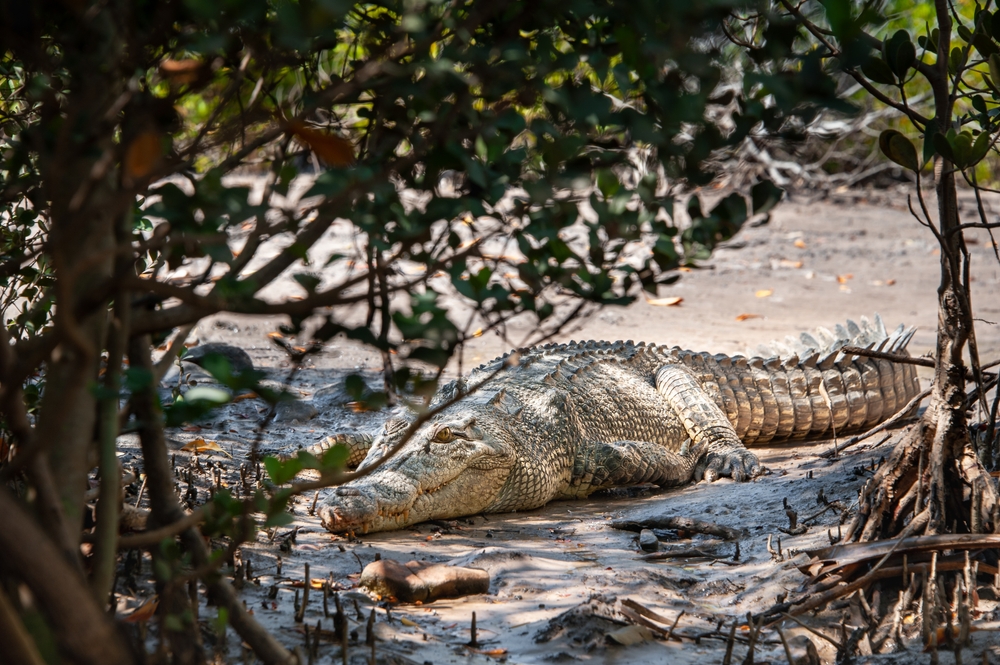
Estuarine crocodiles are commonly spotted around the region. Photo credit: Linda K
Publishers Indemnity. Any individual or entity that places advertising, supplies copy material, or submits editorial content to Core Life Publishing agrees and undertakes to ensure that all such material:- Does not infringe upon any copyright, trademark, or other intellectual property rights;- Is free from any content that could be considered defamatory, libelous, or slanderous;- Does not infringe upon any rights related to privacy or breach of confidence;- Contains no obscene, indecent, or otherwise unlawful material;- Complies fully with the Trade Practices Act and all other applicable laws, regulations, or statutes.Furthermore, by submitting or placing such material, these individuals or entities agree to indemnify and hold harmless the publisher, Core Publishing and Events Pty Ltd, and/or its agents from and against any and all investigations, claims, demands, liabilities, damages, costs, or judgments arising out of or in connection with the material provided. All material is believed to be accurate at the time of printing and remains the copyright of Core Publishing and Events Pty Ltd.
© 2026 Mackay and Whitsunday Life Pty Ltd.