Independently Owned, Locally Grown, Community Loved

An international research team, including scientists from James Cook University (JCU) and the Queensland Museum, has turned to centuries-old records to modernise the way hard coral species are identified, reshaping coral science and conservation.
New JCU-led research published in Memoirs of the Queensland Museum details the development of a global database of hard coral information that reduces reliance on historical gatekeepers. The framework blends modern DNA sequencing with historical observations to create a more rigorous and accessible approach to coral identification.
“People the world over who work on coral reefs know that hard coral identification has been a problem,” said JCU Professor Andrew Baird, co-author and supervisor of the research.
“Our database provides the basis for a new identification framework, at a time when accurate species-level knowledge has never been more critical. It encourages the use of multiple lines of evidence for coral identification, and we hope the database will make what’s previously been a specialist-led taxonomy, more accessible.”
While molecular techniques have transformed coral science, linking modern genetic data with historical species descriptions has long been difficult. The team’s key innovation is the use of ‘topotypes’ — living coral specimens collected from the same locations where species were first described — allowing scientists to sequence genetically comparable material.
“Most historical species names are based on museum specimens which are bleached skeletons, lacking tissue. We need topotypes so they can be sequenced using modern genetic techniques,” said JCU PhD candidate and first author, Augustine Crosbie.
“The significance of this work is that it tells us where to look for topotypes. We’ve found the locations for thousands of corals, right across the world’s oceans.”
The database collates 2338 nominal coral species described between 1758 and 2025.
Professor Baird said improved identification is critical as reefs face growing pressure from warming oceans.
“Inaccurate identification can lead to silent extinctions, misleading experimental results, incorrect species distributions and flawed conservation decisions,” he said.
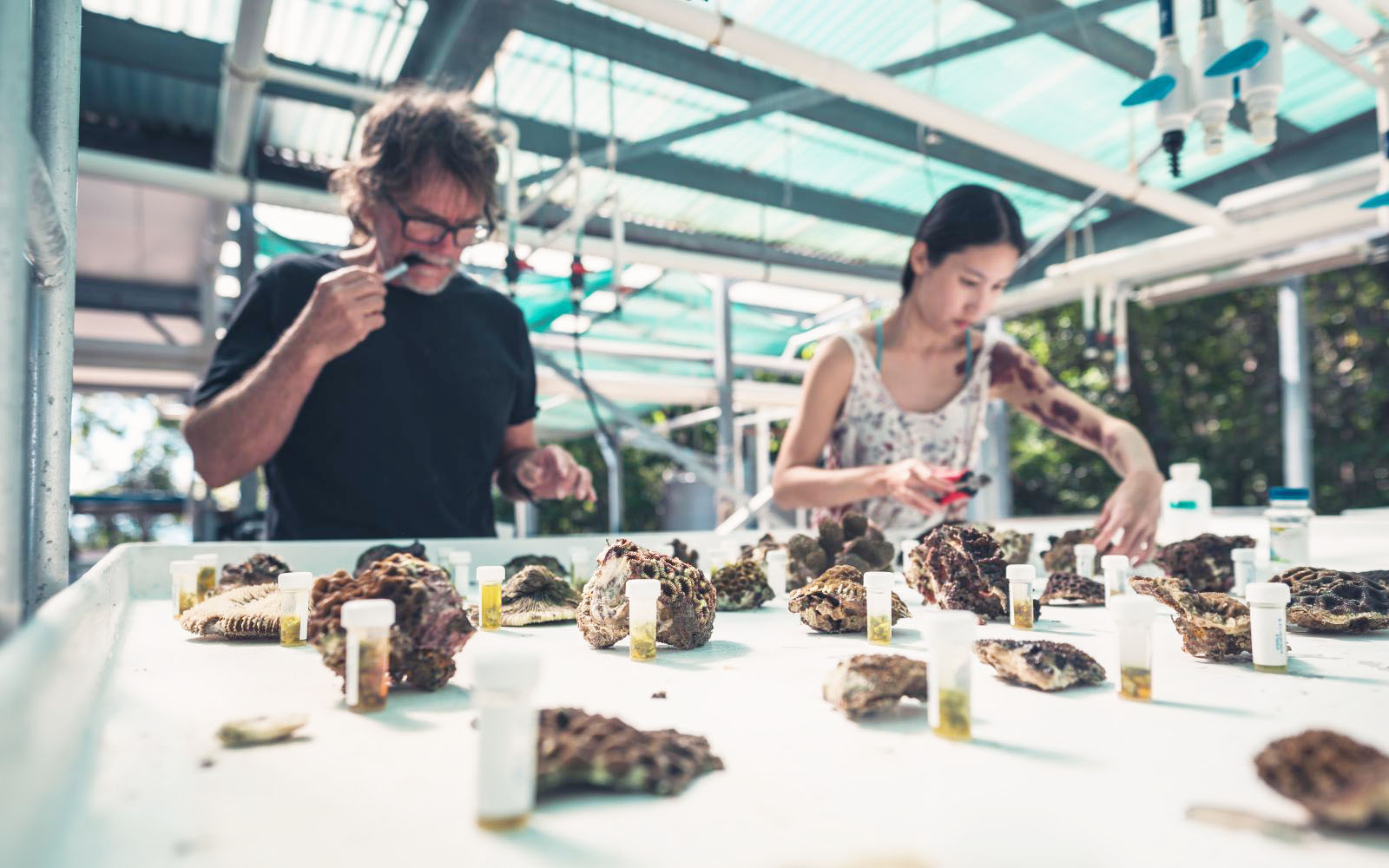
CAPTION: Professor Andrew Baird, and Julia Hung of JCU processing coral samples after a successful morning of collection diving at Orpheus Island Research Station. Photo credit: Augustine Crosbie
Publishers Indemnity. Any individual or entity that places advertising, supplies copy material, or submits editorial content to Core Life Publishing agrees and undertakes to ensure that all such material:- Does not infringe upon any copyright, trademark, or other intellectual property rights;- Is free from any content that could be considered defamatory, libelous, or slanderous;- Does not infringe upon any rights related to privacy or breach of confidence;- Contains no obscene, indecent, or otherwise unlawful material;- Complies fully with the Trade Practices Act and all other applicable laws, regulations, or statutes.Furthermore, by submitting or placing such material, these individuals or entities agree to indemnify and hold harmless the publisher, Core Publishing and Events Pty Ltd, and/or its agents from and against any and all investigations, claims, demands, liabilities, damages, costs, or judgments arising out of or in connection with the material provided. All material is believed to be accurate at the time of printing and remains the copyright of Core Publishing and Events Pty Ltd.
© 2026 Mackay and Whitsunday Life Pty Ltd.