Independently Owned, Locally Grown, Community Loved


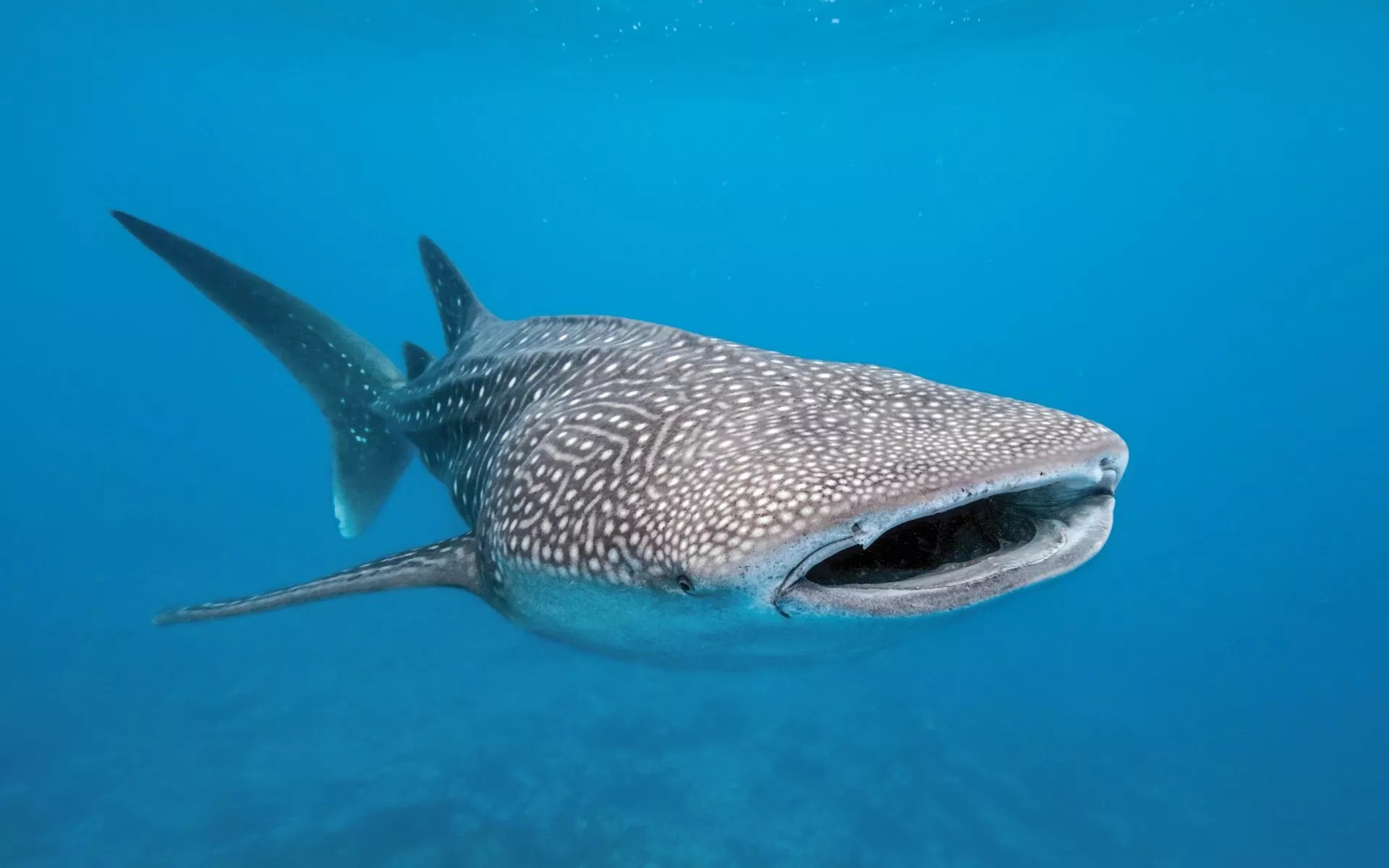
If you had to design the ultimate ocean giant, you might come up with something like the whale shark — a fish as long as a bus, covered in dazzling white spots, and gentle enough to swim alongside humans. The magnificent Whale Shark (Rhincodon typus) is not only the largest fish in the sea, but also one of the most fascinating creatures on Earth.
Despite their enormous size, whale sharks are surprisingly harmless. Adults can grow to around 12 metres long, although some individuals may reach 18 metres or more. That makes them heavier than an elephant and longer than many boats. Yet these giants are gentle filter feeders that eat some of the smallest organisms in the ocean.
Instead of hunting large prey like many sharks, whale sharks glide slowly through the water with their huge mouths open, filtering tiny creatures from the sea. Their diet includes plankton, small fish, fish eggs, and shrimp-like animals called krill. As water passes through their gills, specialised filters trap the food while the water flows back out. It’s a feeding style more commonly associated with baleen whales, which explains how the whale shark earned its name.
Another cool feature of whale sharks is their extraordinary appearance. Their dark blue-grey skin is covered with pale spots and stripes arranged in a pattern that is completely unique to each individual — much like a human fingerprint. Scientists actually use photographs of these patterns to identify individual sharks and track their movements around the world.
Whale sharks are true ocean travellers, migrating thousands of kilometres through tropical and warm-temperate seas. They can be found in oceans all around the globe. Australia hosts one of the best-known seasonal gatherings of whale sharks at Ningaloo Reef in Western Australia, where dozens of these giants arrive each year to feed on plankton blooms.
Whale sharks are increasingly spotted on the Great Barrier Reef (GBR), with a newly identified, consistent seasonal aggregation site for juveniles in Wreck Bay (northern GBR). Peak sightings occur from late November to late December, coinciding with coral spawning.
Whale sharks are rare but occasional visitors to the Whitsundays. While not common, these gentle giants have been spotted near locations like Blue Pearl Bay.
Despite their size, whale sharks remain surprisingly mysterious. Scientists still know relatively little about their breeding behaviour. Pregnant females are rarely seen, and no one has ever observed whale sharks mating in the wild. One female examined by scientists contained more than 300 embryos, suggesting they produce many young at once — a useful strategy for survival in the vast ocean.
Another impressive ability is their diving behaviour. Whale sharks spend time feeding near the surface, but they are also capable of deep dives to more than 1,000 metres. These dives may help them search for food or navigate long migrations through the open ocean.
Unfortunately, even giants are vulnerable. Whale sharks face threats from ship strikes, accidental capture in fishing gear, and plastic pollution. In some parts of the world, they have also been hunted for their meat and fins. As a result, the species is now listed as endangered.
Contributed with thanks to the Whitsunday Conservation Group
Captions
Whale Shark
Photo supplied

Publishers Indemnity. Any individual or entity that places advertising, supplies copy material, or submits editorial content to Core Life Publishing agrees and undertakes to ensure that all such material:- Does not infringe upon any copyright, trademark, or other intellectual property rights;- Is free from any content that could be considered defamatory, libelous, or slanderous;- Does not infringe upon any rights related to privacy or breach of confidence;- Contains no obscene, indecent, or otherwise unlawful material;- Complies fully with the Trade Practices Act and all other applicable laws, regulations, or statutes.Furthermore, by submitting or placing such material, these individuals or entities agree to indemnify and hold harmless the publisher, Core Publishing and Events Pty Ltd, and/or its agents from and against any and all investigations, claims, demands, liabilities, damages, costs, or judgments arising out of or in connection with the material provided. All material is believed to be accurate at the time of printing and remains the copyright of Core Publishing and Events Pty Ltd.
© 2026 Mackay and Whitsunday Life Pty Ltd.