Independently Owned, Locally Grown, Community Loved


Today’s Future Voices column is sharing a perceptive, thoughtful piece penned at St. Catherine’s by Year 12 student Finlay Farrell. The essay, written for Lions’ Youth of the Year Competition, explores Finlay’s family’s connection to tourism, community and conservation in Fiji.
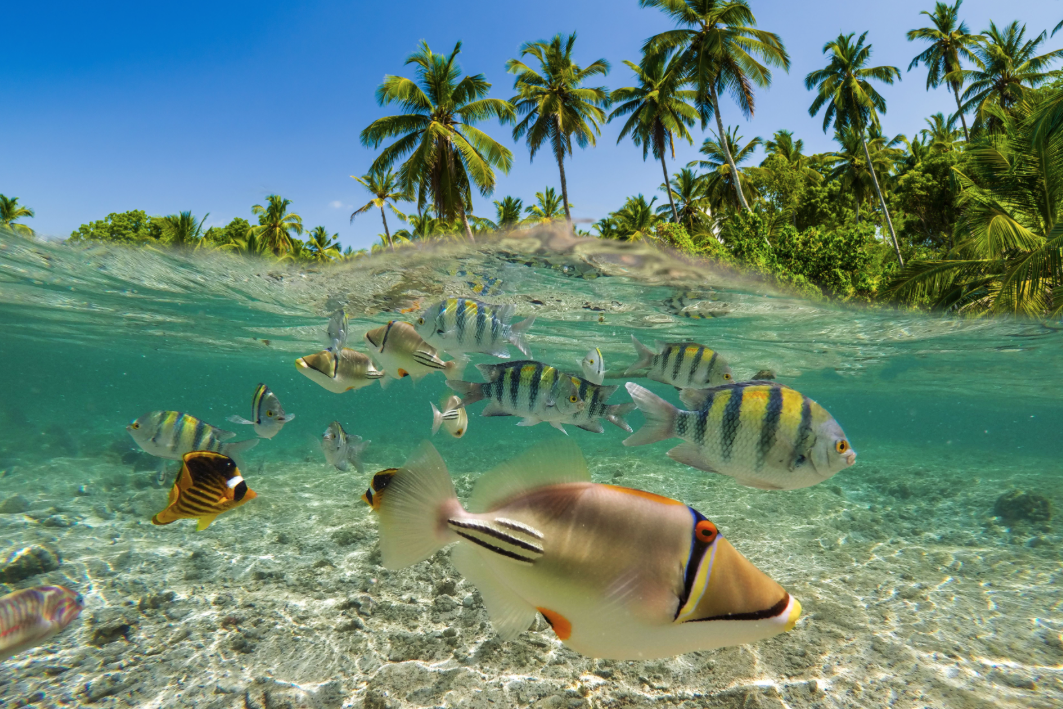
Imagine yourself lying in a hammock on an Island in Fiji. Soft breeze brushing against your face, the hope and excitement to get in the endless ocean growing fonder as you see fish darting across the shallows. Hear the Fijians singing “Bula Malaya”, a traditional welcoming song to the guests lucky enough to join you on this remote haven.
This is not just an image of paradise. It’s the heart of a story. A story that today, I have the privilege of sharing with you.
This story is a trifecta of three aspects: business, community, and conservation. Like the reef itself, where every creature has its role to play, this is a mutualistic relationship that defines not only survival, but a potential for a thriving future for all.
This story isn’t just about a business or a place. It's a story about what's possible when people, purpose, and planet come together.
Fijians fish for two reasons. The first is for food to feed their families. It's a crucial source of protein. This fishing is sustainable. The second is to sell the fish. Fijians,
like us, need money to pay for the necessities of life, such as school books, toothpaste, or phone credit. This fishing has no limit and is not sustainable. When no
limit or protection is set on the amount of fishing, immense damage is inevitable.
Many Fijians may be unaware of the damage this can cause, meaning they will continue to do so without second thought. Part of solving this issue is done through education, which the business supports. An alternate revenue source must also be created. This is where tourism can be the answer.
The Barefoot Collection business operates on land owned by the community. It offers an alternative source of revenue for the community as part of anagreement for lending the land. The business has committed to hiring as many people from the community to give them individual income. This allows Fijian’s to work closer to their village, meaning spending more time at home with family, rather than having to travel to a distant mainland. A percentage of the income that the business creates is shared with the community. Now that multiple members of society have income sources, it takes immediate pressure off the reef.
A thriving ecosystem benefits both business and the community. Potential guests are more likely to visit an Island with a healthy reef. Their stay is enhanced by discovering and learning about the beautiful ecosystem beneath the surface, increasing the chance of a return visit or a recommendation. Guests are also more likely to spend their hard-earned money on an experience with a unique and jaw-dropping reef. This then creates more income for both the resort and the community. In the agreement with the community, a marine protected area, or in the Fijian language, a Tabu area, has been created. This is crucial for healthy reefs. It creates the opportunity for fish to grow and make babies that will grow up on other reefs, where some can be harvested. We know that having some protected areas will boost fishing in other areas. Tabu areas have long-term benefits for the reef, but they can also create immediate economic benefits for the community. Long-term benefits have no use to a parent needing to feed their child tomorrow.
The community learning more about the benefits of correctly managing resources and the business learning how to manage the income appropriately, both are crucial to the trifecta's success. Building trust takes time. The business and community have both individual wants and common needs. Having trust in the other and an open relationship, as well as understanding that neither partner will get everything right, is difficult but crucial in this relationship.
The environment is the only leg on this tripod that has no say and is dependent on the collaboration of the others. For now, it is thriving. Do you want to help? Whilst lying on a hammock? preferably cocktail in hand? I strongly recommend you seek out holiday destinations where tours and resort operators conduct their business in an environmentally and community-friendly, sustainable manner.
Publishers Indemnity. Any individual or entity that places advertising, supplies copy material, or submits editorial content to Core Life Publishing agrees and undertakes to ensure that all such material:- Does not infringe upon any copyright, trademark, or other intellectual property rights;- Is free from any content that could be considered defamatory, libelous, or slanderous;- Does not infringe upon any rights related to privacy or breach of confidence;- Contains no obscene, indecent, or otherwise unlawful material;- Complies fully with the Trade Practices Act and all other applicable laws, regulations, or statutes.Furthermore, by submitting or placing such material, these individuals or entities agree to indemnify and hold harmless the publisher, Core Publishing and Events Pty Ltd, and/or its agents from and against any and all investigations, claims, demands, liabilities, damages, costs, or judgments arising out of or in connection with the material provided. All material is believed to be accurate at the time of printing and remains the copyright of Core Publishing and Events Pty Ltd.
© 2026 Mackay and Whitsunday Life Pty Ltd.