Independently Owned, Locally Grown, Community Loved
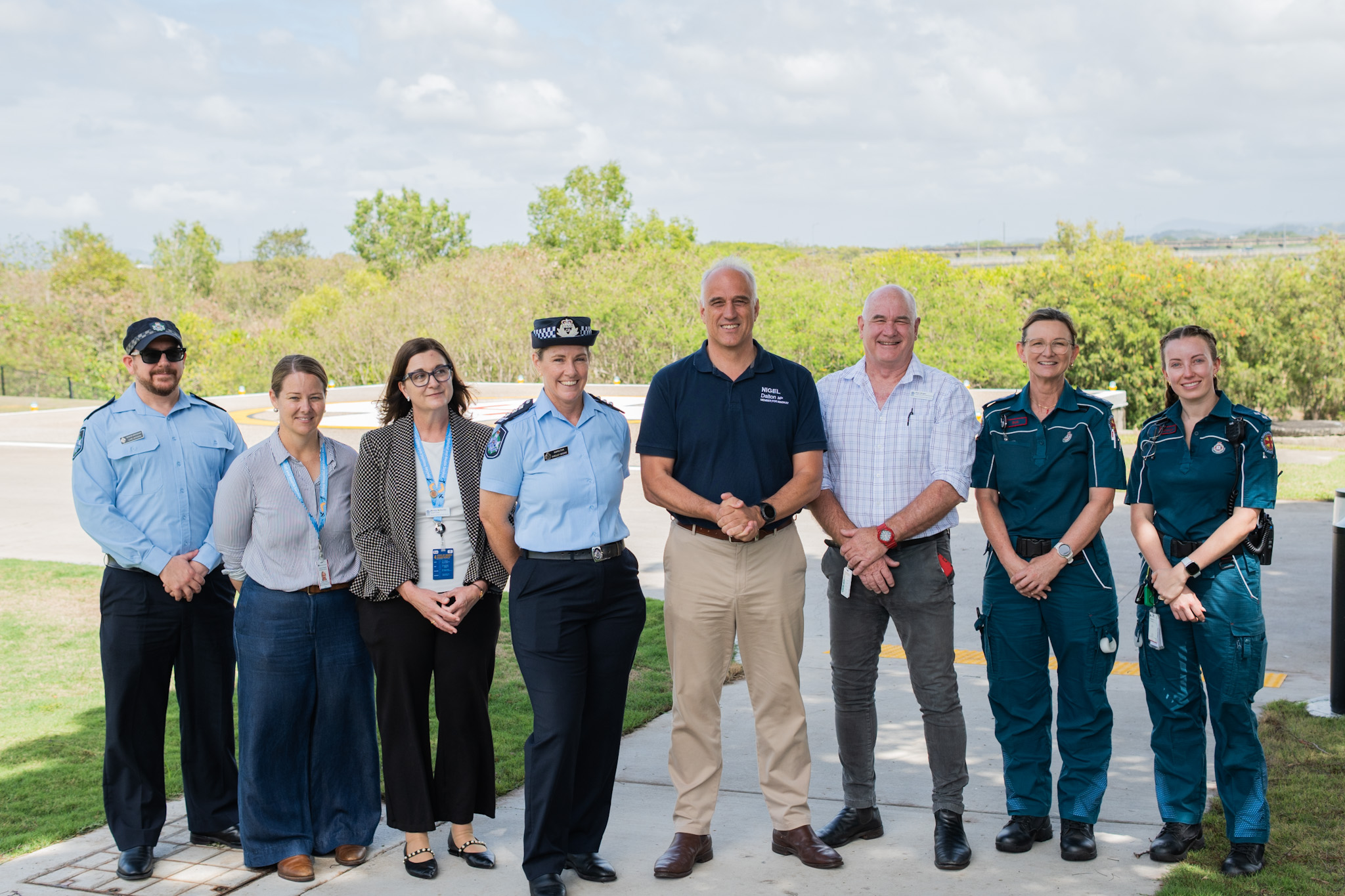

Since 21st January, 2026 marks the centenary of the CANEGROWERS Association, it is an appropriate time to recognise the pioneers from Proserpine who helped establish this organisation. One such pioneer was W H Doherty.
From the cane farm to State secretaryship of Queensland Cane Growers' Council; such was the career of Mr. W. H. Doherty who worked tirelessly building up of a spirit of co-operation among Queensland cane growers.
Born at Yambuk, Victoria, in 1868, Mr. Doherty spent fourteen years in New Zealand, drawn to mining. This interest lured him to the Northern Territory and to Charters Towers. In 1908, while in Charters Towers, in partnership with Mr Ralph Lewis, he purchased W Compton’s farm at Mt Marlow, later selling half of his share and growing cane in his own right.
While at Mt Marlow, Doherty was responsible for paying for beetles for the Insect Pest Destruction Committee. For two years, he was president of the United Farmers and Cane Growers’ Association and then continued as Mt Marlow delegate. In 1912, he was appointed secretary of the newly formed Cannon Valley District Branch of the association and successfully proposed that farmers in outside districts have the right to vote on all Executive Council business. This power given to branches was a major factor in retaining their importance.
From 1910 until 1918, he was a member of the Proserpine Shire Council and was Chairman in 1911. The formation of the United Cane Growers' Association (UCGA) in 1914, foreshadowed Doherty’s long service as an executive on the statewide body. In 1918, with the imminent retirement of the secretary, delegates urged Doherty to apply. Disheartened by the devastation to his crop in the Mackay cyclone of that year, he did so and was duly selected from twenty-three applicants.
At this time, the organisation had sufficient funds to carry on for only three months, so it was necessary for Mr. Doherty to go out into the sugar districts and endeavour to further organise the farmers who were too busy for meetings. Consequently, Doherty had to make personal calls particularly in the Innisfail, South Johnstone, Tully, Ayr, Mackay, and Bundaberg districts.
In the early days of the UCGA, roads (where they did exist) were in a pitiable condition and the UCGA was too poor to hire a sulky or horse. Doherty was often obliged to discard boots and carry them from farm to farm because of torrential rains and lack of adequate thoroughfares. Such was his determination and dedication! On one of these treks, he walked thirty miles while calling on two dozen farmers. Many and varied were the unusual incidents which befell Doherty, but he always spoke appreciatively of the ready and good-natured hospitality of the hard-working cane farmer to “the wayfarer”.
In just seven months, Doherty raised the membership of the association to over 3000 and the revenue from £750 to more than. £2000 per annum. During the next two or three years, the membership represented 82 per cent of the growers in Queensland.
In 1926, the Primary Producers Organising and Marketing Act came into being. This act made it compulsory for every cane grower to contribute towards the Queensland Cane Growers' Council. Building on the foundation of the UCGA, the Queensland Cane Growers' Council was formally established as a statutory body in Mackay on January 21, 1926. The Council invited applications for the position of general secretary (equivalent to its Chief Executive) and Mr. W H Doherty was accepted from twenty-five other applicants.
During Mr. Doherty’s twenty-one years as secretary of these associations, he lectured on matters of interest to the industry throughout most states except Western Australia. For many years, he was the Council's advocate in the Industrial Conciliation and Arbitration Court. He retired in 1939 and served on the Royal Commission on Sugar Peaks and Cognate Matters later that year.
Story courtesy of Proserpine Historical Museum.
William H Doherty, 1911. Photo Source: Whitsunday Regional Council
Inaugural CANEGROWERS Meeting, 1926. Photo Source: Australian CANEGROWERS' Magazine
Publishers Indemnity. Any individual or entity that places advertising, supplies copy material, or submits editorial content to Core Life Publishing agrees and undertakes to ensure that all such material:- Does not infringe upon any copyright, trademark, or other intellectual property rights;- Is free from any content that could be considered defamatory, libelous, or slanderous;- Does not infringe upon any rights related to privacy or breach of confidence;- Contains no obscene, indecent, or otherwise unlawful material;- Complies fully with the Trade Practices Act and all other applicable laws, regulations, or statutes.Furthermore, by submitting or placing such material, these individuals or entities agree to indemnify and hold harmless the publisher, Core Publishing and Events Pty Ltd, and/or its agents from and against any and all investigations, claims, demands, liabilities, damages, costs, or judgments arising out of or in connection with the material provided. All material is believed to be accurate at the time of printing and remains the copyright of Core Publishing and Events Pty Ltd.
© 2026 Mackay and Whitsunday Life Pty Ltd.