
Independently Owned, Locally Grown, Community Loved

There are new things to consider when buying real estate in Australia. Up until last month, people buying real estate in Sydney really only considered the capital growth they were expecting to create within just a few years of making their purchase. Paying $1.2 million for an inner-city two-bedroom apartment didn’t matter so much if it was going to be worth $1.5 million two years later. It didn’t really matter that the crap rental returns you got for that price didn’t go anywhere near covering the mortgage because the old negative gearing benefit meant you could claim the losses on your tax. Things have changed. Negative gearing has gone and prices are dropping in Sydney … so that $1.2 million apartment doesn’t look so enticing any more, even though it’s now $1.1 million. Other cities have also been hit hard. Melbourne is now one of the cheapest cities in Australia to buy real estate. Although there are special Victorian reasons that come into play in that state. Victorians were bullied during COVID in a way that impacted small businesses in a disastrous way. The state’s debt is exorbitant, and no one seems to know how it gets paid back. Tobacco shops keep getting blown up by some underworld gang thing that the Government can’t control. They have metal boxes where people can hand in their machetes and that doesn’t appear to instil peace of mind in anyone. Terrible Governments end up having an impact and it definitely has had one on property prices in Victoria. A quick scan of on-line property sites shows you that you can pick up a decent two-bedroom unit in an inner-city suburbs like St Kilda and Collingwood in the $400,000s. I saw a three-bedder in St Kilda advertised in the $500,000s. While those prices might seem like great value, there are reasons the market is so low. People don’t trust the state Government and its management of the economy and the obvious concern would be that even though the prices might be low, there is no guarantee of capital growth. Capital growth has offered a warm embrace for investors in Australian real estate over many years. There has been an expectation that prices will go up. Obviously they will go up again but the questions is: Where will they go up, when and by how much? Unfortunately I don’t have the answer to that but I do find that when things get a bit blurry and uncertain, it’s good to stick to what you know … which, for me, is Mackay. We have several advantages over many other markets. Our median price for houses, in the $600,000s, is a lot lower than bigger cities so more affordable for local people who, by the way, still need somewhere to live. And, with the end of negative gearing and the banning of borrowing for property out of self-managed super funds, lower prices and strong rental returns should become a key factor in real estate investment. Yes, investors want capital growth but I feel the focus will probably shift more to rental yield and the monthly return on investment. Mackay’s rental returns are good and the purchase prices relatively low compared to other markets so there seems to me a good chance that our market will continue to be buoyed by those wanting to take advantage of that. Meanwhile the Mackay economy seems to be going well, driven by that crucial resource that is dug out of the ground and exported to countries that make steel. I got strong offers on three properties this week so there is a feeling that while there has certainly been a change driven by national political factors, our market is moving through it, adjusting to the new information and still bubbling along. The only thing I would say is that if any of you bump into David Crisafulli tell him to dump those high-level coal royalties.
Read the full story
Queensland’s top real estate professionals and agencies are being called to step into the spotlight, with nominations now open for the Real Estate Institute of Queensland’s (REIQ) 2026 Awards for Excellence. REIQ CEO Antonia Mercorella said the awards remained the state’s highest professional recognition in real estate and continued to adapt alongside the profession itself. “The REIQ Awards for Excellence are the pinnacle of professional recognition in Queensland real estate, and each year we ensure the program remains contemporary, inclusive and reflective of the full scope of our profession,” Ms Mercorella said. “This year, we’re delighted to add a new Multi-Office Network of the Year category, recognising real estate agencies that operate as a unified multi-office network. “It’s a category our members asked for, and it’s a great example of how the awards continue to evolve alongside the structure and sophistication of Queensland real estate businesses.” Ms Mercorella said there was even more incentive for members to nominate this year, with a pathway from the outset to national recognition in eligible categories through the Real Estate Institute of Australia’s (REIA) National Awards for Excellence (NAFE). The REIQ Awards for Excellence span individual and agency categories, with some split into regional and SEQ areas, across residential and commercial sales, property management, buyer’s agency, auctioneering, business broking, multimedia, innovation and community contribution. Ms Mercorella said real estate professionals throughout Queensland could now start preparing and polishing their award nominations with the clock now ticking down. It’s time to shine! Nominations close on Sunday 12th July 2026, with the winners announced at a spectacular awards gala on Saturday 31st October 2026 at The Star Brisbane. Nominate now via awards.reiq.com
Read the full story
Makayla Groves and Bianca O'Brien are part of the commercial property team at Blacks Real Estate, supporting landlords, tenants and business owners across the Mackay region. Working as Commercial Property Managers, Makayla and Bianca assist with the day-to-day management of commercial properties, helping clients navigate leasing and property management requirements across retail, office and industrial spaces. Based at the agency’s Wood Street office, the pair work closely with business clients throughout the region as part of Blacks Real Estate’s commercial division. Makayla Groves can be contacted on 07 4963 2522, while Bianca O’Brien can be contacted on 07 4963 2525. CAPTION: Bianca O'Brien works with Blacks Real Estate as a Commercial Property Manager. Photo supplied Makayla Groves works as a Commercial Property Manager with Blacks Real Estate. Photo supplied
Read the full story
The Coalition has pledged to make the Northern Australia Infrastructure Facility (NAIF) a permanent institution, arguing the move would provide long-term certainty for regional investment, infrastructure and jobs across Northern Australia, including Mackay. The announcement follows the Federal Government's decision to extend the NAIF for a further 10 years, rather than permanently removing its sunset clause. Leader of The Nationals Matt Canavan said while the Coalition would support Labor's legislation, it believed the independent review's recommendation to make the facility permanent should be adopted. “The Developing Northern Australia is a proud LNP achievement,” Senator Canavan said. “Despite naysayers at the time, Northern Australia has remained on the agenda ever since. I am personally proud to have introduced the original Northern Australia legislation in 2016, with the policy built on the work that was done by LNP Members of Parliaments such as former Senator Ian Macdonald and former MP Warren Entsch. “Unfortunately, Labor is now kicking the can down the road. Northern Australia shouldn’t have to fight every decade to prove it is worthy of investment. “The independent review recommended making the NAIF permanent because it works. The Coalition established the NAIF in 2016, and we will make it permanent because Northern Australia should have long-term certainty for investment, jobs and economic growth.” Since its creation, the NAIF has supported 33 projects with $4.3 billion in finance commitments, helping deliver more than 18,000 jobs and an estimated $33 billion in public benefit across Northern Australia. Those investments include upgrades to airports in Darwin, Alice Springs, Townsville, Cairns and Mackay, along with projects supporting agriculture, mining and manufacturing. Shadow Minister for Northern Australia Senator Susan McDonald said permanent funding would continue to drive regional development. “Labor talks about Northern Australia, but the Coalition backs it with lasting investment,” Senator McDonald said. “The NAIF has transformed communities, unlocked private investment and created jobs across the North. Making it permanent sends a clear message that the Coalition believes in Northern Australia’s future and won’t treat its development as a temporary priority.” “Governments come and go, but Northern Australia’s importance will never diminish,” she said.
Read the full story

Whitsunday Regional Council has taken a strategic step forward with the launch of Whitsunday Event Centres, bringing together three of the region’s leading venues under one unified platform.
The initiative connects the Proserpine Entertainment Centre, Shute Harbour Marine Terminal and Flagstaff Hill Convention Centre, positioning the Whitsundays as a competitive destination for conferences, corporate events and major celebrations.
Rather than a simple rebrand, the program is designed to actively take the region to market through industry networks, trade events and business tourism channels. Led by Council’s Commercial Business Directorate, the approach aims to secure new events that drive visitation beyond peak tourism periods.
Mayor Ry Collins said the launch reflects a deliberate focus on economic growth.
“This is not just about a new logo, it is about how we actively take our region to market and create real opportunities for local businesses,” Mayor Collins said.
By presenting the venues under one coordinated identity, Council is offering event organisers a clearer, more professional pathway to host events in the region. An integrated online booking system further streamlines the process, allowing users to explore venues, review layouts and submit enquiries with ease.
The move is expected to support local accommodation providers, hospitality venues and suppliers, while strengthening the Whitsundays’ reputation as a destination capable of delivering high-quality events year-round.
Event organisers and businesses can explore the new platform at www.whitsundayeventcentres.com.au.
Captions
Photo supplied

News this week that the Government has cut the fuel levy by half for the next three months provides welcome relief to motorists ahead of the Easter long weekend.
The reduction kicked in this Wednesday and is expected to filter through to fuel stations quickly, reducing the price of fuel on average by 26 cents per litre.
In addition, the heavy vehicle road user charge will also be reduced to zero, a welcome move that will make logistical transport more affordable and help regional communities get their commodities moving again.
The measures will cost taxpayers $2.55 billion and are expected to reduce the price of a 65-litre tank of petrol by $19.
Federal Member for Dawson Andrew Willcox said that he has been fighting hard for the region.
"We have heard you loud and clear,” Mr Willcox said.
“My office has been flooded with emails, my Facebook page has been filled with your comments, and I have seen the stress on the faces of families at the bowser across Dawson.”
He does, however, add that the battle is still not won, as the relief needs to be seen at the bowser.
"We remember what happened during the COVID-era excise reduction; the relief was not always fully passed on to the consumer. We cannot allow that to happen again. The task now is to ensure this 26-cent saving is felt immediately at the pumps,” he said.
Caption: The price at the pump has been reduced by 26 cents a litre as of this Wednesday. Photo Victoria Velton

Kids across the region have been carefully crafting their Easter bonnets, and enjoying Easter parades and festive end-of-term fun. Classrooms have been filled with colour, creativity and plenty of laughter as students celebrated the renewal and fun that Easter brings.
From floppy bunny ears to grazing pom-pom sheep, each bonnet was a unique reflection of the personality and creativity of the little ones who wore them proudly during their schools’ Easter parades.
As Term 1 wraps up, these celebrations provide a joyful send-off into the Easter break, with families across the Whitsundays looking forward to a well-earned holiday filled with relaxation, adventures, and cherished time together.
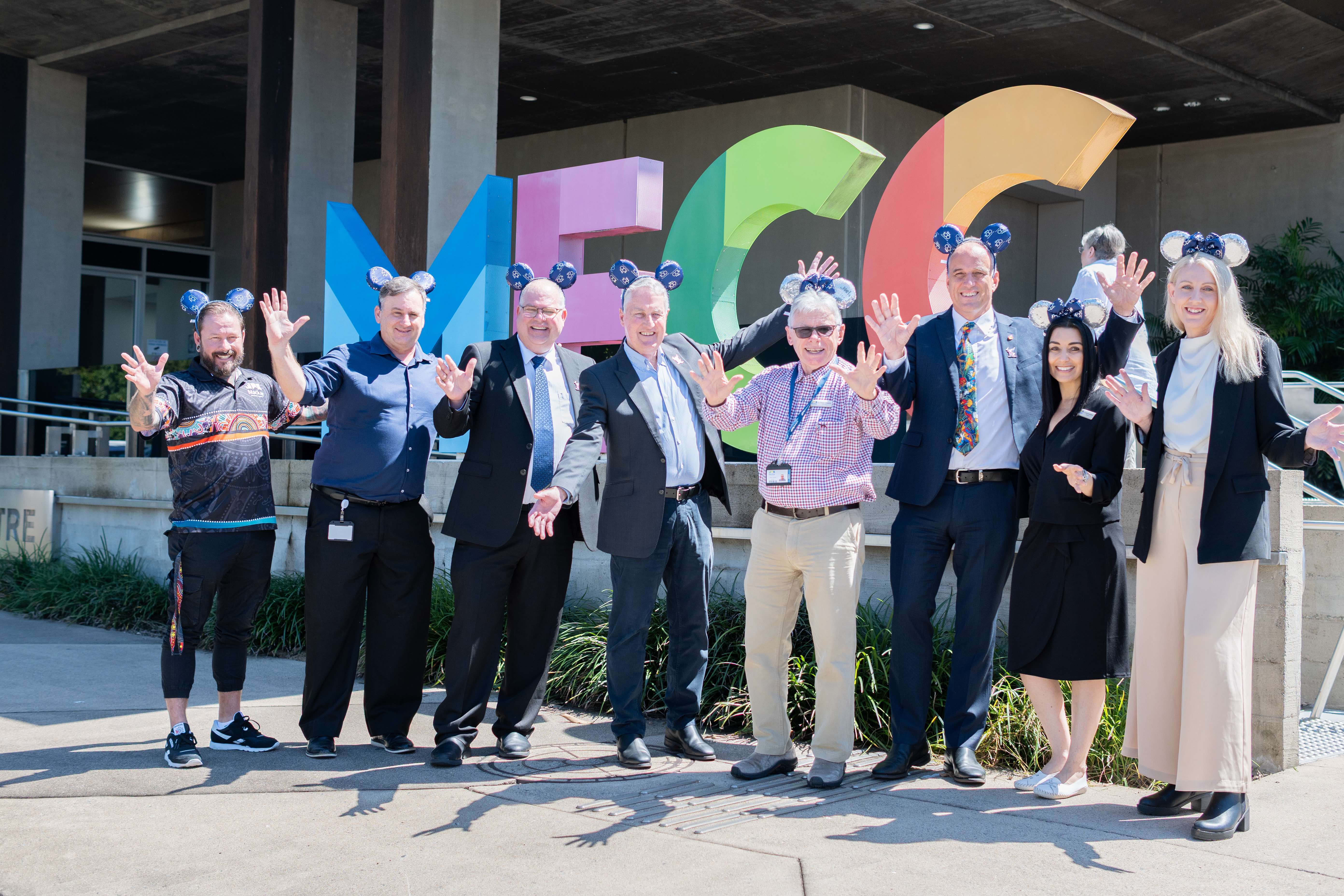
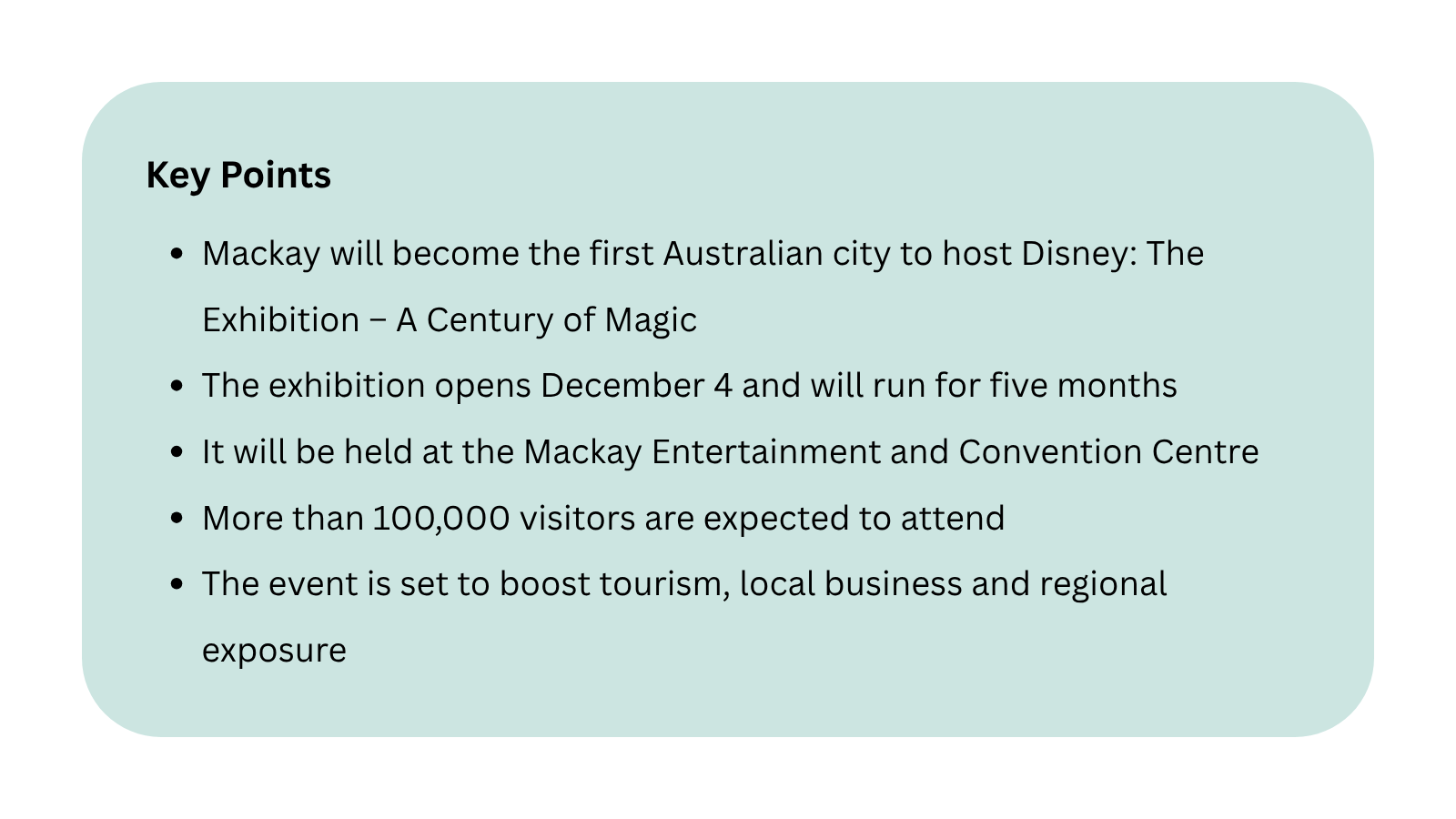
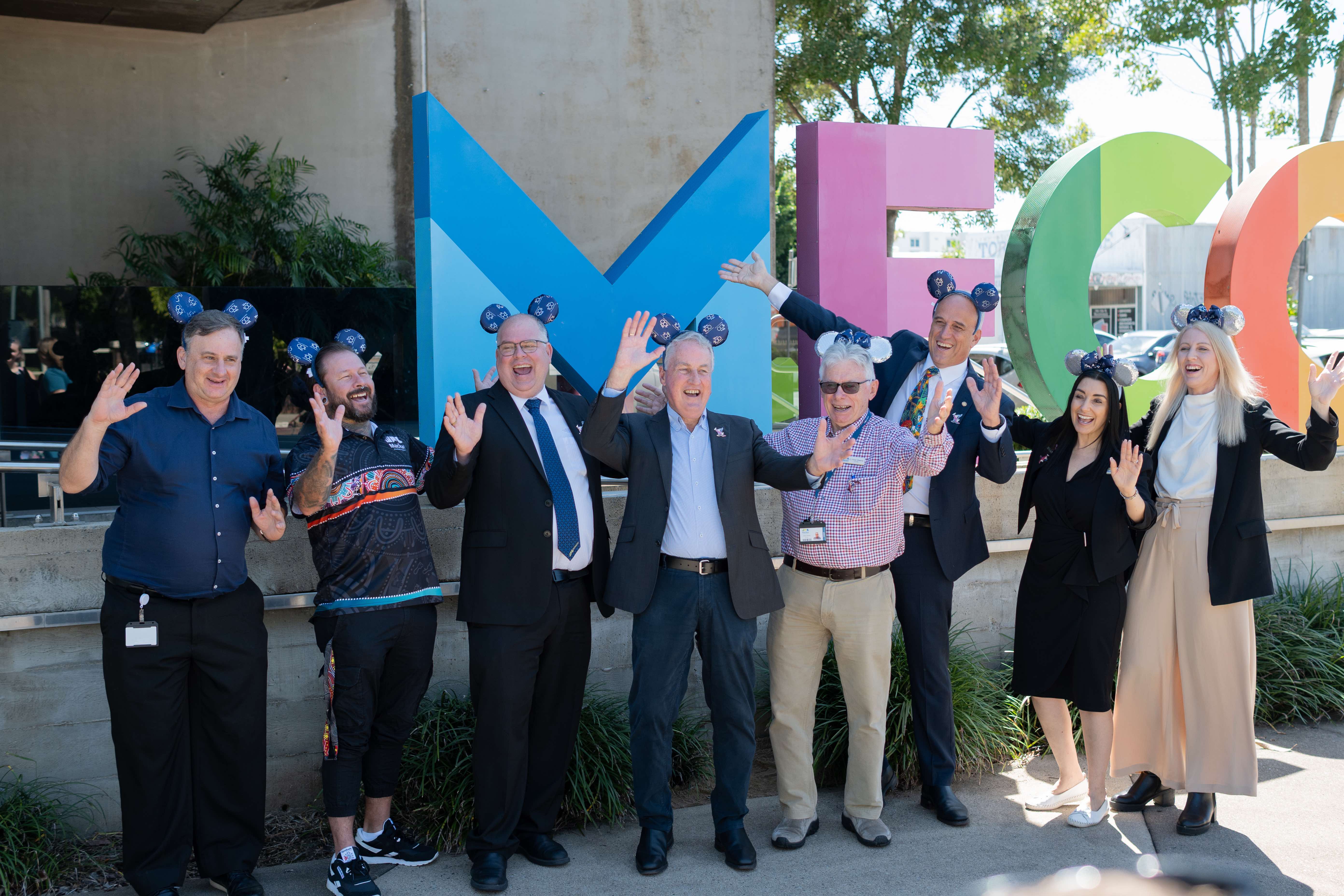
Mackay is set to make history as the first Australian city to host the global blockbuster Disney: The Exhibition – A Century of Magic, a world-renowned celebration of 100 years of storytelling.
Previously showcased in major international cities including Munich, London, Chicago, Seoul, Paris and Madrid, the exhibition will arrive in Mackay on December 4th and run for five months at the Mackay Entertainment and Convention Centre.
The immersive exhibition will feature rare artefacts from The Walt Disney Company, iconic costumes, behind the scenes insights and interactive displays that trace a century of beloved characters and films.
Mayor Greg Williamson of Mackay Regional Council said the announcement marked a landmark moment for the region.
“This is a magical day for Mackay, for Queensland and for Australia,” Mayor Williamson said.
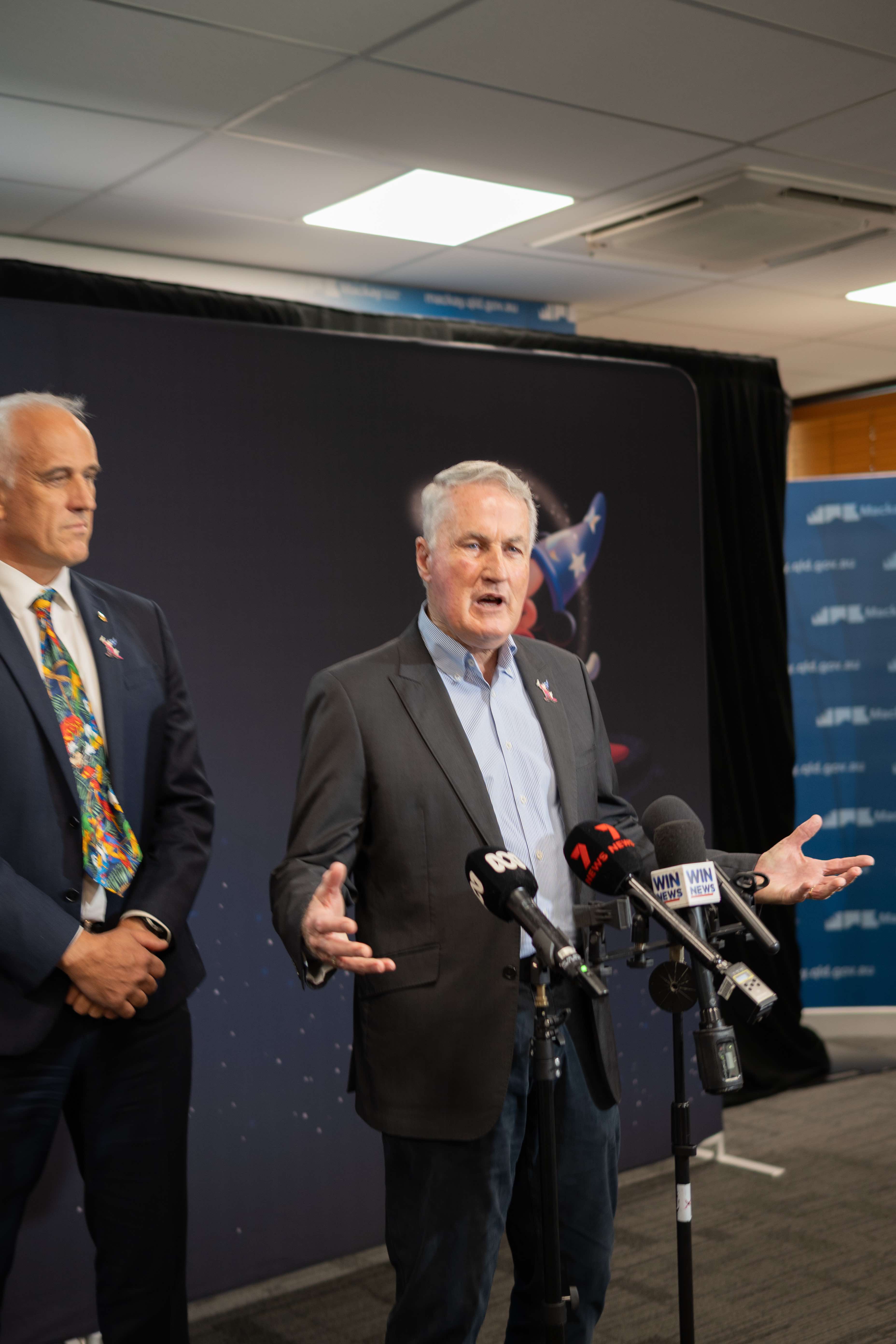
“Mackay will be the first city in Australia to host Disney: The Exhibition – A Century of Magic. The exhibition will open on December 4 and run for five months.
“It has travelled to major cities around the world, including Philadelphia, Paris, London and Madrid, and now it is coming to Mackay.”
Mayor Williamson said securing the exhibition was the result of a strategic pitch by the council’s events team, and would help place Mackay firmly on the international tourism map.
“We are expecting at least 100,000 visitors over the five months,” he said.
“This is about introducing Mackay to the world and giving people the Disney experience they have been waiting for.”
Mayor Williamson said he hoped the announcement would spark curiosity across the country.
“I hope people in cities like Melbourne and Sydney are asking, ‘why Mackay’,” he said.
“The answer to that is simple. Come and see it for yourself and you will understand why it’s here.”
The exhibition will be staged at the MECC, with international crews working alongside local staff to deliver the event.
“Our team at the MECC is ready to deliver a world class event at a world class entertainment centre,” Mayor Williamson said.
Member for Mackay Nigel Dalton said the announcement represented a major milestone for the city and the state.
“This is a wonderful and exciting moment for our region,” Mr Dalton said.
“From December through to May, Mackay will become the centre of Disney in Australia,” he said.
“That means increased visitors, more activity for local businesses and a boost for cafes, accommodation providers and tourism operators.”
He said the event aligned with Queensland’s vision of strengthening its major events calendar.
“We are incredibly excited about the magic that will unfold here in Mackay,” he said.
“This is a fantastic opportunity for locals, for Queenslanders and for visitors from across Australia and overseas to experience something truly special.”
With tens of thousands of Disney fans expected to travel to the region, the exhibition is poised to deliver a magical boost to tourism, business and community pride while placing Mackay firmly in the global spotlight.

A simple act of service is leaving a lasting imprint on patients at Mater Private Hospital Mackay, where 80-year-old Alison Fenech has quietly transformed her time, talent and compassion into something extraordinary.
Since July 2025, Ms Fenech has sewn an astonishing 562 tote bags by hand, repurposing surgical equipment packaging that would otherwise go to waste. What was once discarded is now reimagined into sturdy, reusable bags, placed into the hands of patients during some of their most vulnerable moments.
Hospital representatives highlighted the significance of her contribution, stating, “These bags aren’t just sustainable and practical… they’re a beautiful reminder of the kindness, talent and generosity of volunteers like Alison.”
Each bag carries more than belongings. It carries care and a sense of connection that extends beyond the clinical setting.
For Ms Fenech, the journey began with a desire to find purpose in her time. Speaking candidly about her motivation, she said, “I was aware of having too much free time and how that could lead to depression, so checked out a couple of other options but didn’t settle to them.
“I am happy to work on my own in my own time at my own speed and this suited me perfectly.”
That decision has grown into a deeply meaningful contribution to the hospital community. Working independently and at her own pace, she has dedicated countless hours to carefully crafting each bag, ensuring they are both practical and made to last.
The initiative has also drawn heartfelt appreciation from the hospital, which shared, “Thank you, Alison, for making a meaningful difference to our patients and our community.”
Many have praised Ms Fenech, calling her work “brilliant”, a reflection of both her skill and her quiet determination.
One community member said, “That’s amazing Alison, such beautiful work from a beautiful person.”
An 80-year-old Mackay woman has sewn more than 560 reusable bags from discarded hospital materials, offering comfort and care to patients during vulnerable moments.

Specialists put the focus on endometriosis and pelvic pain this week for EndoMarch, an awareness campaign bringing attention to the often-overlooked condition endometriosis, which according to studies affects approximately 1 in 7 Australian women.
Mackay Hospital and Health Service hosted an EndoMarch information evening on Tuesday 24th to raise awareness and understanding of the condition.
The event was led by Mackay HHS specialist clinicians and was supported by local women sharing their personal stories of living with endometriosis and chronic pelvic pain.
Obstetrics & gynaecology specialist Dr Wojciech Szubert began the evening with an overview of the disease and an update on the work going on at Mackay Base Hospital to improve treatment and care options.
“Endometriosis is a chronic disease affecting women and girls,” Dr Szubert said.
“It is associated with pelvic pain, pain with intercourse, painful urination or defecation, heavy and painful periods, and infertility.
“It can have a significant impact on women’s health and lives, and it has been estimated that it can take six years to get a confirmed diagnosis.
“At this event, we want to provide an update on the work we are doing to improve treatment options.
“We will also have presentations from women who have been brave enough to step forward and share their own personal stories of living with endometriosis.”
Other presenters included director of psychology Rachel Bega who spoke on the role of the psychologist in the management of these conditions, and director of nursing and midwifery Susan Sweeney who shared future plans to advance treatment and care.
It was a relaxed and informal event that gave opportunity for those attending to ask any questions they have about endometriosis and treatment options.
Regarding the event, one local said: “My daughter suffers Endo and also has Andomentriosis which is rare and not many know about it. Glad to see you’re doing this.”
Another expressed frustration surrounding long waitlists for treatment for the condition, appealing for improvement in women’s healthcare across the region.
In 2024, Mackay Hospital and Health Service received new imaging technology that boosted diagnosis and treatment for local women, removing the need for surgery confirm presence for endometriosis.
Following the innovation, the team has been committed to continuing to champion women’s health services and improve treatment options and timelines for women across Mackay.

Drew McGilchrist
Sales Agronomist, Wilmar AgServices
Soil testing has become one of the most valuable tools available to modern agriculture because it enables farmers to make better decisions around crop management.
Soil sampling provides a clear picture of nutrient availability, soil condition and emerging constraints.
With this information, growers can optimise their fertiliser management plan to target specific deficiencies, improving crop performance while avoiding inputs that deliver little return.
In many cases, this leads to more efficient fertiliser use and reduced costs through the removal of unnecessary nutrient applications.
Another key advantage of soil testing is the ability to move away from a one-size-fits-all approach. Results are specific to individual paddocks, so you can design a management plan specific to your farm and local conditions.
Soil sampling also plays an important role in managing soil health over time. Regular testing allows growers to track changes, identify trends and respond early to issues that may affect productivity in future seasons.
Just as importantly, laboratory-based results are a reliable foundation for making sensible decisions about farm management, rather than the status quo of historical fertiliser application.
Finally, soil testing helps ensure your nitrogen, phosphorus and potassium budgets are aligned with current regulations.
Wilmar AgServices offers a soil sampling service for selected paddocks, with a fee applied to cover the soil analysis. Results are provided in a timely manner, highlighting any deficiencies and potential solutions for your farm management.
Agronomy staff can provide additional advice and recommendations on fertiliser selection, as well as costing and application rates.
Contact us on 1800 881 957 to find out more.
Wilmar AgServices Sales Agronomist Drew McGilchrist can provide a soil testing service,
enabling growers to make more informed decisions about their fertiliser management plan.
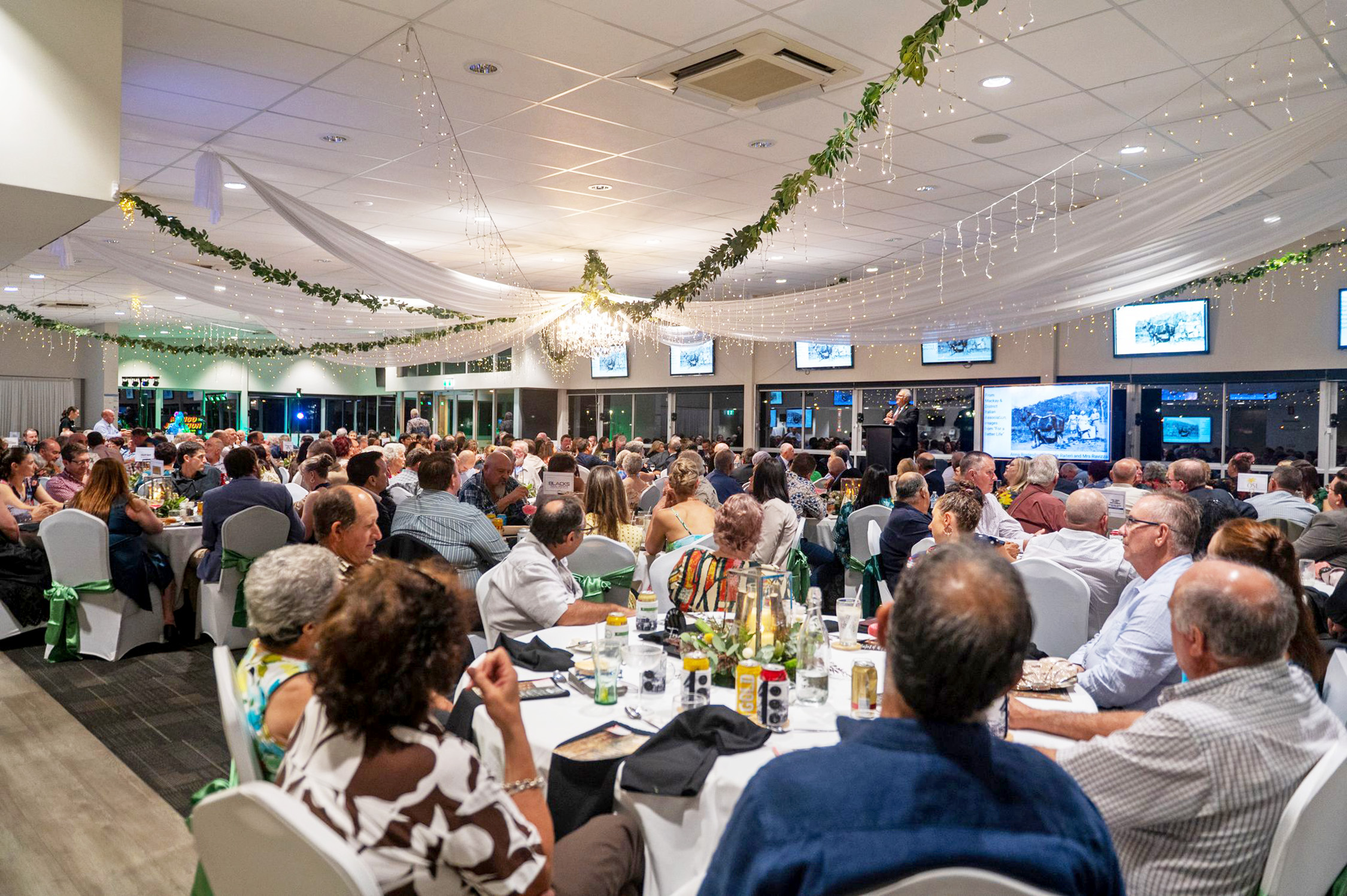
By Joseph Borg, Chairman, CANEGROWERS Mackay
CANEGROWERS’ centenary celebrations continue to roll on and, over the past couple of weeks, all roads have led to our wonderful central region of Mackay.
Mackay is, of course, the birthplace of CANEGROWERS. It was here, on 21 January 1926, that the organisation was formed and first met at Mackay Boys' School. Over the past century, the industry has faced many challenges and seen significant advancements. Through it all, the organisation has evolved alongside these changes to ensure its heart and soul – its members – are represented as strongly as possible.
For the first time in almost a decade, the CANEGROWERS Policy Council gathered in Mackay for one of its three annual meetings. The Council includes representatives from all Queensland sugarcane-growing districts, with one representative per mill area. To put that into perspective, Mackay has four representatives advocating for growers supplying the Plane Creek, Racecourse, Farleigh and Marian mills.
The meetings also bring together district managers and staff from across the state, creating a real mix of views and discussion. The primary role of the Policy Council is exactly what the name suggests – to set the policies that guide the organisation. Key topics this time included environmental policy, trade, transport, the future of harvesting, and water and electricity. Navigating fuel and fertiliser supply chains following the conflict in the Middle East has also quickly moved up the priority list.
On the final night of the Policy Council, the centenary gala dinner was held at the Mackay Turf Club. Policy Council members and visiting staff joined a sold-out crowd of 240 guests, including business partners and industry representatives.
CANEGROWERS Mackay would also like to thank Glenn Kelly, Member for Mirani, along with several Mackay Regional Councillors, for attending. A special thank you goes to all our sponsors – their support helped make the evening a memorable one.
The event was MC’d by Meecham Philpot, with music from Mackay’s own Mango Junction and a special appearance by Nikki Vella Power, well known locally and the daughter of a cane-farming family. Guests also heard an inspiring address from CANEGROWERS Chairman and World Beet and Sugarcane Growers Chairman Owen Menkens, along with some entertaining reflections from former CANEGROWERS and CANEGROWERS Mackay Chairman Paul Schembri, who shared a few of the lighter moments he’s seen over the past 40 years.
Most importantly, the night provided a chance to reflect on the past, consider the present, and look ahead to the future of our historic and ever-evolving industry.
All the best.
Burn Ashburner, Matt Kealley, Justin Blair, Chris Gillitt, Glenn Clarke, Sam Orr and Brendon Nothard
FAR - Former Queensland and Mackay Canegrowers Chairman, Paul Schembrii. Photo credit: Michaela Harlow

The Greater Whitsunday region has taken a significant step toward accelerating agricultural innovation with the release of the Greater Whitsunday AgTech Ecosystem Mapping Report, a comprehensive picture of the organisations, services and partnerships supporting agricultural technology adoption across the region.
Commissioned by Greater Whitsunday Alliance (GW3) and supported through the Queensland Government’s Regional Enablers Program, the report identifies more than 140 regional stakeholders across agriculture, technology, research, training and industry who together form the region’s growing AgTech ecosystem.
Released by the Greater Whitsunday AgTech Hub, the report provides a clear, evidence-based foundation for how the region can strengthen AgTech adoption, improve productivity and support the long-term competitiveness of agriculture across the Greater Whitsunday.
Greater Whitsunday Alliance Chief Executive Officer Ms Kylie Porter said the findings confirm what producers, industry and innovators have long recognised - that the region is uniquely positioned to lead practical, on-farm technology adoption.
“This report highlights the strength of the Greater Whitsunday ecosystem and the opportunity we have to accelerate real-world technology adoption across agriculture,” Ms Porter said.
The report highlights that the region’s greatest opportunity lies not in inventing new technologies, but in strengthening the systems that help producers confidently adopt existing technologies that improve efficiency, reduce costs and support better on-farm decision making.
Over the coming year, the Hub will focus on building a coordinated regional AgTech adoption model, bringing together producers, suppliers and service providers through demonstrations, trials and validation activities that allow technologies to be tested and understood in real production environments.
By improving coordination between industry, government, research and suppliers, the Hub is helping position the Greater Whitsunday as a region that is AgTech-ready, connected and capable of supporting the next generation of agricultural innovation.
Greater Whitsunday Alliance is the region’s peak, independent economic development body committed to making the Mackay, Isaac, Whitsunday region strong for generations.
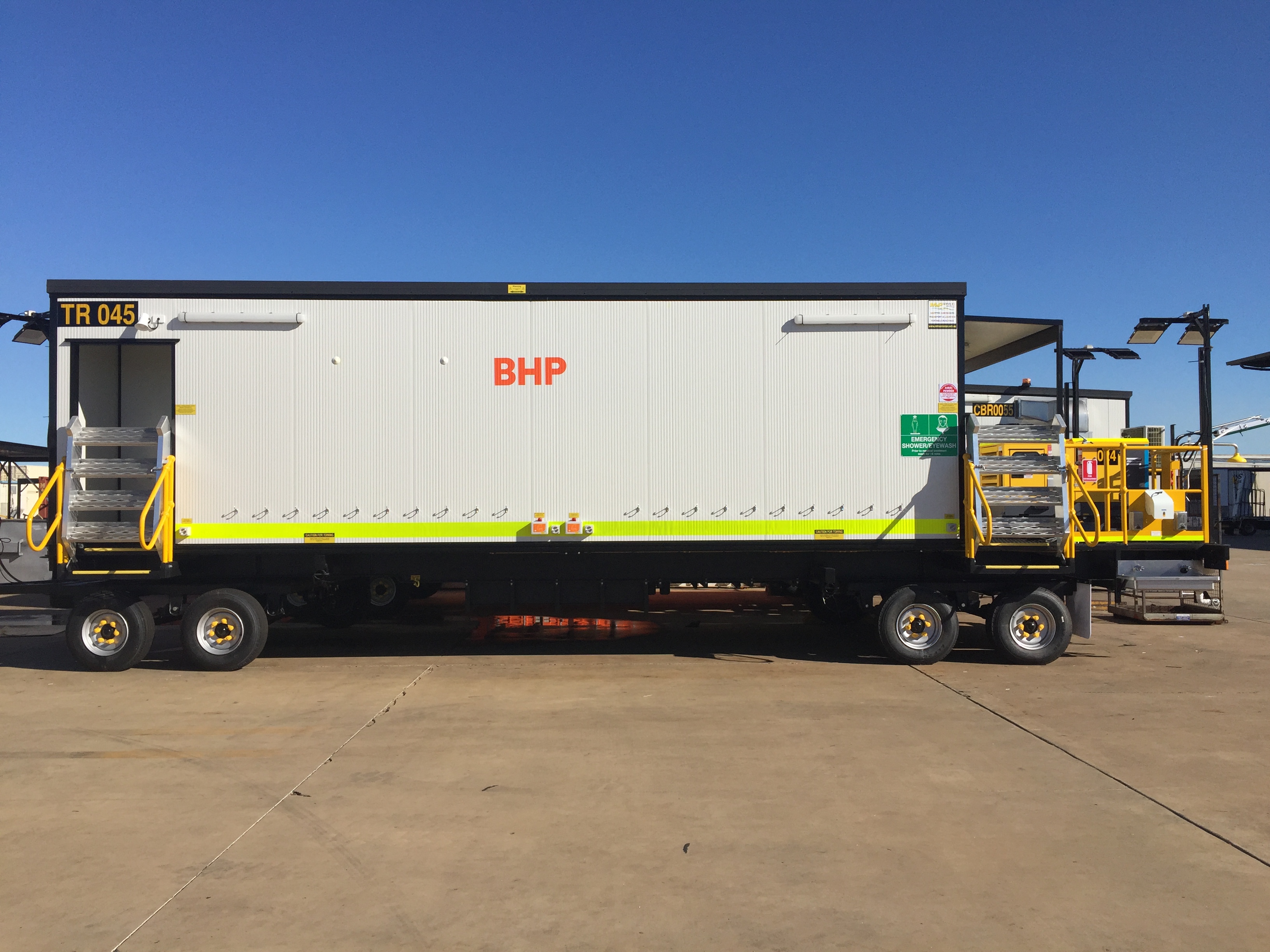
Revolutionising the experience of working, training, learning and living in remote locations is at the forefront of business development at M&P Services. Their Signature Mobile Cribs are proudly designed and manufactured at their Mackay headquarters, establishing them as a market-leading solution for remote-site facilities. Built to rugged minesite specifications, each mobile crib features robust EPSpanel shells, C2 cyclonic resistance, and a heavyduty offroad base - all fabricated on-site in Mackay’s Diesel Drive factory in Paget.
Offered for both hire and sale across QLD, WA, NT, NSW and into PNG and New Caledonia, these units include amenities like reversecycle airconditioning, generatorpowered operation with a 7day fuel supply, kitchenette, toilets, even emergencyshower and firstaid options. They’re selfsufficient and quick to deploy, using a specialised trailer that delivers and unloads the unit directly on-site.
M&P says proper deployment makes the asset “costneutral,” with direct benefits in safety, productivity, and staff comfort. Whether for mining, civil construction, remote agriculture, or emergency relief, Mobile Cribs stand as versatile, dependable, Australianbuilt solutions.

Member for Mirani Glen Kelly MP is urging residents across the electorate to have their say as part of Mirani’s Biggest Community Survey, with early results already highlighting key challenges and priorities in local communities.
Mr Kelly said the survey was delivering valuable insights, but stronger participation was needed, particularly from Walkerston and communities within the Isaac Regional Council area.
“The more people who complete the survey, the better we can understand the real issues facing our communities,” Mr Kelly said. “I represent a diverse electorate stretching around the major centres of Mackay and Rockhampton. Too often, our communities feel overlooked, and this survey is about making sure every town and district has a voice.”
Initial findings revealed that 66.7 per cent of respondents in Ooralea reported not having access to enough safe walking and cycling paths, while 54.5 per cent of Sarina respondents said they were very dissatisfied with local community infrastructure, including parks, sporting grounds and the pool. In contrast, 45.5 per cent of Sarina respondents rated Sarina Hospital as excellent, reflecting confidence in local health services.
Across the electorate, residents also raised concerns about limited public transport options, with many saying they feel cut off or underserviced.
Mr Kelly said the early data reinforced the importance of community feedback.
“These results help guide our advocacy, shape our priorities, and ensure we’re pushing for the things that matter most, whether that’s safer pathways, better community infrastructure, reliable public transport, or improved services.”
He encouraged all residents, particularly those in Walkerston and Isaac communities, to take part in the short online survey.
“Every voice matters. If we want better outcomes for our region, we need to hear from as many locals as possible. This is your chance to help shape the future of Mirani,” he said.
The survey is being conducted alongside a Town Hall Roadshow visiting communities across the Mirani electorate.
Residents can take part online at glenkellymp.com.au/biggestsurvey/, by phone on (07) 4806 0700, or by requesting a hard copy from the Mirani Electorate Office.
Member for Mirani Glen Kelly MP is urging residents to complete Mirani’s Biggest Community Survey, as early results highlight key local issues including infrastructure, transport and access to services. Photo supplied
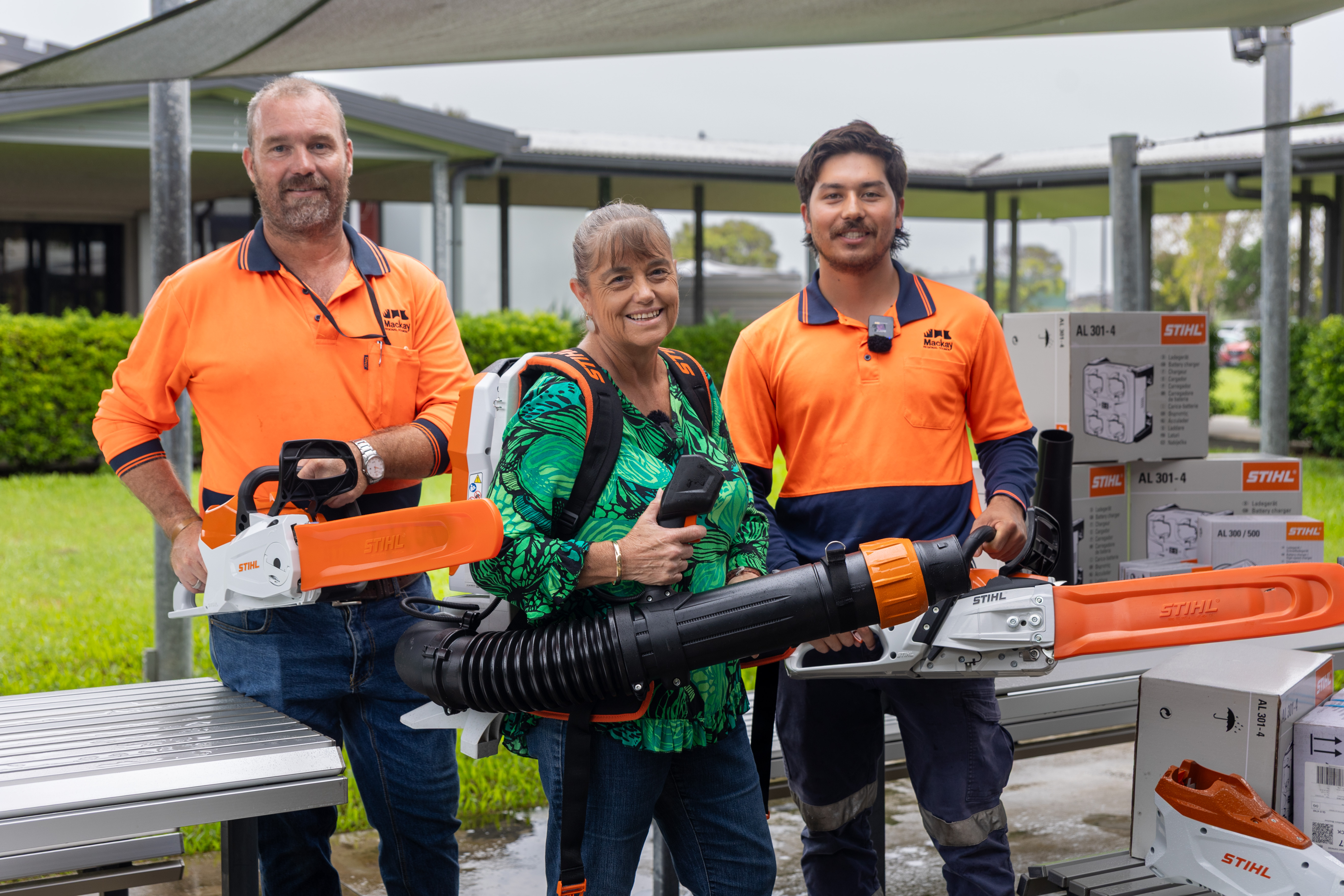
Mackay Regional Council is taking a step toward a greener future, launching a new trial aimed at cutting carbon emissions from equipment used by outdoor crews.
The initiative will see more than a dozen battery-powered tools put to the test, as council explores both the cost and environmental benefits of transitioning away from traditional petrol-powered machinery.
Mayor Greg Williamson said the modelling done by council officers is very encouraging.
“We estimate that in a five-year period, council could reduce their CO2 emissions from this kind of equipment from almost 11 tonnes to about three tonnes,” Mayor Williamson said.
“With the current volatility of fuel prices, any reduction in our reliance on petrol will offer a financial benefit to ratepayers, with electricity charging costs at about $0.24 per kilowatt hour. That’s significantly less than the current cost of fuel,” he said.
“If 100 petrol tools were replaced with battery-electric equivalents, we could see cost savings of about $28,000 over five years and more than 800-tonnes of CO2 emissions reduced.”
Among the equipment purchased for the trial is brush cutters, whipper snippers, blowers and chainsaws.
Sustainability Strategic Advisory Committee co-Chair Cr Alison Jones said there are other benefits to the community and staff.
“Often the equipment is lighter than petrol-powered – reducing strain and fatigue on staff, and by moving away from fuelled equipment we are removing any workplace hazards around airborne particulates,” Cr Jones said.
“The battery-powered equipment is also quieter, meaning that council staff can use them at expanded times and locations.”
The trial aims to determine if projections around cost and CO2 emissions reductions are correct and if the equipment is fit for purpose.
It’s also part of council’s goal to reduce emissions and achieve net zero by 2050, in line with Australia’s international commitments.
The trial will run for three years, with council officers to review how many tools and batteries are still viable and which tools are preferred and fit-for-purpose
The three-year trial will evaluate the long-term viability of the powered tools and batteries. Photo supplied

Community members are being encouraged to come along and show their support as Safe Sleep Mackay prepares to launch its inaugural Bosses on Buses event, aimed at raising vital funds for those experiencing homelessness across the region.
Set to take place on Friday, March 27 at the Mackay Showgrounds from 3pm to 7pm, the event will offer the public an opportunity to step inside the Safe Sleep bus, meet participating local leaders, and gain a deeper understanding of the initiative driving change in the community.
Safe Sleep Mackay spokesperson Lisa Jamieson said the event is about more than just fundraising, highlighting the importance of community connection and collective action.
“The Bosses on Buses sleepout is about leadership, our community coming together and stepping up when it matters most. We’re asking the Mackay community to get behind this event — nominate a boss, make a donation, or come along and check out the bus.”
Funds raised will help Safe Sleep Mackay operationalise the bus service and start providing safe, dignified overnight temporary accommodation people experiencing homelessness in the Mackay region.
To find out more about the event and how to nominate a boss or how to donate visit, www.safesleepmackay.com.au
The Mackay community is being urged to support the upcoming Bosses on Buses event, raising funds to deliver safe overnight accommodation for people experiencing homelessness. Photo source: Safe Sleep Mackay
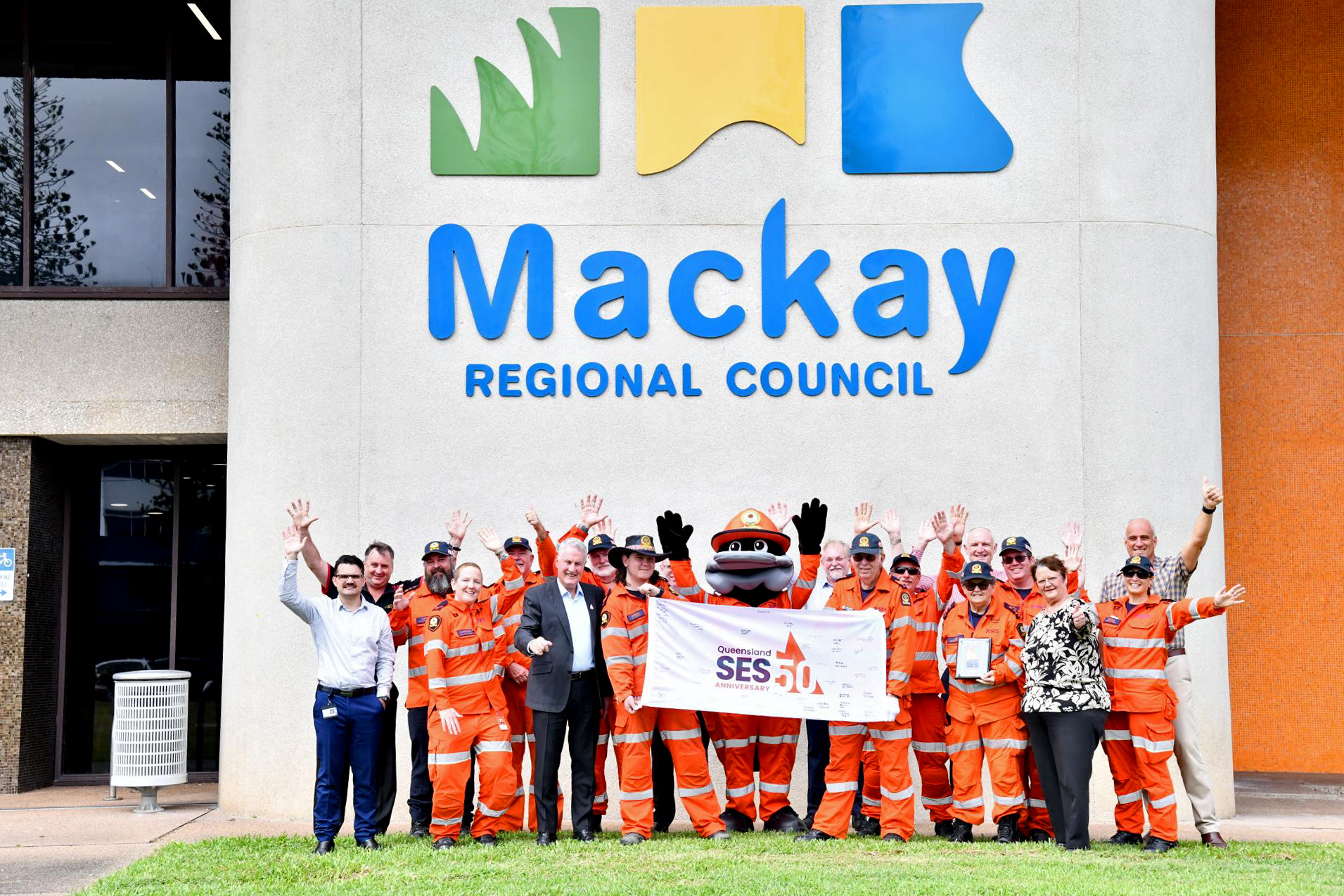
Mackay Regional Council paid tribute to the Queensland State Emergency Service this week, in celebration of its 50th anniversary.
To commemorate the milestone, eight 50-year Anniversary Flags will travel right across the region to be signed by SES volunteers.
The Central Region stretches from the Whitsunday Islands to Agnes Water, consisting of 14 units, 66 groups and over 1200 active volunteers, supported by 26 staff spread across offices in Rockhampton, Mackay and Longreach.
Mayor Greg Williamson acknowledged the dedicated, highly trained volunteers who support our community in times of emergency and disaster.
“Every year, SES volunteers make a real and lasting impact on the lives of Queenslanders – providing help, hope and practical support when it’s needed most,” Mayor Williamson said.
“These tremendous individuals always step up when they are needed and often the conditions they work in are extreme,” he said.
“Whether that’s sandbagging and tarping roofs in torrential rain or searching for missing people amongst dense bushland or in flood boats in raging rivers and creeks – our SES volunteers are local heroes through and through.
“So, if you know an SES volunteer or see one out and about, please thank them for their service.
“Now is also the perfect time to get involved, so if you have ever thought about becoming an SES volunteer, head to ses.qld.gov.au and register your interest.”
SES Mackay Local Controller Alexander McPhee said the Central Region had two 50-year serving members.
“Our region is incredibly lucky to have such a depth of experience and expertise amongst our members,” Mr McPhee said.
“It’s great to be able to celebrate all our volunteers and this is a special opportunity to acknowledge the history of this organisation and the amazing, lifesaving work these volunteers have carried out over the last 50 years,” he said.
The Queensland SES was formally established on December 11th 1975.
It was created in response to the devastating 1974 Queensland floods, evolving from the former Queensland Civil Defence Organisation that had operated since 1961.
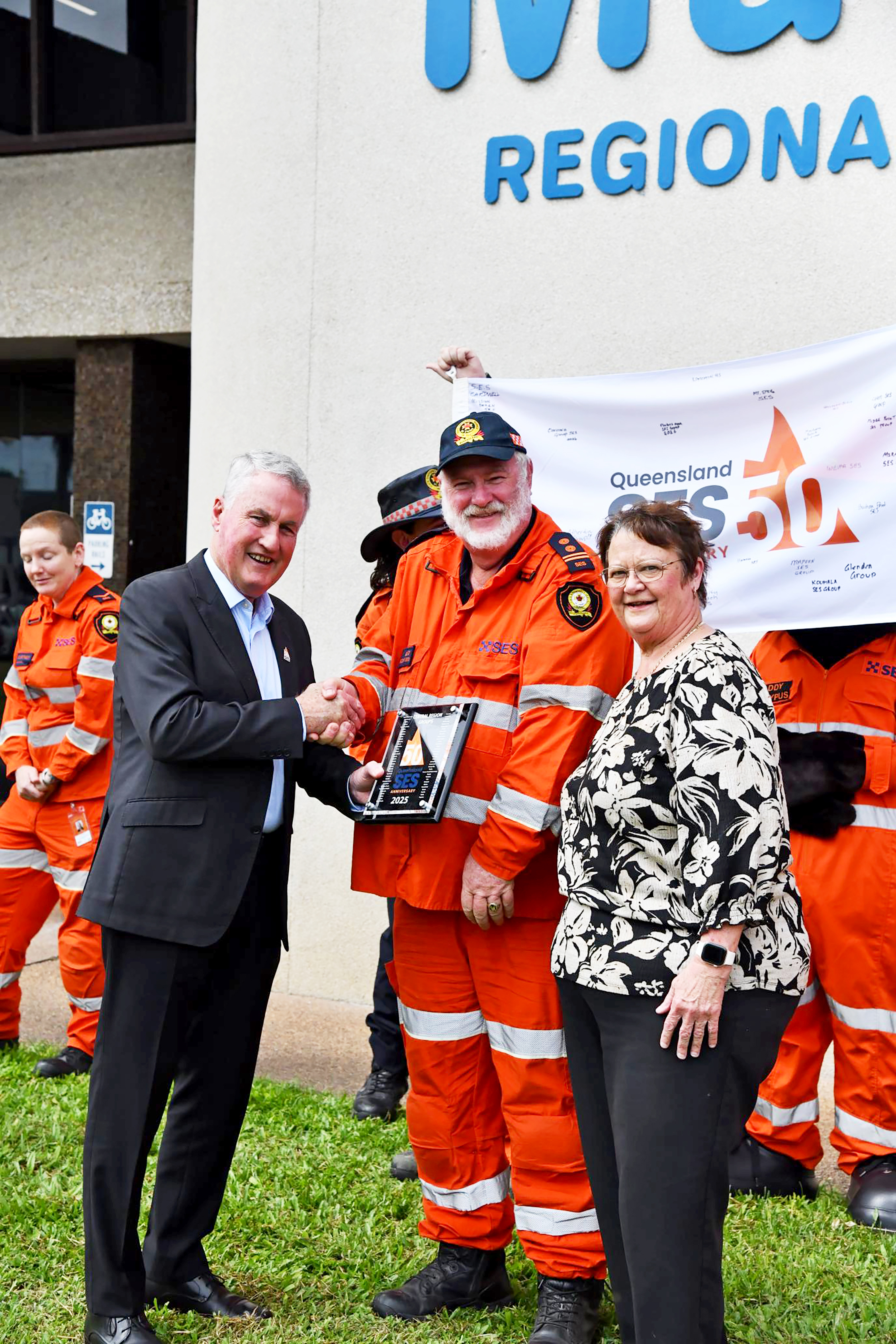
2 - SES Mackay Local Controller Alexander McPhee presented Mayor Greg Williamson and Deputy Mayor Karen May with a commemorative plaque of all the SES groups in the state and thanked council for its support.
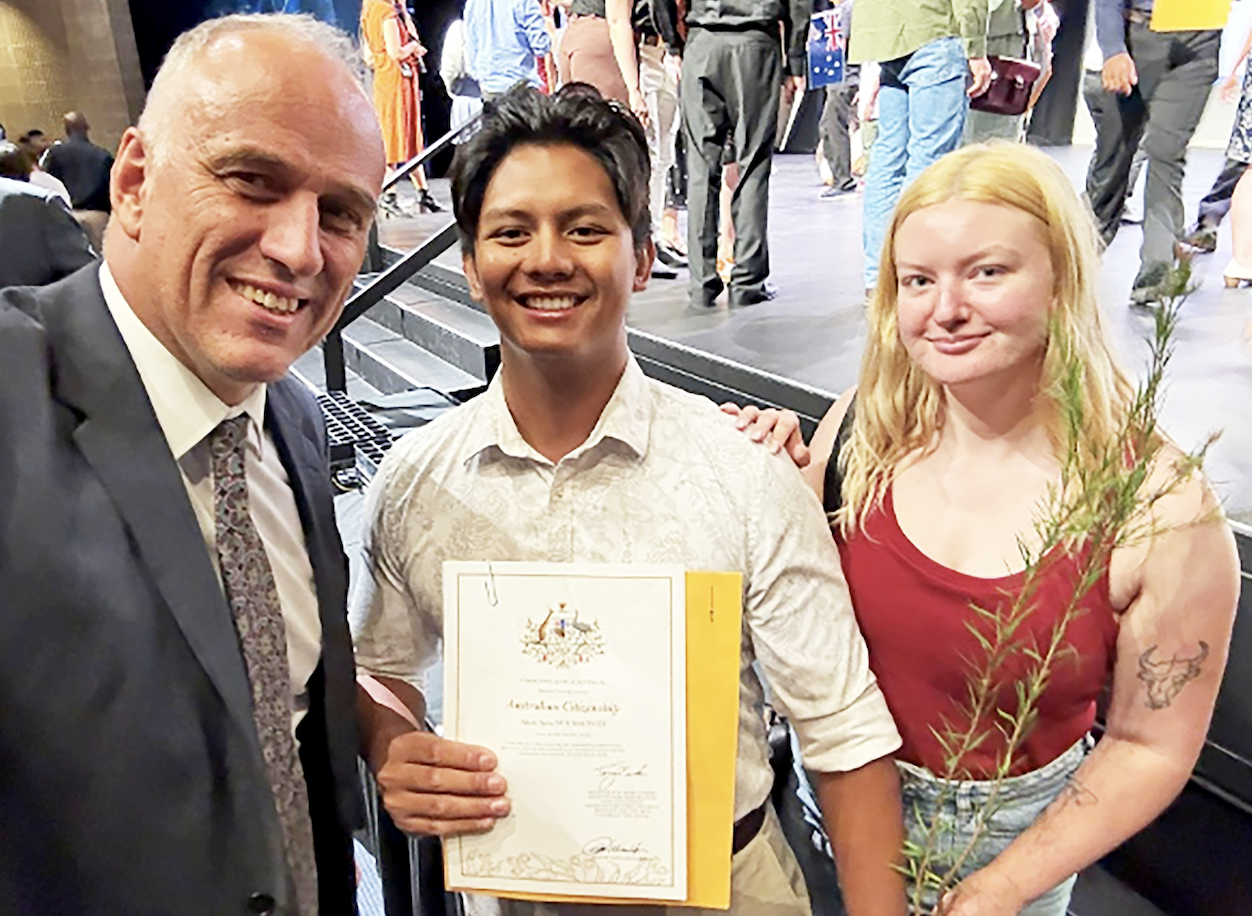
The last few weeks have been a whirlwind, with plenty happening both in the Mackay community and at Queensland Parliament. I am proud to see the Mackay events and sporting season for 2026 in full swing — from festivals and art exhibitions to thrilling sporting matches. As we get closer to the Easter school holidays, my priority — and Parliament’s — remains squarely on public safety.
One of Parliament’s key achievements has been Daniel’s Law — Queensland’s first public child sex offender register — which is already delivering results. Just ten weeks after launching in Queensland, nine reportable offenders have been identified, including two now facing charges for allegedly breaching reporting obligations. A further seven individuals not previously on the register have also been identified, prompting new police investigations.
We’ve also taken strong action through the Blue Card system across Queensland. So far, 543 people have been suspended under strengthened powers. This includes 269 prevented from starting child-related work and 274 who can no longer work with children. These changes close gaps, act earlier, and strengthen protections for families across our community.
On opportunities, Round 2 of the Women’s Career Grants has officially opened. With grants of up to $4,999, the program helps women who have been out of the workforce for six months or more cover the costs of returning to work — whether that’s training, study, or other practical support. For more information, visit: https://www.women.qld.gov.au/grants-sponsorship/women-career-grants
Closer to home, March also marks the wrap-up of my third year raising funds locally for Laps for Life — supporting youth mental health and suicide prevention. Many Mackay locals know I’m a passionate swimmer, and youth mental health is especially close to my heart, having previously served as a Crime Prevention Officer with the Queensland Police. Laps for Life allows me to combine my love of swimming with a greater cause. If you haven’t already, I encourage you to hit the pool, sign up, or support another local participant. I swim with the Master Swimmers Queensland Team, and every donation makes a real difference.
Donate at: www.lapsforlife.com.au/fundraisers/NigelDalton/laps-for-life-2026
These updates reflect a clear focus: safer communities and stronger opportunities. Whether it’s protecting children of any age, supporting families, or investing in the future of our workforce, the work being done in Parliament is focused on delivering practical outcomes where they matter most — right here in our region.
Publishers Indemnity. Any individual or entity that places advertising, supplies copy material, or submits editorial content to Core Life Publishing agrees and undertakes to ensure that all such material:- Does not infringe upon any copyright, trademark, or other intellectual property rights;- Is free from any content that could be considered defamatory, libelous, or slanderous;- Does not infringe upon any rights related to privacy or breach of confidence;- Contains no obscene, indecent, or otherwise unlawful material;- Complies fully with the Trade Practices Act and all other applicable laws, regulations, or statutes.Furthermore, by submitting or placing such material, these individuals or entities agree to indemnify and hold harmless the publisher, Core Publishing and Events Pty Ltd, and/or its agents from and against any and all investigations, claims, demands, liabilities, damages, costs, or judgments arising out of or in connection with the material provided. All material is believed to be accurate at the time of printing and remains the copyright of Core Publishing and Events Pty Ltd.
© 2026 Mackay and Whitsunday Life Pty Ltd.

