
Independently Owned, Locally Grown, Community Loved

OPINION PIECE from the office of Federal Member for Dawson Andrew Willcox There is no question that immigration into Australia is out of control. The government’s numbers are too high, and standards are too low. A sustainable migration program must consider our capacity to provide housing, healthcare, infrastructure and the essential services everyone relies on, and Australians must come first. But Labor’s decision to target Working Holiday Makers Visa holders is not the answer. These people filling vital gaps in our workforce are not the cause of Australia’s housing crisis. In many cases, they are living in accommodation provided by the very businesses that employ them. The National Farmers’ Federation has made the point that Working Holiday Makers generally stay in hostels, caravan parks or purpose-built on-farm accommodation. Resorts usually have on-site staff quarters. They are not the source of Australia’s housing shortage. So why is Labor making it harder for them to come here, when these workers fill genuine jobs that regional Australia holds? Working Holiday Makers fill approximately one in seven farm jobs nationally and are particularly important during peak agricultural periods, which for Dawson, it is right now! Farmers rely on these workers to plant, pick, pack and harvest the produce that ends up on Australian supermarket shelves. Having run one of Australia’s largest tomato farms, at times Working Holiday Makers made up more than 50 per cent of my workforce. Without them, much of our crop simply would not have been picked in time and rotted in the paddock. Some may say, why not employ the Australians who don’t have a job and are on “the dole”? Can I say, this does not work. Most farmers will employ Aussies over travelling backpackers, but many either don’t want to do the work or don’t turn up after the first day. Who picks the fruit or veggies then? Farmers are already warning that visa delays are leaving them without workers. The NFF says approvals that once took days are now facing processing times of up to three months, and this time frame can be the difference between harvesting a crop or losing it. That should concern every Australian already feeling the pressure at the supermarket checkout. The same problem is playing out in tourism. Across Dawson, Working Holiday Makers are an important part of the workforce supporting tourism and hospitality, particularly in the Whitsundays. They help fill shifts, work in hotels and restaurants, support tour operators and keep businesses running through their busiest periods. They also contribute to the local economy. They spend money on food, fuel, attractions and tours, supporting the small businesses that depend on a strong visitor economy. That is why tourism and business leaders across North Queensland are raising the alarm. They understand what happens when a regional business cannot get enough staff: opening hours are reduced, and services are cut, creating a downward spiral. We do need to reduce migration to sustainable levels. We need stronger integrity measures, and we need to crack down on rorts. But responsible migration policy means understanding which parts of the system are creating pressure and which parts are helping Australia function. Working Holiday Makers are not the problem. They are part of the workforce solution for regional. Australia. People have had a gutful of watching their standard of living go backwards. Groceries, fuel, housing and everyday expenses are already putting enormous pressure on families. The last thing Australians need is another reckless policy that makes it harder to produce food, harder to run regional businesses and harder for tourism operators to find the workers they need.
Read the full storySomeone sold a house in Sydney last week for $9 million less than they bought it for four or five years ago. The sellers had bought the property in Sydney’s eastern suburbs for $29 million and sold it for $20 million in a sale forced by their bank. I imagine the sellers are a little disappointed by the government’s decisions on negative gearing and capital gains tax and feeling pretty hurt by the increased interest rates. Australia’s interest rates are on the rise and are now sitting at levels not seen since 2011. Increased cost of living is hurting people around the country and interest rates are playing into that. But the impact of interest rates is not felt evenly around the country. The far-higher property prices mean people in the major cities suffer much more than regional areas with the rates increase. That is certainly not to say people in Mackay are unaffected by the cost of living; it’s just that the impact of interest rates increase on a $400,000 mortgage is much less than the impact on a $1m mortgage. There are other Mackay-specific factors that are in play when discussing the current housing market. The big factor is the role of coal in our economy. Most of the coal extracted and exported from our region is coking coal, which is used to make steel. The price of coking coal is around $280 a tonne, which is about 50 per cent up. Good activity in the coal market translates to good news for the Mackay economy, as it is an economic engine that other cities and regions just don’t have. Good activity in Bowen Basin flows throughout the Mackay economy; Paget workshops, transport, suppliers and related businesses all benefit. But so do other, non-mining-related businesses as they benefit from the general confidence and spending that goes on. The strong mining activity also means mines need to keep their staff levels up and that means more people moving to Mackay. Of course, Mackay is much more than a coal mining town but if the coal sector is going well those other areas definitely benefit. It is a confidence boost for Mackay people looking to get into the housing market and those wanting to upgrade or downsize. It also means continuing strong demand from people wanting to rent a property and it will be interesting to see what sort of activity that creates from investors. Investors have walked away from the big-city markets because they can no longer use negative gearing on established properties that do not have a sufficient yield to be positively geared. Negative gearing has never been a big thing in Mackay because our prices are lower and rental returns continue to be strong so many investors have a positively geared property. Around the country everyone is nervous about the state of play and the probability of more interest rate rises. But strong coal prices and an economy that is performing well mean Mackay might just be presenting an opportunity for buyers and sellers that doesn’t exist in other parts. I remember when national confidence was flying high and Mackay prices were going up significantly that many buyers were saying “I wish we had bought a while ago when the market wasn’t so hot”. I’m not armed with a crystal ball so I’m not here to tell you what is going to happen but I suspect there is a very good buying window right now for those looking for an opportunity.
Read the full story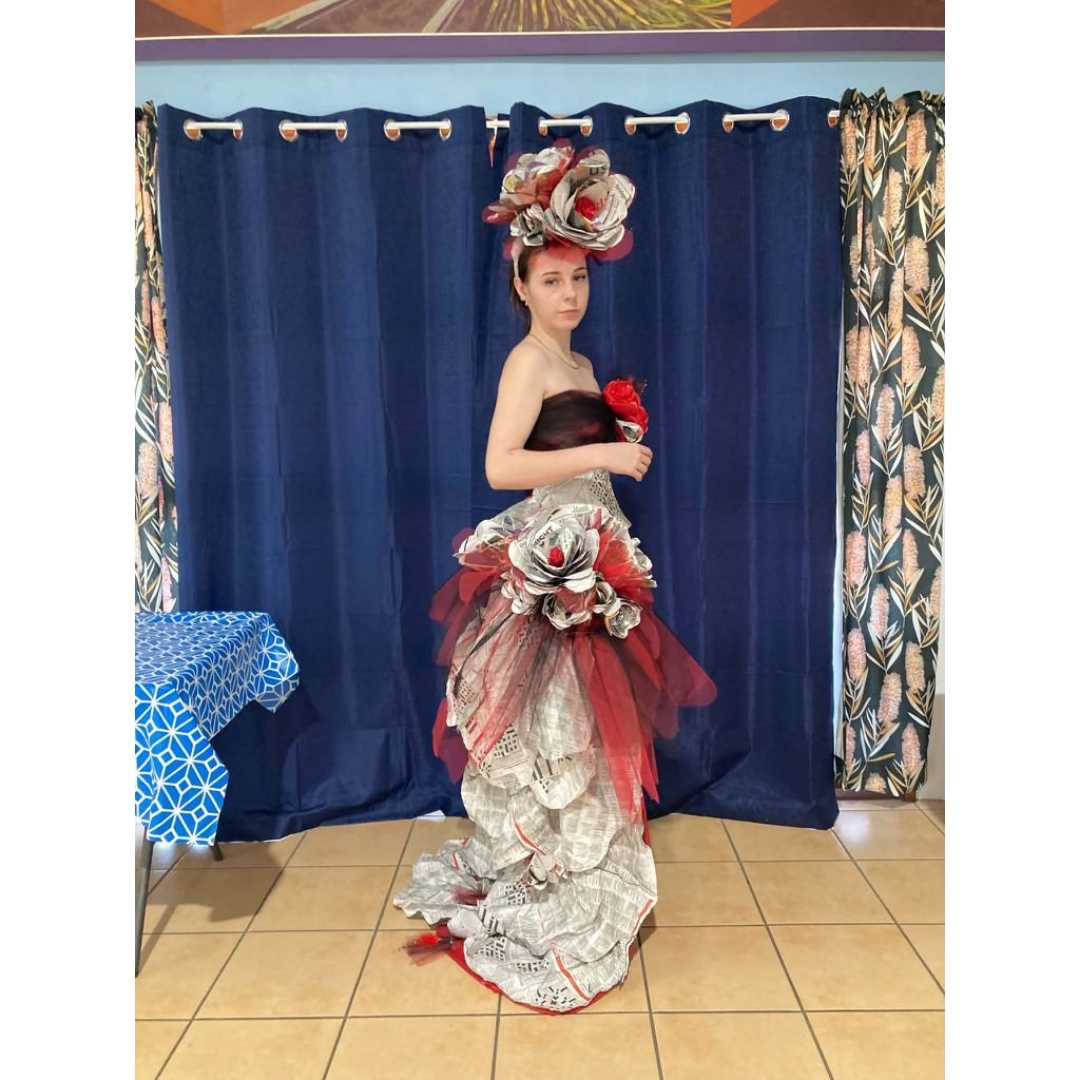
A local Mackay and Sarina based model has created a dress out of newspapers, including Mackay Life, for her upcoming pageant, representing her region and hometown on the runway as she vies for Miss Diamond International in Brisbane. Zoe Place will be competing this weekend in the three-day event, beginning this Friday 2nd October and ending on Sunday 4th October. The young model spent around a month creating her eco-fashion outfit, using old newspapers as the main material and transforming them into a bodice, skirt and flowers. Red elements were also incorporated into the design to give the dress a bold and glamorous pageant feel. Zoe said, “The entire concept was really about taking something that would normally be thrown away and turning it into something beautiful and meaningful.” Her eco-fashion creation will form part of a busy weekend in Brisbane, with the Miss Diamond International event including photo shoots, interviews, an eco-fashion show and the final pageant. Zoe has been preparing for the event by practising her strut and walking, preparing for interviews and getting comfortable in the different outfits she will wear throughout the weekend. Alongside her love of modelling, pageantry has also provided Zoe with a platform to raise awareness about causes close to her heart, including mental health, while fundraising for Beyond Blue. “Pageantry has given me more of a platform to combine my love for modelling with something that is really important to me.” “When I first started, I was more nervous about putting myself out there and worried about what others would think about me – but I’ve changed a lot through my journey in pageantry.” “Pageantry has also taught me that it’s not about how you look on stage. It’s about the person you are when you step off it.” “Every woman has their own unique journey and that journey is something we should all be really proud of.” “To me, it represents confidence, empowerment, kindness, and using your voice to make a difference.” Zoe said she was looking forward to meeting the other contestants, making new connections and creating memories. “I’m definitely looking forward to meeting all the new contestants and making new connections and creating memories that I will carry with me for a lifetime.” While Zoe hopes to eventually move to the city, her sights are set even further afield, with a dream of one day walking in New York Fashion Week. Mackay and Sarina local Zoe Place has created an eco-fashion dress from recycled newspapers, including Mackay Life, ahead of her Miss Diamond International pageant in Brisbane. Photos supplied
Read the full story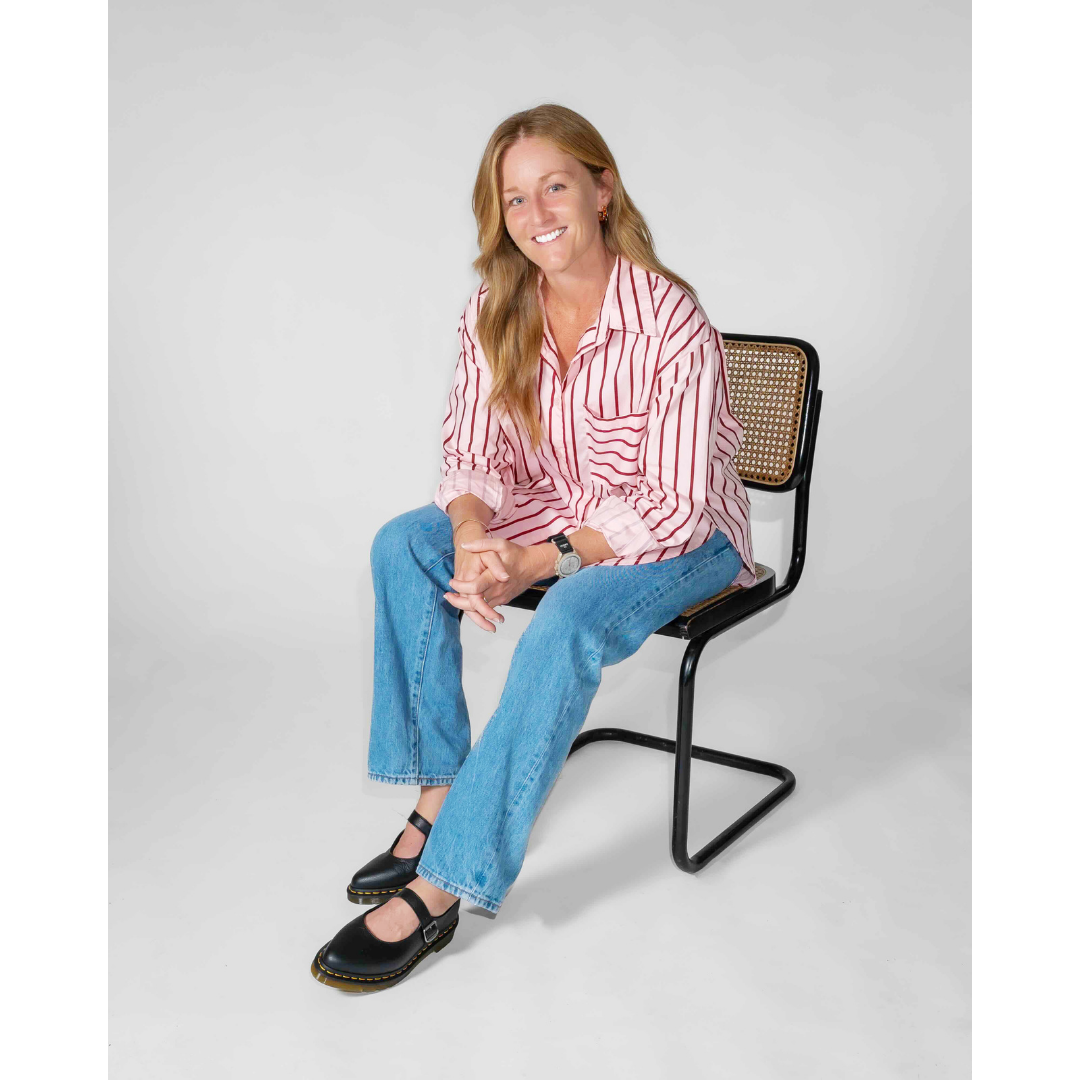
Trends, reels and the endless cycle of always wanting more has quietly bombarded the minds of countless social media users of all ages, but one former Mackay local has made it her mission to help others understand the effects of social media and find practical ways to break free from online addiction. Alexis Zahner is in Mackay over the next week to teach upcoming generations about social media and the effects it can have on the mind, particularly on identity, self-discovery, as well as the marketing strategies that get viewers hooked and influence their decisions. It is something Alexis knows first-hand can be a useful tool, but also a great disruption to authenticity and the world as we see and experience it. Alexis will hold a free meet and greet and book launch today, Friday 2nd October, at 5.30pm at the Mackay Surf Lifesaving Club, where she will give a talk and answer questions relating to her debut book, Real: Reconnecting to Yourself in a World of Likes and Lies. A former Mackay girl, Alexis spent the past 15 years working across business psychology, marketing and media, with her interest in social media influence beginning during her university studies at James Cook University in Townsville. Her own experience as a social media user, travel blogger and influencer eventually led her to question how much of her identity, decisions and values were being shaped by what she saw online. “The tipping point came for me about 3 years ago when I had this feeling that I couldn't separate influence from my own personal decision making,” she said. “I couldn't separate my own likes, dislikes, values, relationships from what I was being exposed to and being influenced by online.” “I found that I needed to take some time away from social media to recalibrate what was important to me and sort of reconnect and come back to myself.” Alexis said she understood the feeling of questioning who you are outside of social media. “I know what it feels like to live a life under the influence of social media and have that existential crisis of thinking to yourself, who am I? What do I like? What's the kind of life I want to live? and struggling to separate myself from influence.” Alexis is particularly passionate about reaching teenagers, who she says are in an important stage of identity development, and will share this message with Mackay high school students during her upcoming school talks. “Teenagers are really easily influenced by social media. So it's a really important age where we start educating them – not just on the mental health repercussions of things like social media and how it shortens their attention span, but how it actually influences who they become.” “If you're asking yourself these questions, it's not your fault. Social media is actually geared to create this impact on you.” Alexis encourages people of all ages to “start expanding beyond what you see on the platform.” “Dare to indulge in the things that you've always been curious about or things you used to love,” she said. “Don't be afraid to put the phone down to let yourself be curious and have fun.” What: Alexis Zahner's 'Real' Book launch When: 5.30pm Friday 2nd October 2026 Where: Mackay Surf Lifesaving Club Former Mackay local and author Alexis Zahner is returning home to share her experiences with social media and her debut book, Real. Photo supplied
Read the full story
.jpg)
A major safety upgrade to the Farleigh-Habana Road intersection has been confirmed as part of the State Government's commitment to delivering a better Bruce Highway for regional Queensland.
Premier David Crisafulli announced this week that planning and design work is already underway on the upgrade, with construction expected to commence next year. The project will improve safety, increase capacity and enhance heavy vehicle access at one of the region's key intersections.
Member for Whitsunday Amanda Camm welcomed the announcement, saying it was another important step towards improving safety and reliability along the Bruce Highway.
"The Bruce Highway is the lifeblood of regional Queensland, connecting our communities, supporting local businesses and helping people get home safely to their families," Ms Camm said.
"This investment will improve safety and traffic flow at a busy intersection used by local residents, freight operators and visitors travelling throughout our region."
The announcement comes alongside rectification works currently underway at Goorganga Plains following community concerns about road conditions on this section of the Bruce Highway.
Ms Camm thanked local residents who took the time to contact her office and provide feedback.
"Community feedback is incredibly important and helps identify issues that require attention," she said.
"After residents contacted my office, I raised these concerns directly with the Department of Transport and Main Roads and Transport Minister Brent Mickelberg, seeking urgent action and a plan to rectify the issues.
"As a result, microsurfacing works are now underway and progressing, weather permitting."
Ms Camm said while the immediate works were important, the long-term priority remained the delivery of the Goorganga Plains Floodplain Upgrade.
"The most important milestone has already been achieved, with funding secured for the floodplain upgrade and planning work progressing to deliver a more resilient section of highway for our region," she said.
"I know how important this project is to local residents and road users, and I look forward to keeping the community informed as key milestones are reached."
The Farleigh-Habana Road intersection upgrade and the future Goorganga Plains Floodplain Upgrade form part of the State Government's record investment in the Bruce Highway, with 52 projects progressing between Gympie and Cairns.
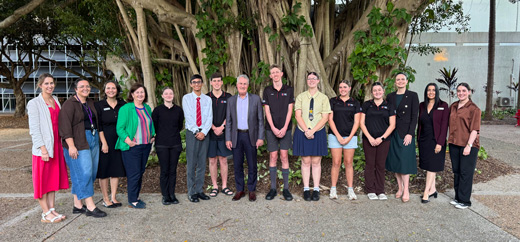
The outgoing Mackay Youth Council with Mayor Greg Williamson, councillors and council staff after completing an 18-month term representing young people across the region. Photo source: Mackay Regional Council
A group of passionate young leaders is leaving its mark on Mackay after completing an 18-month term dedicated to representing the voices of local youth and helping shape the region's future.
The outgoing Mackay Youth Council recently concluded its elected term, having spent the past year and a half engaging with young people, community organisations, policymakers and local leaders on issues that matter most to the region's next generation.
Mackay Mayor Greg Williamson praised the group's achievements, highlighting the council's role in ensuring young people have a voice in local decision-making.
“Mackay was the first local government in Australia to have an elected youth council as part of the Foundation for Young Australians Young Mayors program,” Mayor Williamson said.
“It’s been wonderful to see these passionate young people grow and develop over the last 18 months and to have them advocate for youth priorities in the region.
“Their ‘Recreation, Opportunities and Wellbeing’ document is a tremendous insight into what young people see as the future for our region.”
Throughout their term, the 12-member Youth Council participated in a range of community initiatives and events, including youth nights at local libraries, Rotary's Domestic and Family Violence awareness campaign, and community walk-and-talk sessions at the Mackay Regional Botanic Gardens.
For outgoing Youth Councillor Amelia Webber, the experience provided an opportunity to make a meaningful contribution while connecting with like-minded young people.
“I wanted to be part of something that helps make a difference in our community and it’s been a wonderful opportunity to make new friends and speak on issues that affect the youth of Mackay,” Amelia said.
“I’d definitely recommend that other young people think about nominating to be part of the next Youth Council.”
With the second Youth Council term now complete, attention is turning to the next generation of youth leaders, with nominations officially open for young people aged 11 to 17 who live or study within the Mackay Regional Council area.
Candidates will have the opportunity to campaign through their schools and community networks before a polling week takes place in local schools in October.
Mayor Williamson said the upcoming election would continue to strengthen youth representation across the region.
“With the term of the second youth council now complete, we are excited to be able to support yet another election to deliver the youth of Mackay a voice, via a democratically elected youth council,” he said.
For more information about the Mackay Youth Council and the upcoming election process, visit the Foundation for Young Australians' Young Mayors Mackay page.

Just moments before he was about to make the most difficult decision of his life, Tristram Creek's phone rang.
The 40-year-old Mackay resident had spent almost six years tethered to a dialysis machine, enduring a relentless series of health setbacks while waiting for the call that could save his life.
That Saturday, exhausted physically and emotionally, he had decided he could not continue.
Sitting through a five-hour dialysis session, Tristram had written thank you messages to the nurses who had supported him for years and prepared to tell them he would not be returning.
Then his phone rang.
“I had my phone in one hand, open to a note where I'd written thank you messages to all the nurses over the years, and the nurse call buzzer in my other hand,” he recalled.
The first call came from a private number. He ignored it. Moments later, the phone rang again.
“It was actually the transplant coordinator from Westmead Hospital telling me that they finally had a match.”
For Tristram, the moment felt nothing short of miraculous.
“If that isn't divine intervention, I don't know what is.”
Originally from Cairns and now living in Mackay, Tristram was diagnosed with diabetes at just 13 years old. By his early twenties, the condition had begun taking a serious toll on his kidneys.
“I knew my kidney function was declining, but I didn't make the lifestyle changes I needed to,” he said.
“It eventually got worse over time until I finally required dialysis, which I deeply regret not changing my lifestyle choices back when I had the chance.”
What followed was years of treatment, setbacks and uncertainty.
Before he could even be considered for the transplant waitlist, Tristram lost vision in his left eye and eventually had the eye removed. He endured major dental surgery, multiple infections and internal bleeding that required blood transfusions. At one point, doctors feared he may have a rare and potentially terminal disease called amyloidosis.
“During that time, I was planning my funeral and building a house at the same time,” he said.
“When the amyloidosis team finally gave me the negative result, it felt like another chance.”
Even after making it onto the transplant waitlist, the odds remained daunting. Because he required both a kidney and pancreas transplant, suitable donors were extremely rare.
“Finding an organ donor felt like a one in a million chance,” he said.
The call finally came earlier this year. The following day — which happened to be his late father's birthday — Tristram flew to Sydney and underwent a life-changing kidney and pancreas transplant.
Nearly six months later, he describes the transformation as extraordinary.
“I feel amazing. I have a new lease on life. My whole world has opened back up again and I see life differently now.”
Today, Tristram is focused on maintaining his health through exercise, medication and regular appointments with medical teams in Mackay and Sydney. He remains deeply grateful to the donor and family whose decision gave him a second chance.
And for anyone facing kidney disease or dialysis, his message is simple.
“Even when you feel like you can't fight anymore, you have to really dig deep and find the will to survive,” he said.
“Just don't ever, ever give up.”

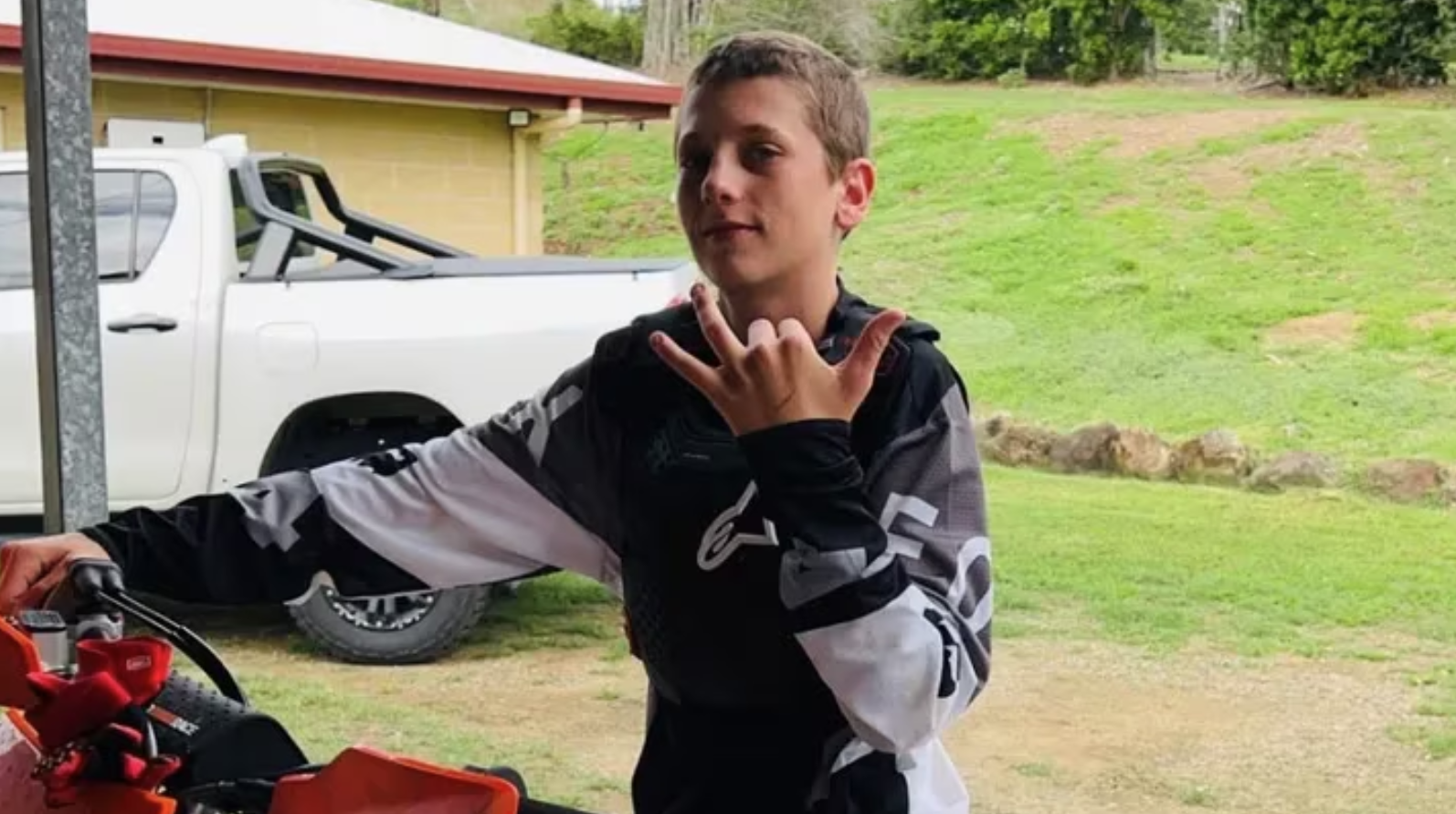
Brayden James McDonald, 14, is being remembered as a kind-hearted and much-loved young man, with the community raising more than $36,000 to support his family following the tragedy. Photo source: GoFundMe
More than $36,000 has been raised to support the family of Bloomsbury teenager Brayden James McDonald, who died following a motorcycle crash near his home last month.
The 14-year-old was riding a motorbike along Lindeman Drive at Bloomsbury, north of Mackay, about 2:30pm on 23rd May when he was involved in a collision with an oncoming van. Brayden suffered life-threatening injuries and was airlifted to Townsville Hospital, where he died the following day.
Queensland Police confirmed the driver of the van, a 42-year-old Bloomsbury woman, was not physically injured. Investigations into the crash are ongoing.
In the weeks since his passing, the local community has rallied around Brayden's family, with a GoFundMe appeal raising more than $36,500 from 262 donations to assist with funeral expenses and ongoing costs.
The fundraiser was established by family friend Tegan King, who described Brayden as a caring and unforgettable young man.
“Brayden was quirky, a good-natured, gentle boy with the kindest soul. He would give the shirt off his back if you needed it,” Ms King said.
“He had the kind of personality that made it impossible not to love him. In his 14 short years he lived life to its fullest and made the most of every moment.”
Brayden attended Calen District State College and was a member of the 122 Army Cadet Unit Mackay Region for more than a year.
In a statement published online, the cadet unit paid tribute to their young member.
“It is with a heavy heart that we share the passing of Brayden McDonald, a dedicated and spirited 14 year old Cadet who was not only part of our Unit for more than a year, but also a bright and cherished presence in our lives and friend to many,” the statement read.
The unit recently held a reflection and parade ground service to celebrate Brayden's life and support fellow cadets through the loss.
“We came together as a Cadet Unit to celebrate his life and find comfort in each other’s support, during a time of Reflection and a Parade Ground Service. In condolence, let us continue to keep Brayden and his Family in our thoughts and prayers.”
Those wishing to support the McDonald family can donate via the GoFundMe page at www.gofundme.com/f/brayden-james-mcdonald.

Mackay teenager Asher Hobbs has begun chemotherapy in Brisbane after being diagnosed with a rare form of bone cancer. Photo source: FAME Talent School
The Mackay community is rallying around 14-year-old dancer Asher Hobbs after she was diagnosed with a rare form of bone cancer earlier this year.
What began as a sore shoulder and a small lump quickly turned into a life-changing diagnosis, forcing Asher and her family to relocate to Brisbane for treatment.
Asher, a dedicated student at Fame Talent School and a familiar face in the local dance community, recently began chemotherapy at the Royal Children's Hospital.
Her diagnosis came as a shock to those closest to her.
“She said her shoulder was sore, and she said there’s a lump there. I touched it, and it was very hard, but it never occurred to me that it could be something like bone cancer,” said Nicole Batzloff, Asher’s boss at Laffos Bar & Pizzeria, in an interview with 7 News.
“My kids always say to me that Asher’s your favourite child, because she’s just so beautiful, honestly.”
The teenager's absence has left a noticeable gap at school, work and within the dance community. Asher had been set to perform a lead role in Fame Talent School's recent production of Madagascar, with fellow dancers finding special ways to honour her. One parent created bracelets featuring the letter "A", which performers wore in support during the production.
“She’s [Asher] going to be there in spirit with us,” said FAME Talent School dance teacher Dolly Louw.
In response to the diagnosis, FAME Talent School has launched a community raffle featuring more than $5,000 worth of prizes, with all proceeds going towards creating special experiences for Asher during treatment. When she is feeling well enough, funds will help provide outings to the movies, musical theatre performances, shopping trips and other activities designed to bring joy during a difficult time.
“It’ll [monetary donations] go directly to Asher to help because the whole family has had to relocate to Brisbane for a whole year so she can get treatment,” Ms Louw said.
In a social media post, FAME Talent School described Asher as “pure joy, light and hope”.
“Anyone who knows Asher knows she is pure joy, light and hope. She has the kindest heart, the brightest smile and a spirit that shines so bright – in true FAMESTAR style,” the post read.
“Even in the face of something so frightening, our girl is already showing incredible courage and strength.”
Asher’s mother, Renee Coscarella Hobbs, said the family had been overwhelmed by the support received from friends, family and the wider community.
“Thank you. We are so so grateful for all the amazing support and love we are receiving from everyone back home and here. This all makes each day a little easier. We love you all,” she said.
Asher now faces a long road ahead, but those who know her best say her strength, determination and positive spirit will continue to shine throughout her treatment journey. For those wishing to support Asher and her family during this difficult time, donations can be made through fundraising initiatives organised by FAME Talent School.
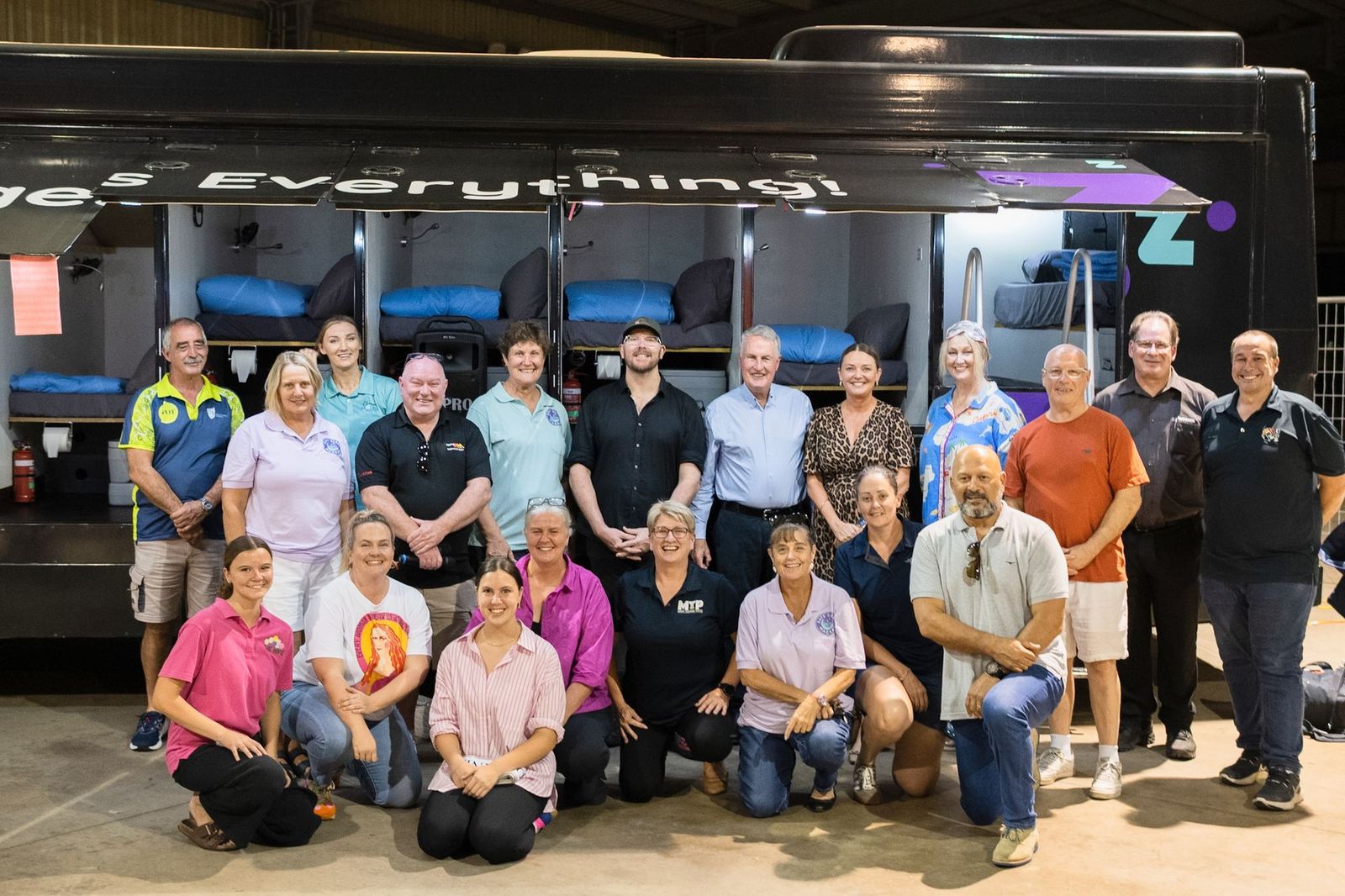
After years of planning from a dedicated team, the Chances Night Bus is in operation. Photo supplied.
Safe Sleep Mackay, together with operating partner Chances House, has announced a major milestone for the region, with the first Safe Sleeps successfully delivered on last Friday night.
Two guests were welcomed aboard the Chances Night Bus, marking the beginning of a new chapter in providing dignity, safety and support for people experiencing homelessness in Mackay.
After a three-and-a-half-year journey of planning, fundraising and community collaboration, the service has officially become a reality—an achievement organisers say belongs to the entire Mackay community.
Safe Sleep Mackay spokesperson Lisa Jamieson said the first night highlighted the importance of the service and the impact it can have on those in need.
“The look on our guests’ faces the next morning said everything. It made every challenge, every delay, and every bit of hard work over the past three and a half years completely worth it.”
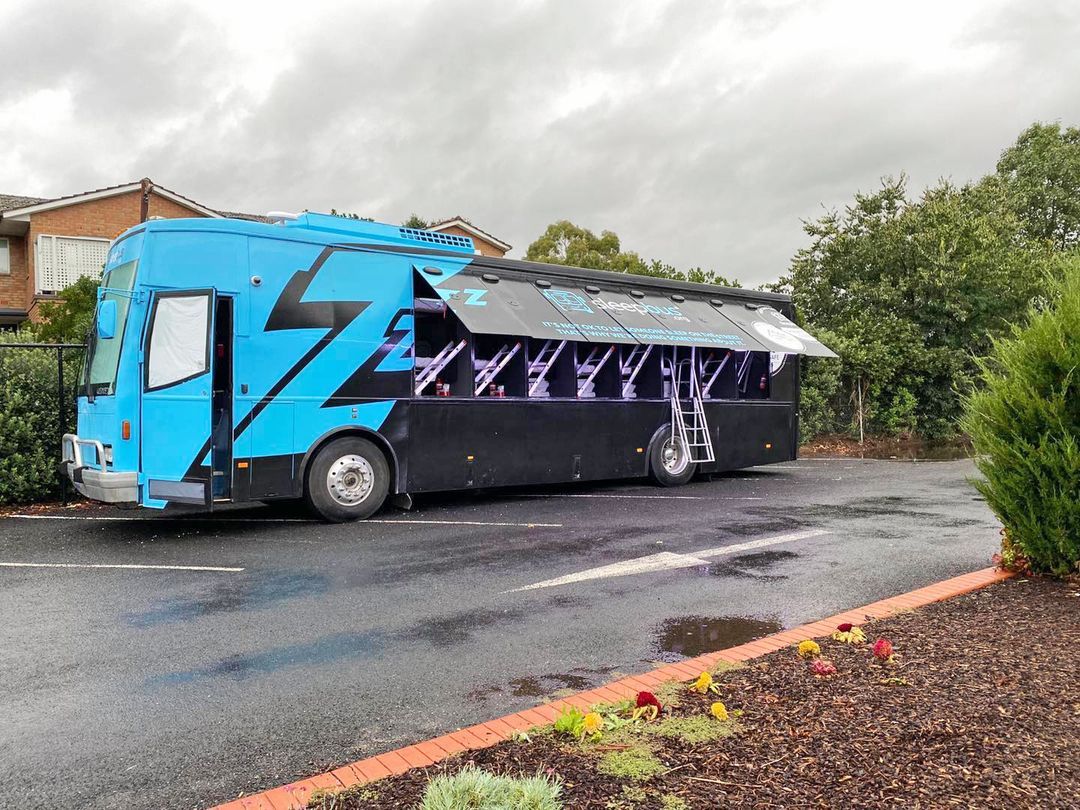
Safe Sleep Mackay extended its heartfelt thanks to everyone who contributed to bringing the project to life.
“We were only a handful of volunteers steering this project over the last three and half years but we felt the support of the Mackay community every step of the way. Through community donations, small business services offering in-kind support, and the contributions from community members, it kept us going and this is an achievement that belongs to the whole community,” Ms Jamieson said.
The Safe Sleep Bus, operated by Chances House as its Night Bus service, will return to operation on Friday, 12th June, with plans to establish a regular service. Initial operations will focus on volunteer training and refining procedures, with the goal of expanding to weekly Friday night services as more volunteers come on board.
Chances House CEO Kayleigh Brewster said the organisation was proud to be delivering a service that responds to growing community need.
“We are extremely proud to be operating this service for our community as every day we see an increase in people in need,” she said.
“This type of service has never operated in Mackay before, so we have proceeded cautiously making sure we have the correct procedures in place to ensure the safety of our guests, our volunteers, and the community. The service will start operating weekly every Friday night and if demand is there and more volunteers come on board, we will look at increasing the number of nights of operation.”
Community members are encouraged to continue supporting the initiative through volunteering, donations or by helping raise awareness. More information about volunteering is available at www.chancesmackay.org/ssm.
“Although it has taken us three and a half years to reach this point, this really is just the beginning. Together, we are creating safer nights and brighter mornings for those doing it tough in our community,” Ms Jamieson said.

Eimeo Local, Michael Fordyce has been recognized for handing out jewellery and spreading joy in the community. Photo source: Facebook
A local photographer was reduced to tears last week after an unexpected interaction during a routine photoshoot
Nicole Alexzandra, owner and director of Meadow and Mist Media, was in the middle of a family shoot near the end of Mango Av in Eimeo when an older gentleman with a walker approached her.
“(He) stopped and said hello…
“But THEN, he handed me a beautiful necklace that he made himself,” she recalled in a Facebook post.
“Yes, I bawled my eyes out and will never ever take it off! It truly made my day.”
Nicole took to Facebook later that night to track down the samaritan and return the favour with a free shoot. Facebook user Paul Fordyce left a comment on the post within hours, identifying the man as his uncle, Eimeo local Michael Fordyce.
“He is a ripper bloke,” Paul said.
“He has a lot of talents, one is making jewellery.”
Michael Fordyce, 92, is well known in the local community. He often jokes he’s the “oldest resident in Eimeo,” and made headlines in 2017 when he and his wife famously decorated palm trees on their property with lost thongs.
When Nicole asked how she could get in touch with him, Paul told her to simply “walk into his house.”
“Have a cup of tea and a yarn—Uncle Mick and Aunty Judy will be the best company you have had,” he said.
He warned, however, that they might not want their photo taken.

A beloved Proserpine salon has earned statewide recognition after being named one of Queensland's top hair and beauty businesses in the 2026 Queensland Day All The Best Awards.
Deb's Hair and Beauty secured second place in the Hairdresser/Barber category, placing the Proserpine business among the best in the state following a record-breaking public vote.
Deb's Hair and Beauty finished second only to Sarge's Barber on the Gold Coast, while Charlie Parrella Hairdresser in Brisbane rounded out the top three.
The result shines a spotlight on the quality of small businesses operating across the Whitsundays and reflects the strong support Deb's Hair and Beauty has built within the local community.
For Proserpine, the recognition places one of the town's longstanding local businesses firmly on the Queensland map.
The result comes as communities across the state celebrate Queensland Day and the people and businesses that help make the Sunshine State unique.
Premier Crisafulli congratulated all winners and finalists, saying their success reflected the pride Queenslanders have in supporting local businesses.
"Congratulations to every winner and to the thousands of Queenslanders who got behind them to take the crown in their category."

Photos sourced: Facebook
The Whitsundays community has grown a little larger and more diverse, with 65 people officially becoming Australian citizens at a record-breaking citizenship ceremony held at the Proserpine Entertainment Centre on Tuesday.

Whitsunday Mayor Ry Collins said welcoming new Australians was one of the most rewarding aspects of his role, describing the ceremony as a celebration of the many journeys that lead people to call Australia home.
"One of the very best parts of being Mayor is welcoming new Australians to our community," Mayor Collins said.

"What I love about these ceremonies is the diversity of stories they represent. Some of our newest citizens have only recently arrived in Australia, while others have been part of the fabric of our community for decades."
Among those taking the pledge were two residents who had lived in Australia for 60 years and 44 years respectively before becoming citizens.

Mayor Collins said it was particularly special to see familiar faces among the group, including a neighbour and members of the Whitsunday Regional Council family.

"We are proud to have you as part of our community and proud to call you fellow Australians," he said.
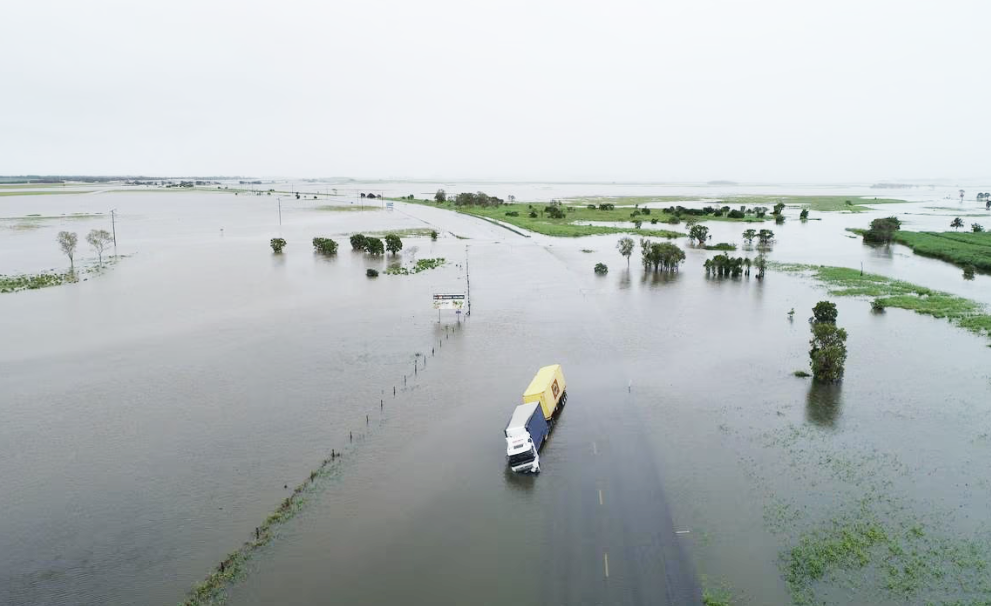
The Bruce Highway at Goorganga Plains remains under scrutiny as residents push for resurfacing works and long-term upgrades to improve safety and flood resilience. Photo source: Courier Mail
By Chelsea Ravizza
More than 700 people have signed a petition spearheaded by Proserpine resident Denise Hadley calling for urgent improvements to the Bruce Highway through Goorganga Plains between Proserpine and Bloomsbury.
Ms Hadley first raised concerns in May 2025, speaking publicly about the deteriorating condition of the road and the safety risks it posed to motorists, and exactly a year later, she launched a formal petition, urging the community to support her calls for action.
“We need action from local authorities to rectify the condition of Goorganga Plains [and] together, we can make our voices heard and ensure safe roads for everyone,” she said.
Over the past 13 months, Ms Hadley has continued to advocate for upgrades and liaise directly with the Department of Transport and Main Roads (TMR), describing the section of highway as dangerous and increasingly difficult to navigate. As part of her petition, she has called for the road surface to be resurfaced and for ongoing maintenance to ensure the highway remains safe for all users.
“It’s still a work in progress. I think we have achieved a lot of good stuff, [but] time will tell. We’ll fight the fight, and I will be the squeaky wheel until somebody listens to me.”
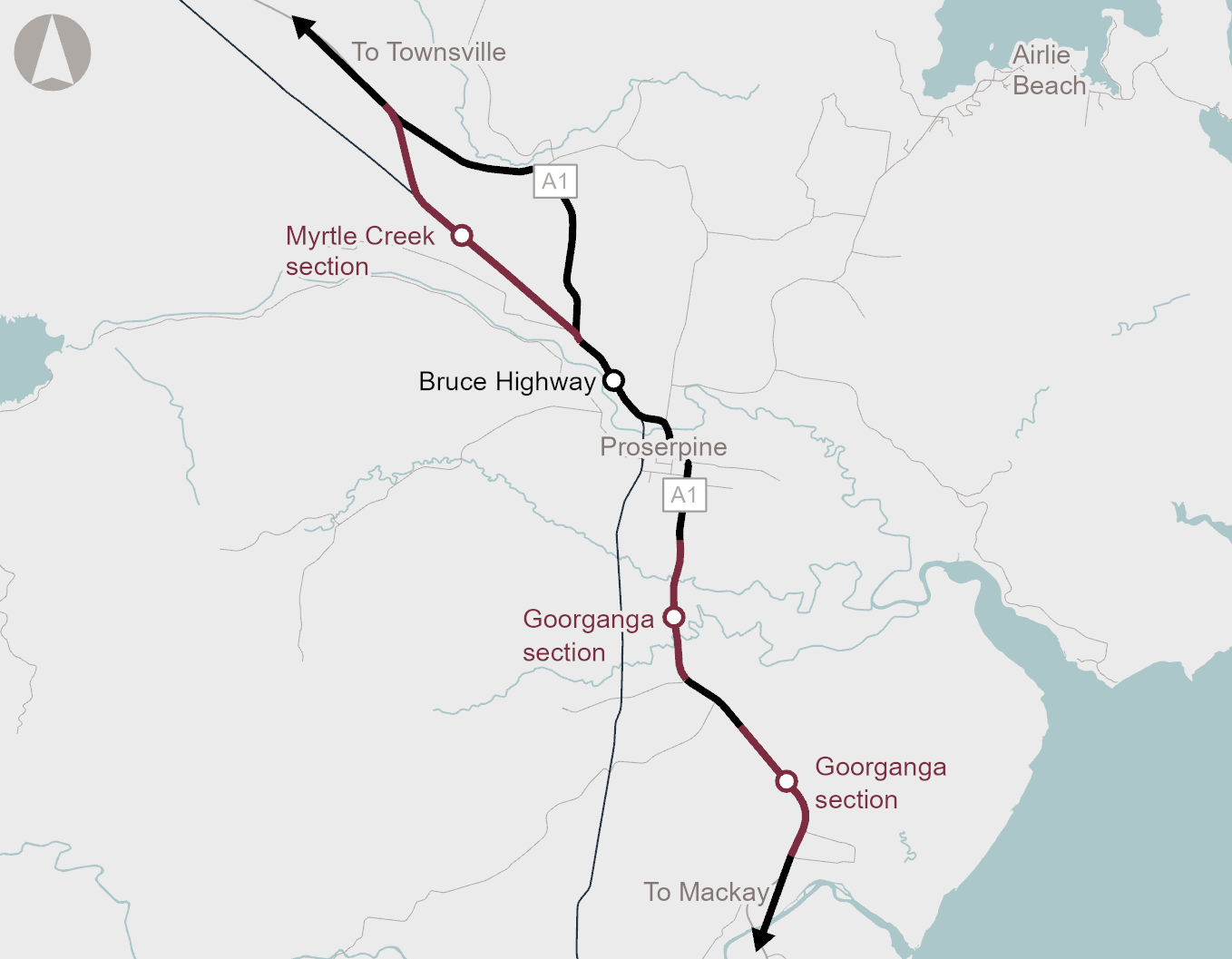
Initially announced in June 2024, the $470 million Goorganga Floodplain Upgrade is designed to improve flood resilience along the Bruce Highway between O'Connell River and Proserpine, while also delivering overtaking lanes to enhance safety and traffic flow. However, two years later, many motorists, like Ms Hadley, continue to raise concerns about the condition of the existing road surface.
TMR said it’s aware of community concerns regarding recent maintenance works at Goorganga Plains and reaffirmed its commitment to improving the condition of the Bruce Highway.
“Recent resurfacing works were impacted by unexpected rainfall, causing damage to part of the new surface,” a TMR spokesperson said.

“Priority repairs were completed under reduced speed limits to maintain safety and keep the highway operational, with final microsurfacing works scheduled for early June. The Australian and Queensland governments have committed funding to upgrade and improve flood immunity across the Goorganga floodplain, with planning underway for the Bruce Highway (Mackay-Proserpine) O’Connell River to Proserpine (Goorganga Floodplain) upgrade project.”
TMR said crews were applying two layers of micro-asphalt to improve ride quality, while overtaking lane upgrades would be delivered over coming months. Identified potholes have also been referred for priority maintenance. As part of longer-term plans for the Bruce Highway, a new section of road will be constructed adjacent to the existing alignment. The upgraded route will be built at a higher elevation and designed with flood immunity as a priority, improving reliability and safety during major weather events. TMR expects the project will be completed by 2032.
Whitsunday Regional Council welcomed planning for the jointly funded Goorganga Floodplain Upgrade and proposed overtaking lanes, describing them as important long-term projects aimed at improving safety, flood resilience and reliability along this critical section of the Bruce Highway.
A Whitsunday Regional Council spokesperson said council regularly received feedback regarding transport and road safety issues and recognised the importance of the Bruce Highway to residents, businesses and visitors.
“Whitsunday Regional Council is aware there has been ongoing community feedback and public discussion regarding conditions through sections of the Goorganga Plains area of the Bruce Highway, including concerns relating to ride quality, temporary line markings, traffic management and flood impacts following recent resurfacing works and weather events,” the spokesperson said.
Council assured it will continue advocating for infrastructure investment that improves connectivity, resilience and safety across the region.
Ms Hadley's campaign has also attracted the attention of Federal Member for Dawson Andrew Willcox, who said he had received a “steady stream of correspondence from deeply frustrated motorists regarding the state of Goorganga Plains” in recent months.
“Immediate, practical action is absolutely required to keep motorists safe while the major upgrade is finalised,” he said.
Mr Willcox said his advocacy for improvements at Goorganga Plains dated back to his time as Whitsunday Regional Council mayor and that he understood residents' concerns.
“The Bruce Highway is the absolute economic and social spine of North Queensland,” he said.
“Every single time the Goorganga Plain floods, the Whitsundays is completely cut off from Mackay, stalling freight, strangling tourism, and leaving regional families stranded without a safe diversion route. It isolates the north from the south, delaying critical shipments across the Queensland coast, costing millions of dollars in lost productivity.
“Building true flood resilience and safety into this corridor is one of the things I am most passionate about. It is the core driving force behind my longstanding Back the Bruce campaign, and it remains an unwavering priority for my time in government."
Mr Willcox also praised Member for Whitsunday Amanda Camm for her advocacy on Bruce Highway upgrades, including the Goorganga Plains overtaking lanes project.
“I have been in contact with Ms Camm to ensure that TMR addresses these immediate safety issues through the area,” he said.
“I will continue to use my platform in Canberra to fight for our Back the Bruce campaign, ensuring that when the Coalition forms government federally, we deliver the significant cash injection needed to get real investment for Dawson’s sections of the Bruce Highway.”
Ms Camm said she had also received feedback from residents and had sought an update from TMR.
“I am aware of the concerns being raised by local residents,” she said.
“The proposed Goorganga Plains Floodplain Upgrade remains an important project for the Whitsundays, and the Crisafulli Government remains committed to improving and upgrading the Bruce Highway for regional Queensland.”
Ms Hadley’s e-petition can be accessed via www.change.org/p/fix-goorganga-pains, and additional information regarding the Goorganga Floodplain Upgrade Project can be found via www.tmr.qld.gov.au.

Police are asking for information surrounding a fire that burnt two vehicles on Border Drive on June 4th. Photo source: Facebook
Police are investigating a suspicious vehicle fire at Cannonvale on 4th June.
Around 4.50am, police and emergency services were called to a Border Drive unit complex following reports of a vehicle on fire in a car park beneath the building.
Two vehicles were destroyed by the fire and were extinguished a short time later.
Two units sustained smoke damage.
All ten occupants of the units were evacuated and no one was physically injured.
Police are appealing to anyone with relevant information or vision to come forward.
A crime scene was declared at 6.25am, and investigations into the cause of the fire are ongoing.
If you have information for police, contact Policelink by providing information using the online suspicious activity form 24hrs per day at www.police.qld.gov.au/reporting.
Report crime information anonymously via Crime Stoppers. Call 1800 333 000 or report online at www.crimestoppersqld.com.au.
Quote this reference number: QP2601064871

Whitsunday Regional Council Mayor Ry Collins has raised concerns about proposed changes to national disaster recovery funding, warning reduced support could impact the region's ability to recover from future natural disasters. Photo supplied
Whitsunday Regional Council Mayor Ry Collins has joined growing calls for the Federal Government to reconsider proposed changes to Australia's Disaster Recovery Funding Arrangements (DRFA), warning the reforms could leave regional communities more vulnerable following natural disasters.
The proposed overhaul would reportedly reduce the Federal Government's contribution to disaster recovery costs from 75 per cent to a 50-50 funding split with state governments, while introducing standardised funding packages across the country.
Mayor Collins said while there were aspects of the reforms he supported, including efforts to streamline funding processes and reduce red tape, any reduction in support for disaster-affected communities should be approached carefully.
"I don't often comment on Federal or state policy decisions, but the Federal Government's proposed changes to disaster recovery funding arrangements have the potential to be a significant blow to communities across regional Queensland, including the Whitsundays," he said.
The Mayor pointed to the region's recent experience with Tropical Cyclone Koji, as well as previous flooding events and Cyclone Debbie, as examples of why disaster recovery funding remains critical.
"Recovery doesn't happen overnight and in some cases continues for many years," he said.
Mayor Collins argued disaster recovery funding should be viewed as an investment rather than a cost, highlighting the significant economic contribution made by regional Queensland.
"The Greater Whitsunday region is one of Australia's most productive regional economies, generating over $140,000 in GRP per person each year — almost double the national average," he said.
"When disaster strikes, recovery funding isn't charity. It is an investment in restoring the productive capacity of regions that help drive the Australian economy."
Queensland Premier David Crisafulli has also criticised the proposed changes, expressing concern about the potential impact on regional communities and local governments.
"The Federal Government's decision to overhaul disaster recovery funding sends a clear message they couldn't care less about North Queenslanders," Premier Crisafulli said.
"Nowhere in Australia is more disaster prone than here in the North, and we need and deserve support to recover from the inevitable natural disasters that will come our way."
The Premier said the changes had raised concerns councils could face significant financial pressure when rebuilding following major events.
Mayor Collins said regional communities already contend with higher costs, ageing infrastructure and long distances, and urged the Federal Government to reconsider any reforms that could reduce support.
"I respectfully ask the Prime Minister Anthony Albanese and the Federal Government to carefully reconsider any changes that would reduce funding support for disaster-impacted communities and ensure regions like ours are not left uncertain and wondering to what level they will recover when the next major event occurs," he said.

Volunteers are being sought to help bring Between the Tides to life at Airlie Beach this July, with locals invited to support the festival while enjoying a night of live music and cultural experiences.
Music lovers are being encouraged to get involved in one of the Whitsundays’ most exciting live music events, with volunteers now being sought for Between the Tides in Airlie Beach this July.
Presented as part of the QLD Music Trails: The Reef series, the one-day festival-style experience will transform the Airlie Beach Foreshore into a vibrant celebration of music, culture, art and community on Saturday, 4th July.
Set against the stunning backdrop of the Whitsunday coastline on Ngaro Country, the event will feature a stellar line-up of Australian artists including Boy & Bear, Jem Cassar-Daley, Mid Drift, Tjaka and Kaylee West.
Organisers are calling for volunteers to help make the event a success, offering locals the chance to be part of the action while supporting a major cultural event in the region.
Volunteer roles include greeting patrons, scanning tickets, handing out wristbands and assisting with merchandise sales throughout the afternoon and evening.
There are two volunteer shift options available, and once volunteers complete their shift, they’ll receive a GA18+ wristband allowing them to enjoy the live performances and festival atmosphere afterwards.
More than just a concert, Between the Tides promises a rich cultural experience featuring workshops, sand art, cultural performances and knowledge-sharing opportunities, alongside locally crafted food, drinks and art installations.
Organisers say volunteering is a great opportunity to meet new people, support live music and experience the event from behind the scenes.
Anyone interested in volunteering can complete the application form online at qldmusictrails.com/volunteer. For further information, email ticketing@qldmusictrails.com or call 07 3010 6600.
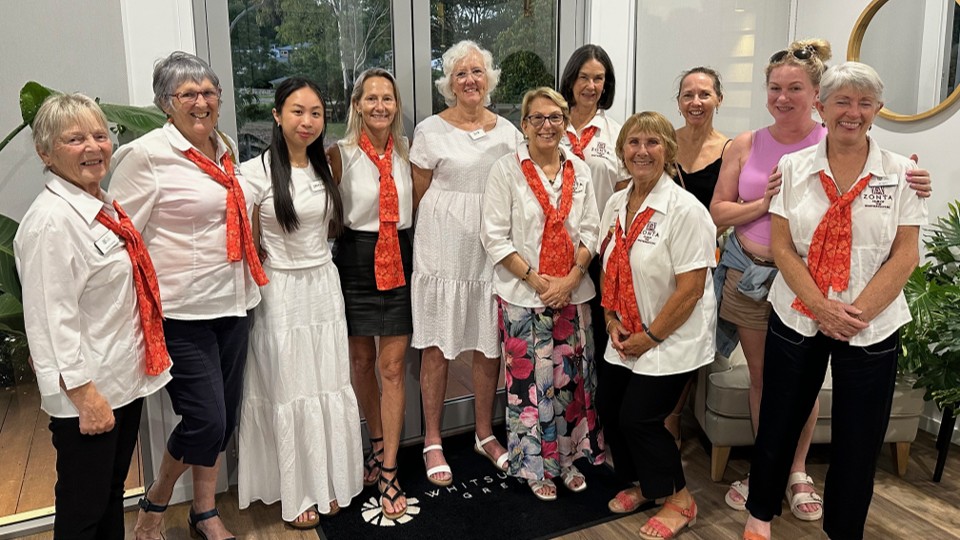
Zonta Club of the Whitsundays members continue their quiet, hands-on work supporting women and girls through community care, education and advocacy initiatives. Photo supplied
Behind the scenes across the Whitsundays, a dedicated group of local women continues to quietly support, uplift and advocate for women and girls throughout the community.
For Zonta Club of the Whitsundays, community service is not only about fundraising events and awareness campaigns — it is about practical support, meaningful connection and creating opportunities for women and girls to thrive.
From assembling pamper packs for women in refuge accommodation and sewing cushions and blankets for local hospitals, to supporting young women through education bursaries and leadership initiatives, the club’s work spans generations and reaches many corners of the community.
President Marlene Reiffel said some of the most rewarding moments for members come from seeing how much small acts of kindness can mean to someone experiencing hardship or uncertainty.
“In regional communities, people often support one another quietly,” Marlene said.
“Sometimes it is simply letting someone know they are seen, valued and supported that can make a real difference.”
The club also continues to support domestic and family violence awareness initiatives locally, while working alongside schools, community organisations and health services to strengthen support for women and girls across the region.
Like many volunteer organisations, Zonta has seen volunteering evolve significantly in recent years, particularly as women balance careers, caregiving responsibilities and increasing cost-of-living pressures.
Despite this, the Whitsundays community continues to show remarkable generosity and community spirit.
“Women still want to contribute and give back to their communities, even if life looks busier than it once did,” Marlene said.
“We are seeing more people volunteer in flexible ways, and every contribution matters.”
For regional communities like the Whitsundays, Marlene believes local connection remains one of the most powerful forms of support.
Initiatives focused on wellbeing, education, safety, leadership and community awareness continue to create lasting impact, particularly for women and girls who may feel isolated or unsupported.
The organisation also hopes younger women in the region see the value of community involvement and the importance of women supporting women.
“We want young women and girls to feel confident in themselves and their ability to make a difference,” Marlene said.
“There is incredible strength in community connection and in lifting each other up.”
While the Whitsundays is often celebrated for its beauty and lifestyle, Marlene acknowledged regional communities still face very real challenges including housing stress, mental health concerns, financial hardship and domestic and family violence.
“These issues absolutely exist locally, even if they are not always highly visible,” she said.
“Regional women can also face additional barriers when it comes to accessing support services, which is why strong local community networks remain so important.”
As the club looks toward the future, growing membership and welcoming more local women into the organisation is a key focus.
Women across the region who are passionate about community, connection and supporting women and girls are encouraged to become involved with Zonta Club of the Whitsundays.
“You do not need special experience to join,” Marlene said.
“Just a genuine desire to give back, connect with like-minded women and make a positive difference in the community.”
Zonta Club of the Whitsundays extends a warm invitation to any women interested in learning more about to the organisation to reach out via emailing zontaclub7@hotmail.com.
Contributed with thanks to Nikki Firmin, Zonta Club of the Whitsundays Head of Community and Corporate Partnerships.
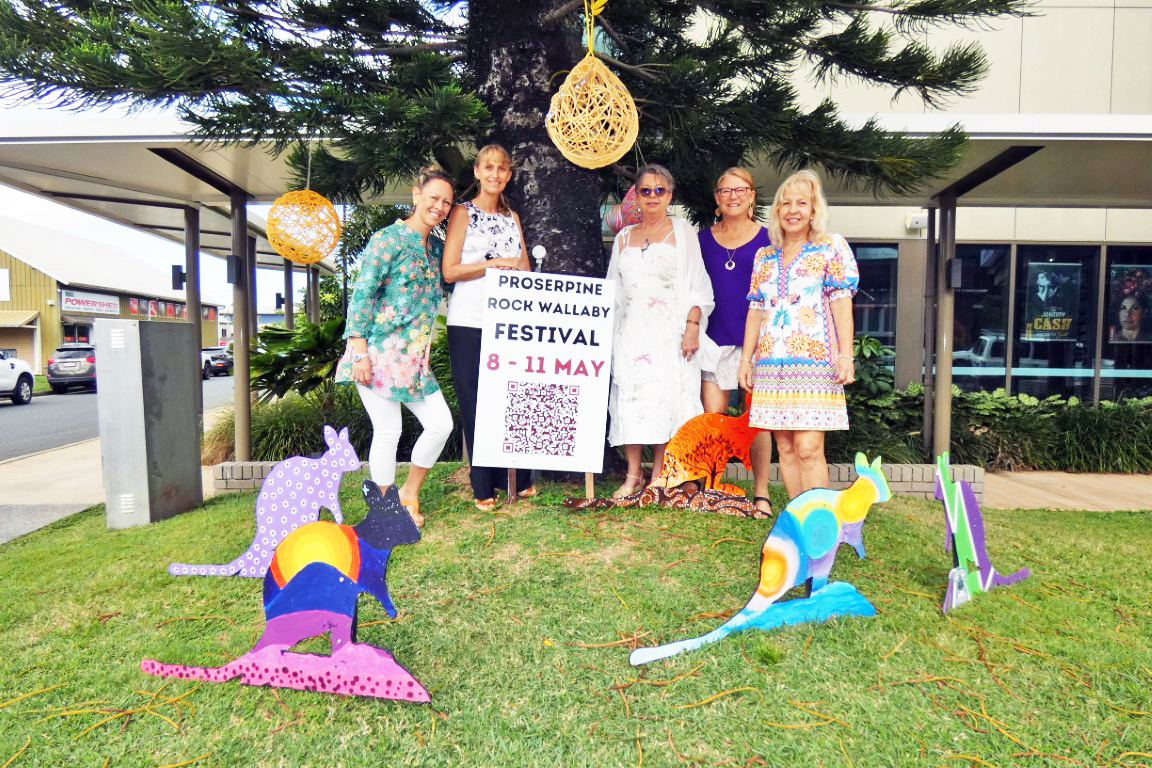
Leigh Skead founded the Proserpine Rock Wallaby Festival in 2025 to celebrate the region’s unique wildlife, local creativity and strong sense of community. Photo source: Proserpine Rock Wallaby Festival
By Chelsea Ravizza
When Leigh Skead realised that many locals were unaware of the existence of the Proserpine Rock Wallaby, she set out on the animals’ behalf, creating a festival that has since become a mark of community, conservation and local pride.
“The Proserpine Rock Wallaby is found nowhere else on earth. Nowhere,” Leigh said.
“Most people drive through Proserpine without knowing it exists, and that felt wrong to me. It felt like a story that needed telling — not just for the wallaby’s sake, but for ours.”
Founded in 2025, the Proserpine Rock Wallaby Festival quickly captured the community’s imagination, earning Community Event of the Year at the 2026 Whitsundays Regional Council Australia Day Awards and establishing itself as a vibrant celebration of local wildlife, creativity and community spirit.
Endemic to the Whitsundays, the Proserpine Rock Wallaby (Petrogale persephone) has inhabited the region’s rocky landscapes for thousands of years and has also been the focus of significant conservation efforts, including a Queensland Parks and Wildlife Service recovery program that saw more than 1,200 wallabies translocated from Hayman Island to mainland habitats between 2014 and 2017.
For Leigh, the festival’s impact extends far beyond a single weekend of celebrations – her aim is to spread awareness across the state to protect the native species.
“You cannot protect what you do not know exists,” she said.
Through initiatives such as the festival’s art exhibition and Proserpine Rock Wallaby Art Trail, visitors of all ages are encouraged to learn about the species, with families exploring the town’s wallaby sculptures and children gaining a deeper understanding of the animal’s significance to the region.
Leigh said conservation efforts in regional Queensland often rely on the dedication of a small number of wildlife officers, volunteers and community advocates, making public support and awareness crucial.
“Every region has beautiful wildlife, but the Proserpine Rock Wallaby carries our name. It belongs to us in a way that nothing else does,” she said.
“It was named for this place. It evolved here. It cannot be found anywhere else on the planet. That is an extraordinary thing to be the custodians of. A community that knows and celebrates what makes it unique is a stronger, more connected, more resilient community. The festival felt like the way to bring those two things together.”
In the festival’s inaugural year, more than 1,200 people from across the Whitsundays and beyond attended, with many leaving with a newfound appreciation for Proserpine and its unique wildlife.
Leigh’s most memorable moments include watching residents from local aged care facilities enjoy the artworks and seeing children confidently explain the significance of the Proserpine Rock Wallaby to their families after learning about the species through the festival.
“That’s the most rewarding part; watching people fall in love with Proserpine,” she reflected.
“Not the logistics or the grant applications or the planning, but those moments when the community recognises itself in what has been created.”
With the festival continuing to grow, a permanent Art Trail established throughout the town and plans for an expanded event in 2026, Leigh hopes the Proserpine Rock Wallaby will become a symbol of the Whitsundays and inspire greater environmental awareness for years to come. She also hopes the festival encourages more people to become involved in shaping their community’s future, and invites anyone interested in supporting the event to reach out to her via emailing prwf2025@gmail.com.
“The festival is built on community,” she said.
“It needs more hands, more hearts, more people who love this place and want to invest their time in something that will outlast all of us.”
Publishers Indemnity. Any individual or entity that places advertising, supplies copy material, or submits editorial content to Core Life Publishing agrees and undertakes to ensure that all such material:- Does not infringe upon any copyright, trademark, or other intellectual property rights;- Is free from any content that could be considered defamatory, libelous, or slanderous;- Does not infringe upon any rights related to privacy or breach of confidence;- Contains no obscene, indecent, or otherwise unlawful material;- Complies fully with the Trade Practices Act and all other applicable laws, regulations, or statutes.Furthermore, by submitting or placing such material, these individuals or entities agree to indemnify and hold harmless the publisher, Core Publishing and Events Pty Ltd, and/or its agents from and against any and all investigations, claims, demands, liabilities, damages, costs, or judgments arising out of or in connection with the material provided. All material is believed to be accurate at the time of printing and remains the copyright of Core Publishing and Events Pty Ltd.
© 2026 Mackay and Whitsunday Life Pty Ltd.
