
Independently Owned, Locally Grown, Community Loved

Three artificial intelligence (AI) initiatives are part of council's new budget to be adopted next week. These initiatives are the latest proactive steps from council to help mitigate significant financial pressures while continuing to deliver reliable, high-quality services to the community. Mayor Greg Williamson said the 2026/27 Budget reflected both the challenges facing local government and council’s commitment to modern, efficient service delivery. “Like many councils across the country, we are facing rising costs and reduced external funding,” he said. “Our focus is on finding smarter, more sustainable ways to deliver services without compromising quality for our community.” Council has seen a startling increase in a costs over recent years, including: An additional $665,000 increase in waste service costs due to reduced Queensland Government Waste Levy Subsidy and higher levy fees. A $1.1 million increase in waste expenses in the previous budget. A $5.92 million rise in depreciation costs this year alone. A $6 million shortfall from decreased Federal Assistance Grants in this budget contributing to a total reduction of more than $27 million in Financial Assistance Grants funding since 2016. An estimated $3 million annual increase in fuel costs. These pressures highlight the ongoing challenge of balancing affordability for residents with the real cost of delivering essential services. To help offset these impacts, council is investing in practical, targeted AI solutions that improve efficiency and reduce operating costs. A key initiative is the introduction of a new after-hours digital assistant, LUNA, which will operate from 4.30pm to 8.30am daily and all weekend from July 1. Replacing a previous afterhours model which used an outsourced, third-party call centre, LUNA will provide consistent, auditable responses using council-approved information. It will improve how afterhours calls are triaged, especially urgent and emergency enquiries, and will allow routine requests to be handled without delays or manual intervention. The transition follows changes in the external provider market and is expected to deliver about $80,000 in annual savings, while maintaining service quality and improving response consistency. Mayor Williamson said this initiative demonstrated council’s commitment to innovation while managing costs. “We’re using proven technology to deliver services more efficiently while maintaining the high standard our community expects,” Mayor Williamson said. Council is also expanding AI use in key service areas to address increasing demand and resource constraints. In Development Planning, automation of high-volume, low-complexity administrative tasks will reduce processing backlogs and allow skilled staff to focus on more complex work. A similar outcome will be achieved by using Agentic AI to enhance internal corporate services, allowing council’s staff to tackle more complex issues. This will help council maintain service levels despite workforce and cost pressures. Mayor Williamson said council was adopting a scalable approach to AI, building on existing systems to deliver improvements across multiple service areas rather than one-off solutions. “This approach ensures responsible and sustainable adoption of new technologies,” he said. “By reducing repetitive manual work and improving consistency, we can better manage costs while maintaining strong governance and oversight.” While efficiencies from these initiatives will be realised progressively, council’s immediate focus is on improving reliability, reducing inefficiencies and supporting a sustainable workforce model. These actions form part of council’s broader commitment to ensuring services remain efficient, accountable and future-ready, even as financial pressures continue to grow. Mayor Williamson said innovation would be key to navigating future challenges. “Innovation is essential to navigating the challenges ahead. By investing in smarter ways of working now, we are helping protect the services our community relies on into the future while putting downward pressure on rate rises.” Photo source: Mackay Regional Council
Read the full story
Set on the elevated hillside of this 21-acre property, the beautifully crafted, fully airconditioned residence enjoys a breathtaking north-facing 27m x 4.2m covered deck, offering ample room for entertaining or peaceful contemplation while taking in the stunning ever-changing vista. A large covered tiled patio adjoins the deck and living area, creating additional outdoor space overlooking the firepit and orchard. The Property At A Glance Spacious open plan living, dining and kitchen area with central fireplace, opening onto two stunning outdoor spaces Modern galley-style kitchen with stone benchtops, induction cooktop, rangehood, pyrolytic self-cleaning oven and dishwasher Media room with projector, with potential to serve as a fourth bedroom Three generous airconditioned bedrooms, including the master suite with walk-in robe and ensuite Modern family bathroom with shower over bath and separate toilet Laundry with excellent storage and external access Airconditioning and ceiling fans throughout North-facing covered hardwood deck, measuring 27m x 4.2m, with stunning views West-facing 9.5m x 6.5m tiled patio overlooking the firepit and plentiful orchard The home is set within a fully fenced house yard, complete with a secure electric front gate at the road. There is an abundance of water across the property, including four dams, a bore with solar-operated submersible pump (not currently connected), three rainwater tanks with a combined capacity of 62,000L, and town water to the residence. Water is also plumbed to the orchard, stables and other areas throughout the property. Additional features include fully covered walkways connecting the carport to the home, wireless NBN and full mobile signal coverage. Infrastructure And Improvements 7m x 7m carport with electric roller door at the home 14m x 7m high-clearance shed with four roller doors and service trench Adjoining 12m x 6m tool shed Stables and pig pens A lush and abundant orchard with avocados, citrus and tropical fruits, along with a well-established beehive Optional machinery includes a Fiat 750 tractor with slasher and rotary hoe, 2000 SE5 backhoe, Hustler 54" zero turn ride-on mower, assorted tools and other plant and equipment. This stunning property is a true gem in the heart of the beautiful Pioneer Valley, offering the opportunity to settle in, relax and enjoy, or get creative and explore the endless possibilities on offer. Gargett is located in the Pioneer Valley, just 15 minutes from the Finch Hatton Mountain Bike Trail and the beautiful Finch Hatton Gorge. The local Gargett Store is only a short drive away, while the nearest shopping centre is 20 minutes to Marian and 50 minutes to Mackay. It is also an easy drive to the Bowen Coal Basin, Airlie Beach and The Whitsundays, with ample opportunities nearby for fishing, crabbing, prawning and boating. Rates: Approx. $1660 per half year Zoning: Rural Price: $1.6M Block Size: 8.88 hectares (21.75 acres) Builder: Brad Kirkpatrick, 2015
Read the full story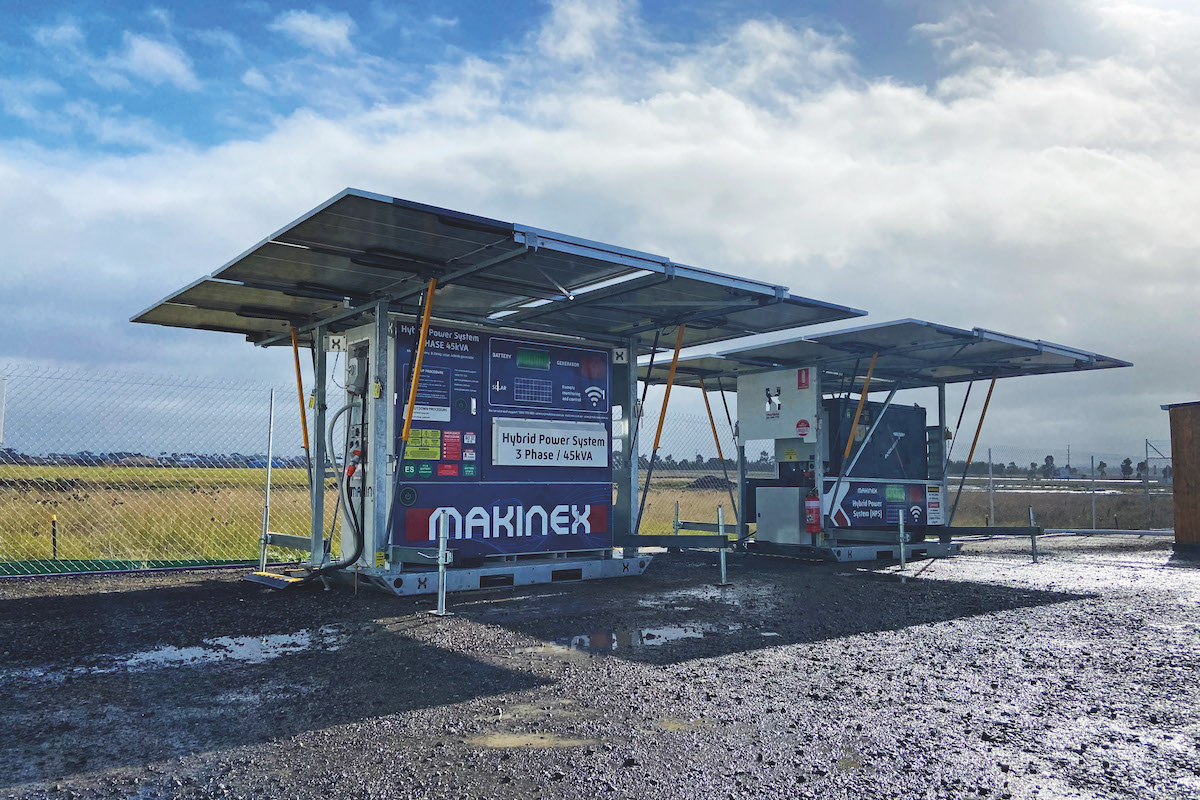
Makinex Renewables is setting an ambitious target, saving 100 million litres of diesel in five years. In an industry long reliant on traditional diesel generators, the Australian-made and owned company is helping reshape how remote and off-grid operations power their sites. Focused on Hybrid Power Systems, Battery Energy Storage Systems and deployable solar arrays, Makinex Renewables is working with customers to lower fuel costs, reduce emissions and improve operational efficiency, while maintaining the dependable power their operations require. “The 100 million litre target gives us a clear and measurable objective to work towards while highlighting the impact renewable energy solutions can have across industries that traditionally rely on diesel power,” the company said. “It’s a goal that keeps us focused on developing practical solutions that deliver real-world results for our customers.” Designed for businesses operating in remote environments, Makinex Renewables’ modular systems can be deployed as standalone units, integrated together, or incorporated into existing site power setups. The company’s solutions are already delivering measurable results in mining. Following a trial installation, a mine site adopted Makinex Renewables’ Hybrid Power System and additional solar arrays, reducing generator runtime from 24 hours a day to approximately six to seven hours. Since the HPS45 was deployed in February, the site has cut generator fuel use by 125 litres a day, delivering annual diesel savings of around $91,000 and projected savings of $640,000 over the site’s seven-year life. Brad Cliff, Director of Generator Services Australia, said the project highlighted the benefits of continuing to challenge traditional ways of thinking and finding better solutions to longstanding industry challenges. To learn more about Makinex Renewables’ solutions, visit the team at the Queensland Mining and Engineering Exhibition in July.
Read the full story
Most Reverend Daniel Meagher, the 11th Bishop of the Roman Catholic Diocese of Rockhampton, made his first visit to St Patrick's College on Wednesday, beginning the day alongside students and staff at the College's Brekky Van outreach service. The visit provided an opportunity for Bishop Daniel to experience the College's commitment to living its Catholic values through service to the wider community before officiating the blessing and official opening of newly completed building and refurbishment works. During the ceremony, Bishop Daniel addressed those in attendance. “We really are here to pray and bless the students and teachers who will use the buildings,” he said. The redevelopment has delivered contemporary learning spaces designed to support learning, wellbeing and faith formation while reflecting the College's commitment to providing high-quality educational opportunities. Assistant Principal: Mission, Mrs Andrea Crocker, said the occasion was a proud moment for the College community. “We’re finally getting to showcase our wonderful new facilities and the way the hard work of so many different people has come to fruition,” she said. The blessing and opening marked the culmination of years of planning and investment, with the new facilities set to benefit Mercy Campus students for years to come. Photo supplied
Read the full story

Here’s a fascinating piece of Great Barrier Reef trivia. Have you ever wondered how long marine animals actually live? From turtles and whales to jellyfish and corals, Reef residents span an extraordinary range of lifespans — from just weeks to thousands of years.
Some creatures live fast and disappear quickly, while others quietly persist through centuries of environmental change. Let’s explore the ages of some of the Reef’s most iconic inhabitants.
Sea turtles
Sea turtles are among the Reef’s longest-lived animals, generally surviving for 50 to 100 years. Of the six species found on the Great Barrier Reef, green turtles and leatherbacks may live up to 80–100 years, while loggerhead, olive ridley, hawksbill and flatback turtles typically average 50–60 years. Their slow growth and late maturity make them especially vulnerable to human impacts.
Saltwater crocodiles
Saltwater crocodiles are remarkable for their longevity and resilience. They exhibit negligible senescence, meaning they show few typical signs of ageing such as declining fertility or physical weakness. These apex predators can live for 60 to over 100 years and may continue growing throughout their lives. They can also survive months without food.
Humphead Māori wrasse
The Humphead Māori wrasse (Cheilinus undulatus), one of the Reef’s largest bony fish, typically lives for at least 30 years, with some individuals estimated to reach 50 years. Females may live longer than males, and their slow growth makes populations vulnerable to overfishing.
Humpback whales
Humpback whales generally live for around 50 years, but scientific studies—using earwax analysis—suggest some individuals may live over 90 years. They reach sexual maturity between 5 and 10 years and may migrate, mate and calve for decades. Older whales are thought to play an important role in guiding younger animals during migration.
Coral colonies
Coral colonies are among the longest-living animals on Earth. While individual coral polyps live only 2–3 years, the colonies they form can survive for thousands of years. Some deep-sea corals exceed 4,000 years in age. A black coral (Leiopathes) specimen was estimated to be around 4,270 years old, dating back to the time of Ancient Egypt.
Gobies
Gobies are small Reef fish with short lives, typically 1 to 4 years, although lifespan varies by species. The pygmy goby (Eviota sigillata) holds the record as the shortest-lived vertebrate known, surviving just 59 days. Larger species, such as engineer gobies, may live for over 10 years.
Dolphins
Dolphins usually live 20 to 40 years, though bottlenose dolphins can reach 60 years or more. Many wild individuals regularly live into their forties, with females often outliving males.
Jellyfish
Most jellyfish live for 3 to 12 months, and some species survive only weeks. The notorious box jellyfish typically lives for less than one year, with its adult stage lasting 3–12 months.
From tiny gobies to ancient corals, the Great Barrier Reef is home to animals living on vastly different timescales. Protecting the Reef means protecting not just species, but lifetimes — some stretching far beyond our own.
Contributed with thanks to Tony Fontes
Green Sea Turtle
Photo source: Tony Fontes
The Government is getting on with their plan for Queensland’s future.
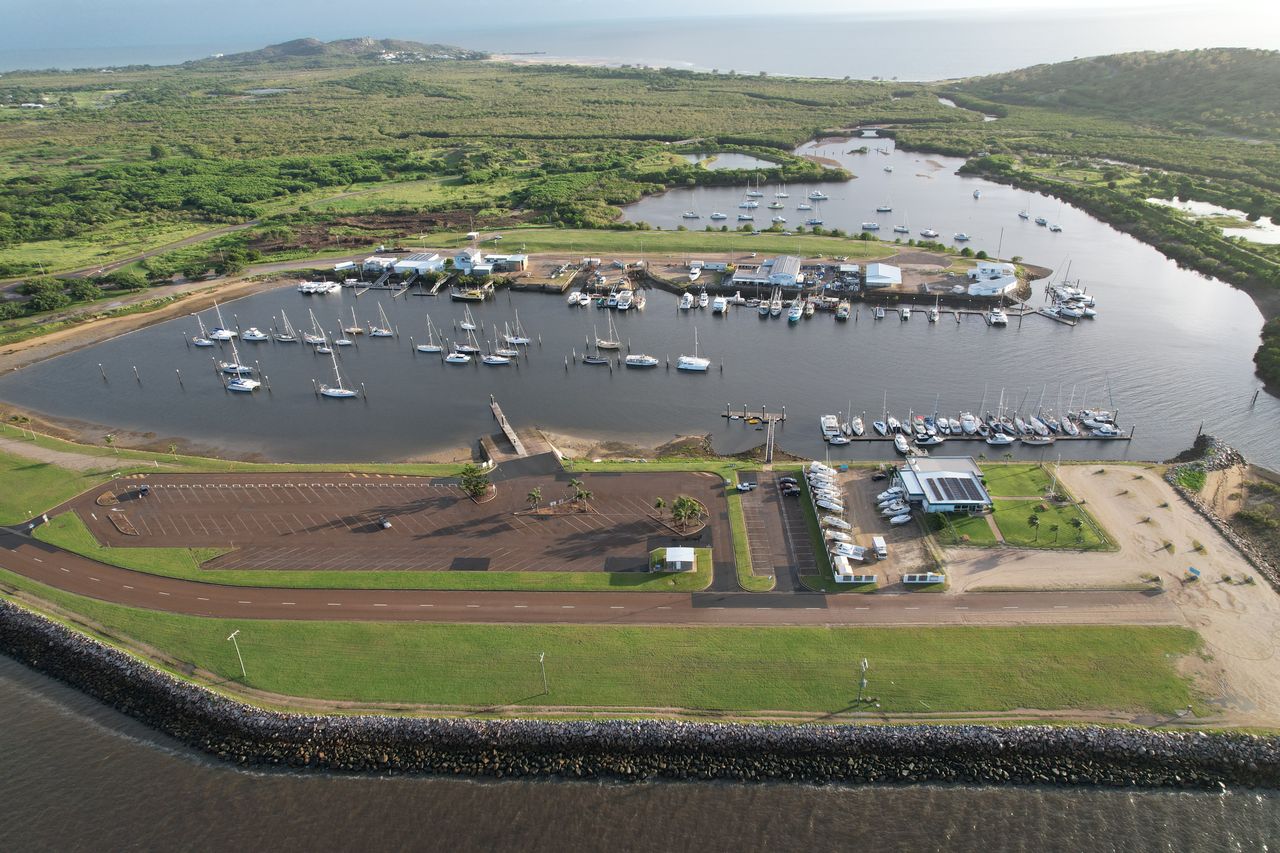
A new master plan for the Bowen State Boat Harbour will set a clear long-term vision to guide future investment, support economic growth and ensure the harbour once again works for the community.
Minister for Transport and Main Roads Brent Mickelberg said the Government was focused on delivery, not delay.
“After a decade of neglect and drift under Labor, we’re getting on with the job of rebuilding Bowen State Boat Harbour and backing the region’s future,” Minister Mickelberg said.
“This master plan, to be delivered by Arup, is about restoring Bowen State Boat Harbour as a strong economic and maritime hub that supports jobs, investment and the local community. We are backing Bowen with a clear plan for the future and a government that is prepared to do the work to deliver it.”
Member for Burdekin Dale Last said Bowen State Boat Harbour was a critical asset for the community and local economy.
“A key focus is making sure the harbour plan aligns with Whitsunday Regional Council’s foreshore master plan, so everything works together for the benefit of the community. Locals have been clear they want a vision that supports the town, local businesses and the wider region.”
The community will be invited to have their say when consultation gets underway later this year. Feedback will help shape a final master plan.
Contributed with thanks to Beth Colvin.
Bowen State Boat Harbour. Photo supplied.
Tuesday’s bowls saw some great contests across the greens. Bron Tolcher, Isobel Wheeler and Marg Wilson claimed victory over Lindy Suann, Deb Retchless and Linda Scells, while Gordon Querro, Jocelyn DeFranciscis and Laurie Land defeated Stumpy Adams, Shirley Jones and Cliff Querro. The jackpot was not claimed and will carry over to the next round.
With several of our players away competing in the BBC Classic, Sunday afternoon saw two triples matches played. Fred Quod, Jim Quod and Bouff Querro secured a win against A. Beaumont, Alby Vigar and Pat Tracey. In the other match, Toni Bowen, Lindy Suann and Deb Retchless were successful against Bill Myers, Sue Shearing and Skin Querro. Once again, the jackpot did not go off.
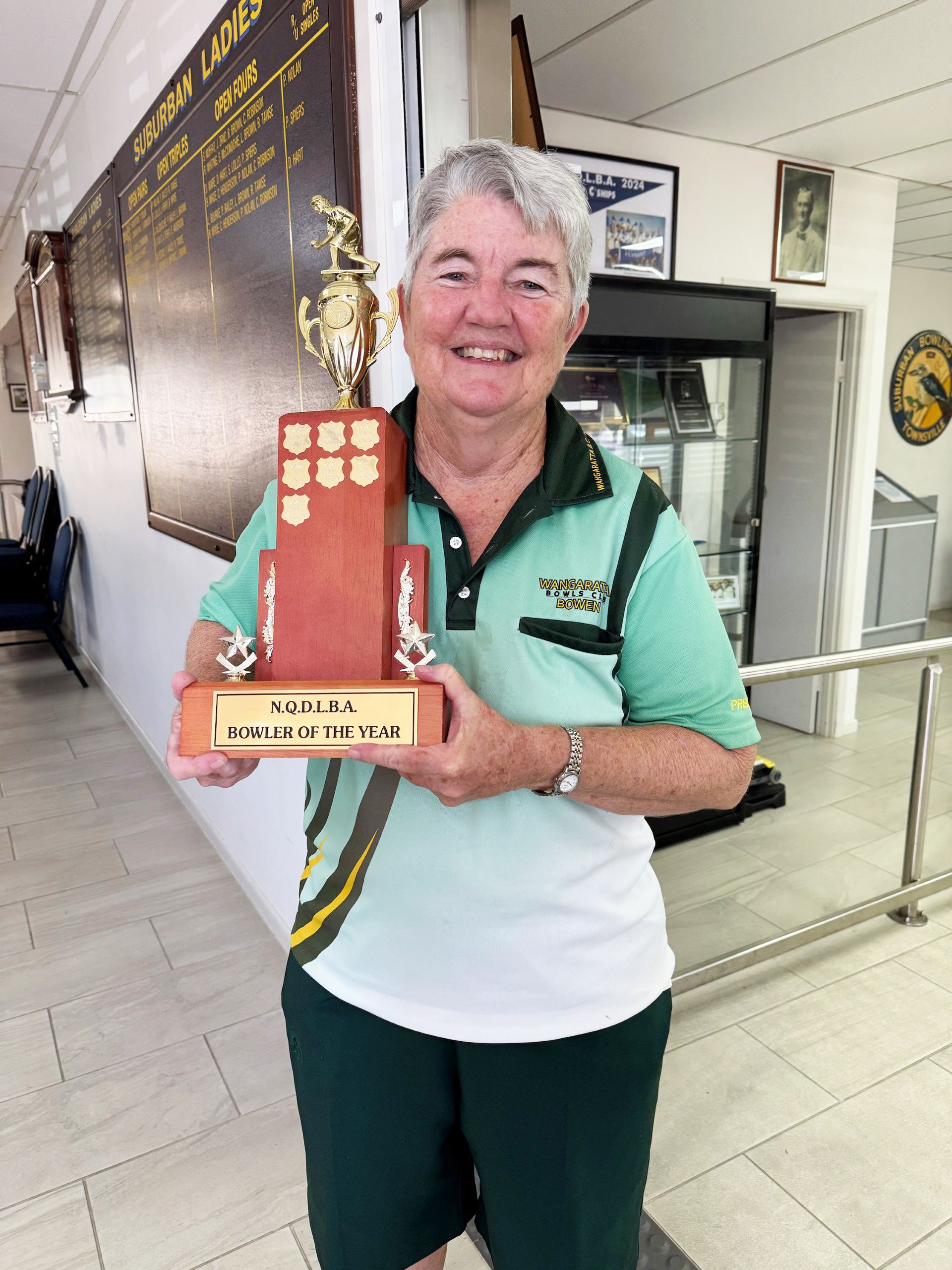
A special congratulations goes to Penny Warren, who travelled to Townsville on Sunday to receive the North Queensland Ladies Bowler of the Year for 2025 award. The trophy was presented by Patron Wilma Berryman at the District Annual General Meeting, in front of the Management Committee and District Club members.
This prestigious award is determined by the total points accumulated throughout the season in both club competitions and District Championships, making it a well-deserved recognition of Penny’s consistent performance and dedication to the sport.
Penny Warren - North Queensland District Ladies Bowler of the Year.
.jpg)
Andrew Willcox Federal Member for Dawson
Federal Member for Dawson, Andrew Willcox, has welcomed the decision to re-form the Coalition between the Liberal and National parties, describing it as a vital step in providing Australia with the strong, credible opposition it deserves.
The re-formation of the Coalition follows a period of principled stand-taking by the National Party after the Albanese Government attempted to rush the complex Combatting Antisemitism, Hate and Extremism Bill 2026 through Parliament with limited scrutiny.
"I have always stood by my convictions, and my priority has never wavered: I am here to do what is best for the people of Dawson," Mr Willcox said.
"This wasn’t an easy period, but it was a necessary one.”
Mr Willcox said the deal to re-form the Coalition wasn’t just a handshake, but a fundamental reset of how the Coalition functions.
“We have replaced unwritten conventions with a formal, written agreement that enshrines the primacy of the Joint Party Room, ensuring regional concerns are addressed before a final Coalition position is reached.
"By taking this stand, the National Party has secured a more transparent and accountable partnership, built on codified rules and mutual respect for our separate party rooms.
“We are returning to this partnership stronger, more united, and more determined than ever."
Mr Willcox said the Coalition’s reunion was a clear win for regional Australians who have been hit hardest by Labor’s economic failures.
"While the media was focused on the split, I remained focused on the families, growers, workers, retirees and students struggling under rising inflation and a reckless ‘renewables-only’ energy agenda that is driving up the cost of living."
As part of the reformed Coalition arrangements, Mr Willcox will return to his role as Shadow Assistant Minister for Manufacturing and Sovereign Capability on 1 March 2026.
"I am eager to get back to work in this portfolio," he said.
“Our manufacturing sector is the backbone of our sovereign self-reliance, yet it is battling soaring energy costs and red tape. I will continue to be a fierce advocate for making things in Australia and ensuring industries have the affordable, reliable power they need to compete globally."
Mr Willcox said he remains committed to standing up for the people of Dawson and holding the Albanese Labor Government to account.

Whitsunday Regional Council has approved a 40-unit short-term accommodation development at the Jubilee Tavern site, increasing the number of accommodation options available in the Airlie Beach and Jubilee Pocket area.
The approval comes as the Whitsundays continues to experience growth in visitor numbers, along with an increase in workers and people choosing to live in the region.
Short-term accommodation developments such as this are intended to contribute to overall accommodation supply, particularly in established tourism areas like Airlie Beach and surrounding suburbs.
Whitsunday Regional Council Mayor Ry Collins said the shire is the fastest-growing regional local government area in Queensland, and approvals like this reflect the need to plan for that growth in a balanced and considered way.
“Expanding accommodation options helps support tourism, local employment and the ongoing vitality of the Airlie Beach area,” said Mayor Collins.
The development was assessed against Council’s planning controls, with conditions in place to manage impacts and ensure it integrates appropriately with the surrounding community.
%20(1).JPG)
Tourism: Balancing Visitors and Community
Tourism is a defining part of life in the Whitsundays. It brings energy, jobs and opportunity and during peak season, it brings pressure too.
When our population swells over holiday periods, Council services are tested. Roads are busier, waste volumes increase, public amenities work harder, and community spaces see far more use than usual. Managing that balance is one of Council’s biggest operational challenges.
Tourism keeps the region moving. It supports local businesses, sustains jobs and underpins much of our local economy particularly in places like Airlie Beach, Cannonvale, Proserpine and Bowen. But it’s also important that locals feel their needs aren’t lost during the busiest times of the year.
Council’s job is to manage that pressure as fairly as possible. That means planning ahead, increasing servicing where needed, and supporting the frontline workers who keep things running, from waste and water crews to parks staff, cleaners, rangers and customer service teams.
These workers often step up during times when most people are on holidays themselves. Their efforts ensure public spaces remain safe, clean and welcoming for locals and visitors alike.
It’s also about setting realistic expectations. Tourism peaks are intense, but temporary. Council focuses on maintaining standards, responding quickly when issues arise, and learning from each season to improve the next.
I want locals to know their patience is recognised, and visitors to understand that the Whitsundays is a living community, not just a destination. Respect goes both ways.
Tourism will always be part of who we are but so is community. Council’s role is to support both, without losing sight of what makes this region such a great place to live.
Thank you for following this six-week series. I look forward to continuing these conversations throughout the year as we deliver key projects, manage growth, listen carefully and support the people who keep the Whitsundays moving.
.jpg)
For Whitsundays locals, paradise is often something we sell, promoteor point visitors towards, turquoise water, white sand, reef-fringedislands, all part of daily life, yet rarely paused for. The relaunchof the Whitsundays Locals Offer at InterContinental Hayman Islandquietly asks an interesting question: when was the last time localsexperienced their own backyard like a guest?
Thisnewly relaunched offer isn’t about novelty. It’s aboutperspective. Hayman Island, sitting at the northern edge of theWhitsunday archipelago and closest to the outer reef, has long beenpositioned as an international luxury destination. For decades, it’shosted jetsetters, honeymooners and once-in-a-lifetime celebrations.Yet for many locals, it remains something glimpsed from afar, asilhouette on the horizon, a name attached to postcards and tourismcampaigns.
TheWhitsundays Locals Offer reframes that relationship. With exclusiveresident-only accommodation rates, discounted return boat transfersand daily breakfast overlooking the Coral Sea, the offer inviteslocals to step inside a destination they’ve always lived beside.It’s not a holiday that requires flights or passports, just a shortjourney that leads to a complete shift in pace.
Availablefor stays between 1 February and 19 March 2026, the offer comes at atime when the Whitsundays naturally slows. The wet season softens thelandscape, the crowds thin, and the region returns to a more intimaterhythm. For locals, this window offers something rare: access toluxury without the peak-season rush, and the chance to see familiarwaters from a quieter, more reflective vantage point.
There’ssomething quietly powerful about experiencing Hayman Island as alocal. The history, from Reginald Ansett’s early vision in the late1940s to the resort’s $135 million redevelopment unveiled in 2019,is deeply entwined with the region’s own story. So too is itsfuture. Sustainability now sits at the heart of the resort’soperations, a recognition that proximity to one of the world’snatural wonders carries responsibility as much as privilege.
Beyondaccommodation, the timing of the relaunch aligns with a calendar ofcurated experiences, from Valentine’s Day dining under the stars toLunar New Year celebrations and immersive cultural events. Thesemoments aren’t just for visitors flying in from afar; they’re nowwithin reach for the community that calls the Whitsundays home.
Atits core, the Whitsundays Locals Offer isn’t about selling a stay.It’s about reintroducing locals to the extraordinary on theirdoorstep. It’s an invitation to slow down in a place defined bymovement, to reconnect with the reef, the island and the sense ofwonder that first drew so many people here.
Becausesometimes, the most meaningful escapes aren’t about leaving home,they’re about seeing it differently.
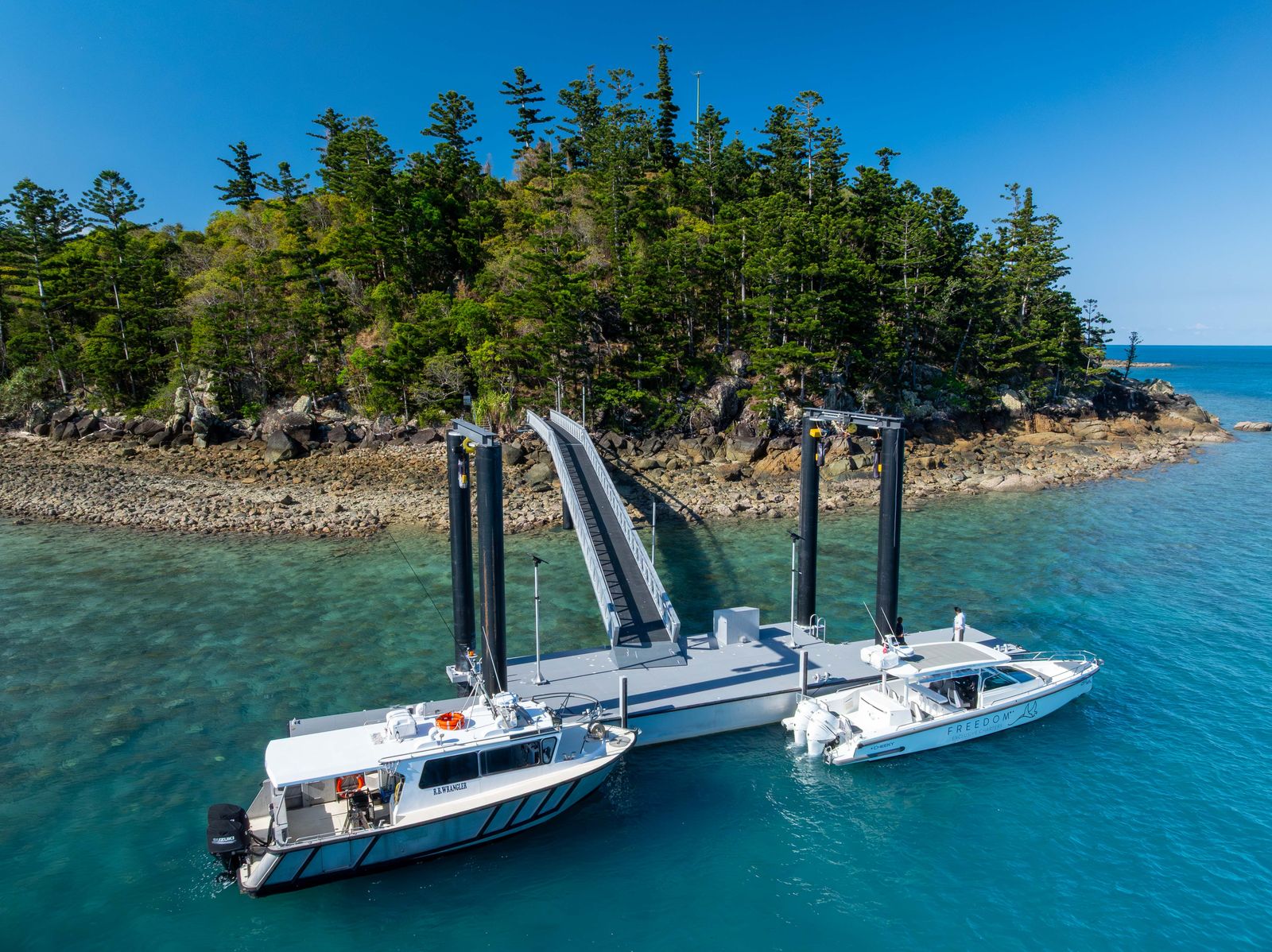
Hook Island has reached a pivotal point in its long-awaited restoration. With a new $2.4 million
jetty complete, facilitated by Tract’s planning team, the DA approval is now secured for the planned eco-lodge. Construction is set to begin in May, unlocking the next phase of the
island’s transformation into a leading destination for sustainable luxury in the Whitsundays.
The jetty, supported by a $1 million contribution from the Department of the Environment, Tourism, Science and Innovation under the Great Barrier Reef Island Marine Infrastructure Package, marks a critical step in enabling safe and reliable access to the island.
The eco-lodge is scheduled to open in 2027, inviting travellers to reconnect with the island’s rugged beauty.
Glenn Piper, CEO and Founder of Epochal Hotels says: “Our focus is on bringing Hook Island back to life in a way that honours its natural beauty, culture and ecology, creating a sustainable, world-class experience that celebrates Queensland.”
Whitsunday Regional Council Mayor Ry Collins said the opening of the Hook Island Jetty is a significant step in re-activating one of the region's most loved island resorts: He said: “This new jetty provides safe access to Hook Island’s pristine environment while supporting a new proposed eco-resort that respects the island’s heritage and ecology”.
Contributed with thanks to Ellie Lee.
The new Jetty ready to welcome visitors. Photo supplied.

Whitsunday anglers have been making the most of the past week on the water, with barramundi season delivering plenty of excitement since reopening on 1 February.
From creeks and estuaries to coastal waterways, fishers across the region have dusted off their rods and launched boats to chase one of North Queensland’s most iconic sportfish. Early reports suggest a strong start to the season, with warm water temperatures and favourable wet-season conditions producing lively sessions and early success.
Barramundi season is now open across Queensland’s east coast and the Gulf of Carpentaria, running through until 31 October. The annual reopening follows the closed season from November to January, which plays a critical role in protecting breeding fish during their most vulnerable spawning period.
Highly opportunistic and thrilling to catch, barramundi remain a cornerstone of the region’s fishing culture. February through to May is widely regarded as prime barra time, with productive tides and flowing systems creating ideal conditions, while another strong window often returns in September and October.
Fisheries authorities are reminding anglers to remain mindful of regulations as the season continues. Barramundi must measure between 58 centimetres and 120 centimetres to be kept, with bag limits set at five fish per person, or 10 per boat when two or more people are onboard. Possession limits apply across boats, vehicles and at home.
Fishers are encouraged to check current size limits, bag restrictions and seasonal closures by downloading the Queensland Fishing 2.0 app, which provides localised updates and reminders.
With prime conditions lining up and barra firmly back on the menu, anglers are being urged to fish responsibly, respect local waterways and enjoy another exciting season on the Whitsunday coast.
Barra season has reeled back in across the state. Photo source: Fisheries Queensland
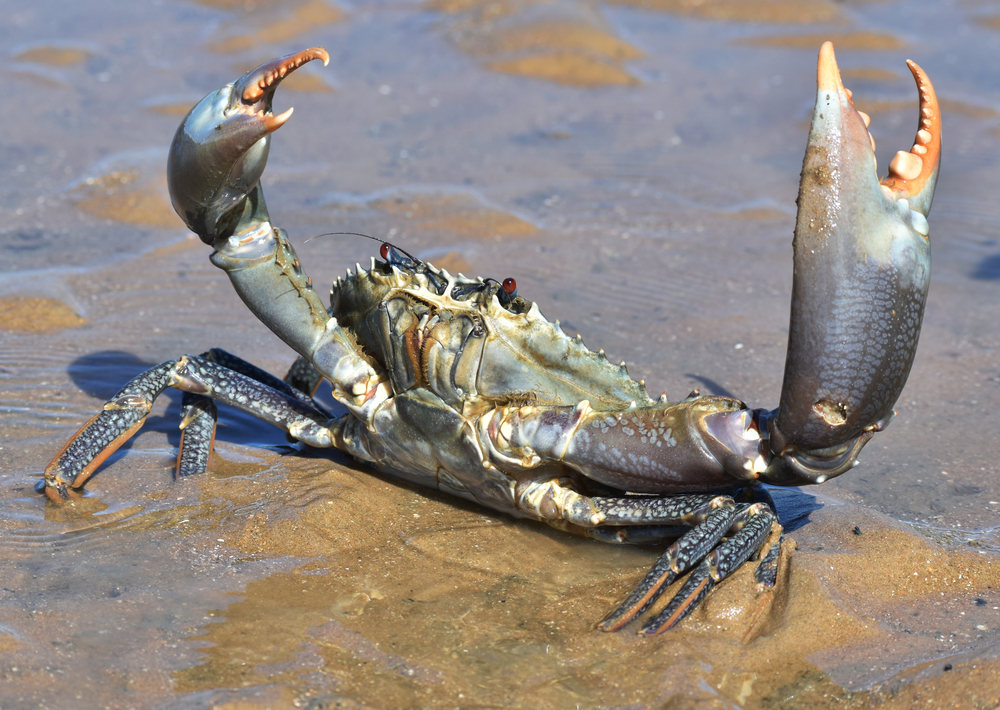
Recreational fishers in the Airlie Beach region are being reminded to follow Queensland’s mud crab regulations after a series of recent prosecutions, including multiple offences detected locally.
In October, Queensland Boating and Fisheries Patrol (QBFP) officers in the Airlie Beach district issued five infringement notices over a six-week period for unlawful interference with crab fishing apparatus, totalling $8,065 in fines. The offences form part of a broader statewide crackdown aimed at protecting Queensland’s fisheries.
The local enforcement follows several high-profile cases, including a Bundaberg man fined $20,000 after officers uncovered 26 offences under the Fisheries Act 1994. He was found with 14 female mud crabs and multiple undersized crabs concealed beneath the floorboards of a tinny, with evidence revealing ongoing illegal sales.
Under Queensland rules, it is illegal to take female mud crabs, and strict minimum size and possession limits apply. Mud crabs must be kept whole, with shell and claws attached, and possession limits include crabs on boats, in vehicles and stored at home. Interfering with another person’s crab pots is also a serious offence.
Since May 2025, QBFP has recorded more than $61,100 in court-imposed penalties and $85,699 in on-the-spot infringement notices statewide.
Department of Primary Industries Deputy Director-General Fisheries and Forestry Pauline Jacob said increased patrol capacity was strengthening compliance efforts.
“Whether it's interfering with crab pots, taking undersized or female crabs or engaging in unlawful trade, no offence goes unnoticed and our staff are ready to take action,” Ms Jacob said.
“The message is simple — if you lift someone else's pots or take crabs outside the rules, you will be caught and face serious penalties.”
Local fishers are encouraged to check the latest size and possession limits using the Qld Fishing 2.0 app before heading out on the water.
State-wide crackdown has landed illegal recreational fishers in hot water. Photo source: Shutterstock

After a wet season that had lawns growing at record speed, a local yard and maintenance company stepped up to help keep Mackay’s cemetery neat and cared for. The team generously volunteered their time and energy to mow and tidy around headstones, making a meaningful difference for the community.
Locals quickly rallied to support the effort, with one resident even offering to contribute towards fuel costs. The company shared that they were still seeking a “particular little guy” they had focused on during the clean-up, and expressed a willingness to assist Mackay Regional Council with future maintenance projects.
The goodwill of this simple, thoughtful act has rippled throughout the community.
Comments of praise online flowed, with one local saying: “What a kind and humble thing to do! Nice work lads, so generous and thoughtful.”
Photo source: Better Yards & Maintenance Pty Ltd
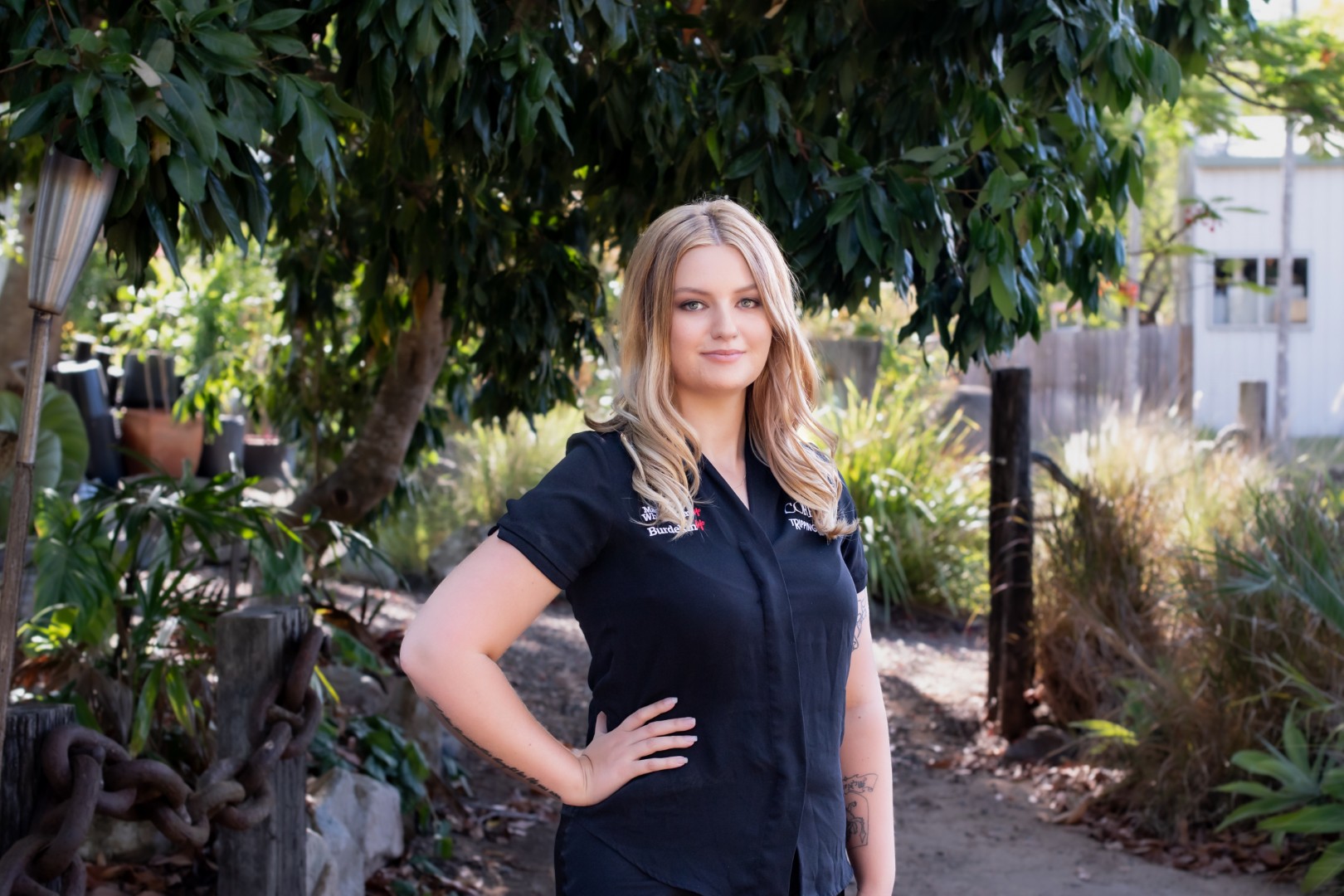
Hi lovely readers,
I hope you’ve had a wonderful week.
On page 5, you can read all about the fantastic residents from the outskirts of our region who were honoured with the 2026 Isaac Australia Day Awards, as featured on the cover.
Across pages 3, 6, and 7, you’ll also find a spread on the recent winners from our Mackay region.
If you know a community hero who deserves recognition, feel free to email me or our head office. I love meeting the quiet achievers of our region and sharing their stories with you all!
On page 9, there’s a follow-up tribute on the 1918 cyclone that devastated the region 108 years ago, and next week, starting Monday, we’ll celebrate National Apprenticeship Week.
A fun fact about me: I actually started a career in panel beating with my dad when I was 14.
Growing up around cars, it was something I really enjoyed, and still have a passion for today. I completed three years of my apprenticeship before deciding to keep it as a hobby – lol!
Apprenticeships are a great launchpad for any career, and even though I didn’t finish my trade, I still carry those skills, as well as the great memories working alongside my dad.
While I sometimes miss the hands-on work, I’m far happier getting to know locals through journalism, and I’m so grateful to be here.
Scripture of the week: “Being confident of this very thing, that He who has begun a good work in you will complete it until the day of Jesus Christ.” – Philippians 1:6
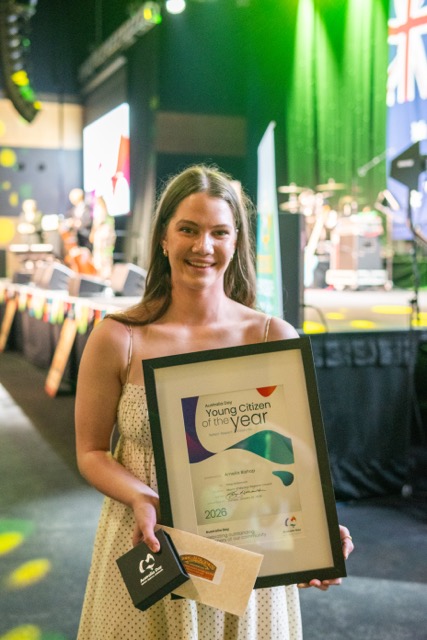
Whitsunday Anglican School student leader Amelia Bishop has been named the 2026 Young Citizen of the Year at the Australia Day Awards, recognising her exceptional leadership, dedication, and service to both her school and the wider Mackay community.
Celebrated as a role model for young people, Amelia holds multiple leadership roles within her school. She is School Captain for 2026, President of the Zonta Club, Coordinator of the Year 1 Reading Program, and a committed volunteer with the Mackay Sony Foundation Children’s Holiday Camp, showcasing a strong commitment to service and peer leadership.
Amelia’s passion extends beyond her school community, with work experience placements at ATSICHS Mackay and the Torres and Cape Hospital and Health Service. She aspires to study medicine and hopes to establish GP clinics that provide essential health support for Indigenous communities in rural and remote areas across Australia.
On the night of the awards ceremony, Mayor Greg Williamson described Amelia as an exemplary young leader who contributes widely across community, sport and service.
“Amelia founded a successful Indigenous scrunchie business at just 11 years of age and has been an inspiration and mentor to many of her peers,” Mayor Williamson said.
“She actively contributes to the Mackay community through her involvement in Eimeo Surf Lifesaving Club patrols, Mackay Road Runners and the Mackay Marina Run.”
School Principal Mr Andrew Wheaton praised Amelia’s achievements and said, “she is a remarkable role model and a most deserving recipient of this honour.”
Amelia said she was overwhelmed when her name was announced at the awards ceremony.
“When I heard them announce ‘Bishop’, I was completely shocked,” Amelia said. “It was such a surreal moment.”
Reflecting on the award, Amelia said the recognition reinforced the importance of giving back and being a positive role model for others.
“This award means so much to me because it shows that ordinary people who are simply committed to their community can make a difference,” she said.
“To know that someone took the time and effort to nominate me is incredibly humbling.”
She also acknowledged the support of her family, teachers and school community.
“I wouldn’t be here without the support of my family, my teachers and the staff at my school. They have all played such an important role in encouraging me and believing in me.”
Amelia’s achievements have been recognised across a wide range of academic, cultural, sporting and community settings. She is a recipient of the ADF Long Tan Youth Leadership and Teamwork Award (2024) and has participated in prestigious leadership programs, including the Australian National University Indigenous Summer School and the Queensland Surf Lifesaving Youth Excellence Leadership Program.
A proud Aboriginal descendant of the Kamilaroi people, Amelia currently lives on Yuwi country in Mackay. She has demonstrated strong cultural pride and creativity through her entrepreneurial venture promoting Indigenous-designed products, as well as through her poetry, earning First Place in the Queensland Aboriginal and Torres Strait Islander Foundation (QATSIF) Arts Competition.
Whitsunday Anglican School, along with the greater Mackay community, congratulates Amelia on this outstanding achievement and celebrates the compassion, integrity and purpose she brings to every aspect of her life.
Whitsunday Anglican School student Amelia Bishop has been named 2026 Young Citizen of the Year, recognised for her outstanding leadership, community service, cultural pride, and inspiring contributions across school, sport, and wider Mackay community. Photo credit: Hannah McNamara

When a police radio falls silent for the last time, it marks the end of more than a shift — it signals the close of a chapter written in service, sacrifice and steadfast leadership.
Officers gathered at Mackay Police Station on Wednesday, January 28, to mark the piping out of Senior Sergeant Anthony McDowall, celebrating an extraordinary 36-year career with the Queensland Police Service. Senior Sergeant McDowall retires as one of the district’s longest-serving District Duty Officers.
Throughout his career, Senior Sergeant McDowall served communities across Queensland, including Hervey Bay, Bundaberg, Mt Perry, Jandowae, Winton and Mackay. His leadership saw him guide countless officers through critical incidents, major disasters, search and rescue operations and complex investigations, earning deep respect for his professionalism and calm under pressure.
A Queensland Police Service representative in Mackay said, “Thank you, Senior Sergeant Anthony. We wish you all the very best in your well-earned retirement.”
Senior Sergeant Anthony McDowall was piped out at Mackay Police Station, marking the end of a distinguished 36-year career with the Queensland Police Service serving communities across Queensland. Photo source: Queensland Police Service

Following the recent recall of Parliament and the passage of the Government’s hate speech laws in January 2026, Andrew Willcox MP, Member for Dawson, is calling for urgent action to criminalise the burning and desecration of the Australian flag.
Despite repeated attempts, including an amendment during the January 2026 sitting, the Albanese Labor Government voted against making flag burning a criminal offence. This leaves the national flag, the enduring symbol of our history, freedoms and shared values, vulnerable to public desecration.
“The Australian flag is not just a piece of fabric,” Mr Willcox said.
“It represents our shared history, our sacrifices, and the freedoms earned through generations of courage and service. Sadly, most recently on Australia Day, we’ve seen the flag set alight in public protests, actions that are celebrated by some, but which show contempt for everything the flag stands for.”
Mr Willcox referenced recent protests in Brisbane and other cities where the flag has been burned in front of crowds, while Australians wearing the flag with pride have been threatened or attacked.
“It is deeply disturbing that someone proudly displaying the Australian flag can be targeted, while those who burn it face no consequence under federal law. This is not a race or religion matter, it is about respect for our nation, its symbols, and the values we all share,” he said.
“No words can describe the feelings I believe the majority of Australians hold when seeing this disgraceful act,” Mr Willcox added.
“Burning our Australian flag, or any flag, isn’t ‘brave’ or ‘activism’, it’s disrespectful and wrong.
“Protest is a democratic right but desecrating our national flag is not.
“Our flag represents our shared history, the sacrifices of Australians before us, and the freedoms that allow peaceful protests to occur in the first place.
“This has been raised in Parliament twice now and I have spoken in support of making this illegal. Yet the Albanese Government refused to support this, voting it down.
“Burning our flag doesn’t advance justice or unity, it deepens division and erodes respect.
“Twice in the space of six months, the Albanese Government has shelved this important protection.
“The question is simple: why is the government so determined to leave our national flag unprotected?”
Mr Willcox emphasised that protecting the Australian flag is about unity.
“We do our best as a nation when we stand together under one flag. I will continue to fight for legislation that ensures our national symbol is respected and safeguarded for generations to come.”
After strong public support, Mr Willcox has launched an online petition on his website to criminalise the desecration of the Australian flag. People can find the petition at andrewwillcox.com.au.
Contributed with thanks to the office of Federal Member for Dawson, Andrew Willcox MP
Publishers Indemnity. Any individual or entity that places advertising, supplies copy material, or submits editorial content to Core Life Publishing agrees and undertakes to ensure that all such material:- Does not infringe upon any copyright, trademark, or other intellectual property rights;- Is free from any content that could be considered defamatory, libelous, or slanderous;- Does not infringe upon any rights related to privacy or breach of confidence;- Contains no obscene, indecent, or otherwise unlawful material;- Complies fully with the Trade Practices Act and all other applicable laws, regulations, or statutes.Furthermore, by submitting or placing such material, these individuals or entities agree to indemnify and hold harmless the publisher, Core Publishing and Events Pty Ltd, and/or its agents from and against any and all investigations, claims, demands, liabilities, damages, costs, or judgments arising out of or in connection with the material provided. All material is believed to be accurate at the time of printing and remains the copyright of Core Publishing and Events Pty Ltd.
© 2026 Mackay and Whitsunday Life Pty Ltd.
