
Independently Owned, Locally Grown, Community Loved

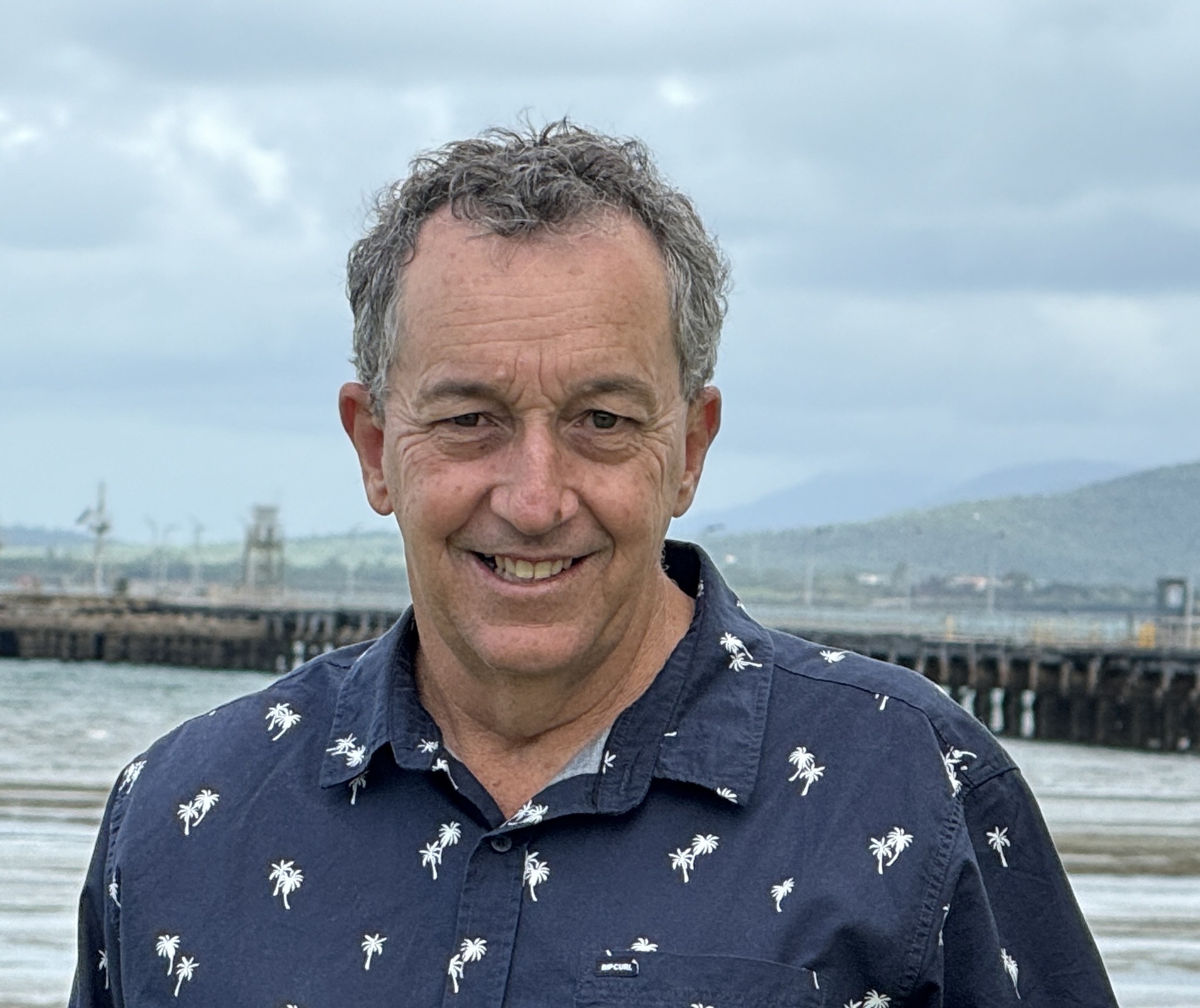
OPINION PIECE from the office of Federal Member for Dawson Andrew Willcox There is no question that immigration into Australia is out of control. The government’s numbers are too high, and standards are too low. A sustainable migration program must consider our capacity to provide housing, healthcare, infrastructure and the essential services everyone relies on, and Australians must come first. But Labor’s decision to target Working Holiday Makers Visa holders is not the answer. These people filling vital gaps in our workforce are not the cause of Australia’s housing crisis. In many cases, they are living in accommodation provided by the very businesses that employ them. The National Farmers’ Federation has made the point that Working Holiday Makers generally stay in hostels, caravan parks or purpose-built on-farm accommodation. Resorts usually have on-site staff quarters. They are not the source of Australia’s housing shortage. So why is Labor making it harder for them to come here, when these workers fill genuine jobs that regional Australia holds? Working Holiday Makers fill approximately one in seven farm jobs nationally and are particularly important during peak agricultural periods, which for Dawson, it is right now! Farmers rely on these workers to plant, pick, pack and harvest the produce that ends up on Australian supermarket shelves. Having run one of Australia’s largest tomato farms, at times Working Holiday Makers made up more than 50 per cent of my workforce. Without them, much of our crop simply would not have been picked in time and rotted in the paddock. Some may say, why not employ the Australians who don’t have a job and are on “the dole”? Can I say, this does not work. Most farmers will employ Aussies over travelling backpackers, but many either don’t want to do the work or don’t turn up after the first day. Who picks the fruit or veggies then? Farmers are already warning that visa delays are leaving them without workers. The NFF says approvals that once took days are now facing processing times of up to three months, and this time frame can be the difference between harvesting a crop or losing it. That should concern every Australian already feeling the pressure at the supermarket checkout. The same problem is playing out in tourism. Across Dawson, Working Holiday Makers are an important part of the workforce supporting tourism and hospitality, particularly in the Whitsundays. They help fill shifts, work in hotels and restaurants, support tour operators and keep businesses running through their busiest periods. They also contribute to the local economy. They spend money on food, fuel, attractions and tours, supporting the small businesses that depend on a strong visitor economy. That is why tourism and business leaders across North Queensland are raising the alarm. They understand what happens when a regional business cannot get enough staff: opening hours are reduced, and services are cut, creating a downward spiral. We do need to reduce migration to sustainable levels. We need stronger integrity measures, and we need to crack down on rorts. But responsible migration policy means understanding which parts of the system are creating pressure and which parts are helping Australia function. Working Holiday Makers are not the problem. They are part of the workforce solution for regional. Australia. People have had a gutful of watching their standard of living go backwards. Groceries, fuel, housing and everyday expenses are already putting enormous pressure on families. The last thing Australians need is another reckless policy that makes it harder to produce food, harder to run regional businesses and harder for tourism operators to find the workers they need.
Read the full storySomeone sold a house in Sydney last week for $9 million less than they bought it for four or five years ago. The sellers had bought the property in Sydney’s eastern suburbs for $29 million and sold it for $20 million in a sale forced by their bank. I imagine the sellers are a little disappointed by the government’s decisions on negative gearing and capital gains tax and feeling pretty hurt by the increased interest rates. Australia’s interest rates are on the rise and are now sitting at levels not seen since 2011. Increased cost of living is hurting people around the country and interest rates are playing into that. But the impact of interest rates is not felt evenly around the country. The far-higher property prices mean people in the major cities suffer much more than regional areas with the rates increase. That is certainly not to say people in Mackay are unaffected by the cost of living; it’s just that the impact of interest rates increase on a $400,000 mortgage is much less than the impact on a $1m mortgage. There are other Mackay-specific factors that are in play when discussing the current housing market. The big factor is the role of coal in our economy. Most of the coal extracted and exported from our region is coking coal, which is used to make steel. The price of coking coal is around $280 a tonne, which is about 50 per cent up. Good activity in the coal market translates to good news for the Mackay economy, as it is an economic engine that other cities and regions just don’t have. Good activity in Bowen Basin flows throughout the Mackay economy; Paget workshops, transport, suppliers and related businesses all benefit. But so do other, non-mining-related businesses as they benefit from the general confidence and spending that goes on. The strong mining activity also means mines need to keep their staff levels up and that means more people moving to Mackay. Of course, Mackay is much more than a coal mining town but if the coal sector is going well those other areas definitely benefit. It is a confidence boost for Mackay people looking to get into the housing market and those wanting to upgrade or downsize. It also means continuing strong demand from people wanting to rent a property and it will be interesting to see what sort of activity that creates from investors. Investors have walked away from the big-city markets because they can no longer use negative gearing on established properties that do not have a sufficient yield to be positively geared. Negative gearing has never been a big thing in Mackay because our prices are lower and rental returns continue to be strong so many investors have a positively geared property. Around the country everyone is nervous about the state of play and the probability of more interest rate rises. But strong coal prices and an economy that is performing well mean Mackay might just be presenting an opportunity for buyers and sellers that doesn’t exist in other parts. I remember when national confidence was flying high and Mackay prices were going up significantly that many buyers were saying “I wish we had bought a while ago when the market wasn’t so hot”. I’m not armed with a crystal ball so I’m not here to tell you what is going to happen but I suspect there is a very good buying window right now for those looking for an opportunity.
Read the full story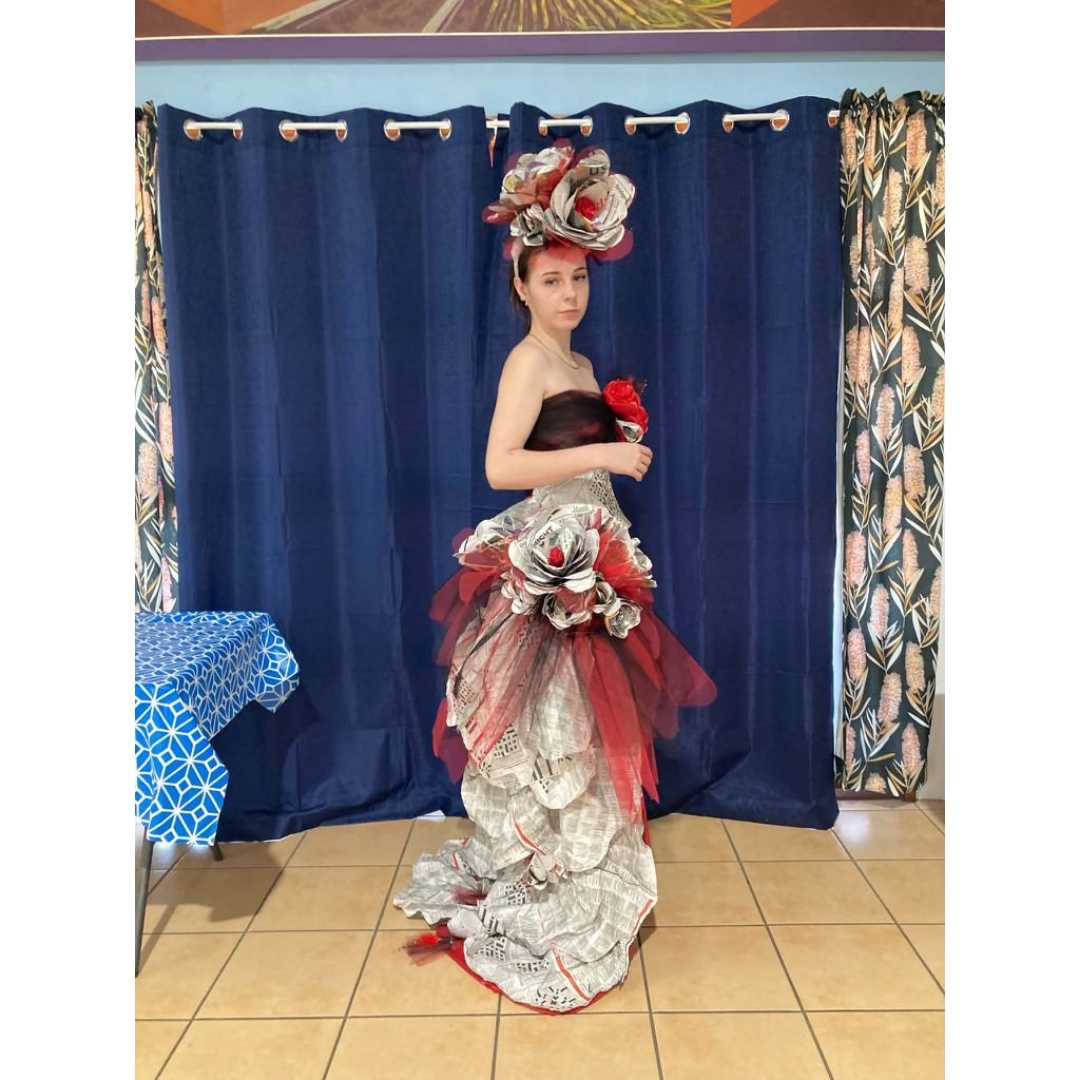
A local Mackay and Sarina based model has created a dress out of newspapers, including Mackay Life, for her upcoming pageant, representing her region and hometown on the runway as she vies for Miss Diamond International in Brisbane. Zoe Place will be competing this weekend in the three-day event, beginning this Friday 2nd October and ending on Sunday 4th October. The young model spent around a month creating her eco-fashion outfit, using old newspapers as the main material and transforming them into a bodice, skirt and flowers. Red elements were also incorporated into the design to give the dress a bold and glamorous pageant feel. Zoe said, “The entire concept was really about taking something that would normally be thrown away and turning it into something beautiful and meaningful.” Her eco-fashion creation will form part of a busy weekend in Brisbane, with the Miss Diamond International event including photo shoots, interviews, an eco-fashion show and the final pageant. Zoe has been preparing for the event by practising her strut and walking, preparing for interviews and getting comfortable in the different outfits she will wear throughout the weekend. Alongside her love of modelling, pageantry has also provided Zoe with a platform to raise awareness about causes close to her heart, including mental health, while fundraising for Beyond Blue. “Pageantry has given me more of a platform to combine my love for modelling with something that is really important to me.” “When I first started, I was more nervous about putting myself out there and worried about what others would think about me – but I’ve changed a lot through my journey in pageantry.” “Pageantry has also taught me that it’s not about how you look on stage. It’s about the person you are when you step off it.” “Every woman has their own unique journey and that journey is something we should all be really proud of.” “To me, it represents confidence, empowerment, kindness, and using your voice to make a difference.” Zoe said she was looking forward to meeting the other contestants, making new connections and creating memories. “I’m definitely looking forward to meeting all the new contestants and making new connections and creating memories that I will carry with me for a lifetime.” While Zoe hopes to eventually move to the city, her sights are set even further afield, with a dream of one day walking in New York Fashion Week. Mackay and Sarina local Zoe Place has created an eco-fashion dress from recycled newspapers, including Mackay Life, ahead of her Miss Diamond International pageant in Brisbane. Photos supplied
Read the full story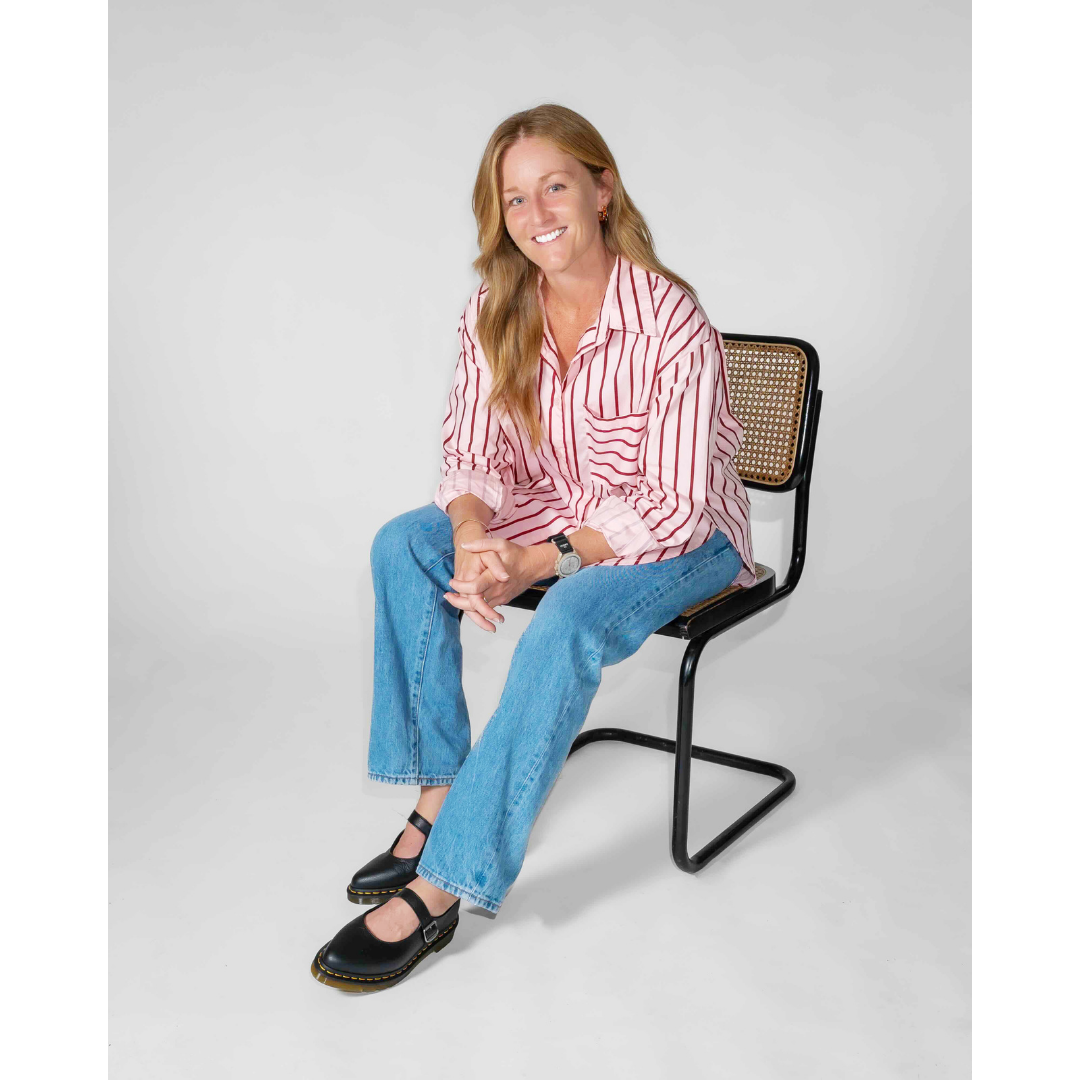
Trends, reels and the endless cycle of always wanting more has quietly bombarded the minds of countless social media users of all ages, but one former Mackay local has made it her mission to help others understand the effects of social media and find practical ways to break free from online addiction. Alexis Zahner is in Mackay over the next week to teach upcoming generations about social media and the effects it can have on the mind, particularly on identity, self-discovery, as well as the marketing strategies that get viewers hooked and influence their decisions. It is something Alexis knows first-hand can be a useful tool, but also a great disruption to authenticity and the world as we see and experience it. Alexis will hold a free meet and greet and book launch today, Friday 2nd October, at 5.30pm at the Mackay Surf Lifesaving Club, where she will give a talk and answer questions relating to her debut book, Real: Reconnecting to Yourself in a World of Likes and Lies. A former Mackay girl, Alexis spent the past 15 years working across business psychology, marketing and media, with her interest in social media influence beginning during her university studies at James Cook University in Townsville. Her own experience as a social media user, travel blogger and influencer eventually led her to question how much of her identity, decisions and values were being shaped by what she saw online. “The tipping point came for me about 3 years ago when I had this feeling that I couldn't separate influence from my own personal decision making,” she said. “I couldn't separate my own likes, dislikes, values, relationships from what I was being exposed to and being influenced by online.” “I found that I needed to take some time away from social media to recalibrate what was important to me and sort of reconnect and come back to myself.” Alexis said she understood the feeling of questioning who you are outside of social media. “I know what it feels like to live a life under the influence of social media and have that existential crisis of thinking to yourself, who am I? What do I like? What's the kind of life I want to live? and struggling to separate myself from influence.” Alexis is particularly passionate about reaching teenagers, who she says are in an important stage of identity development, and will share this message with Mackay high school students during her upcoming school talks. “Teenagers are really easily influenced by social media. So it's a really important age where we start educating them – not just on the mental health repercussions of things like social media and how it shortens their attention span, but how it actually influences who they become.” “If you're asking yourself these questions, it's not your fault. Social media is actually geared to create this impact on you.” Alexis encourages people of all ages to “start expanding beyond what you see on the platform.” “Dare to indulge in the things that you've always been curious about or things you used to love,” she said. “Don't be afraid to put the phone down to let yourself be curious and have fun.” What: Alexis Zahner's 'Real' Book launch When: 5.30pm Friday 2nd October 2026 Where: Mackay Surf Lifesaving Club Former Mackay local and author Alexis Zahner is returning home to share her experiences with social media and her debut book, Real. Photo supplied
Read the full story

Anxiety is one of the most common mental health concerns, and it frequently drives behavioural patterns such as avoidance, reassurance-seeking and emotional withdrawal. While these behaviours reduce anxiety in the short term, they unintentionally strengthen it over time.
Behavioural change in anxiety focuses on skill-building rather than symptom elimination. The goal is not to remove anxiety entirely, but to help individuals tolerate uncertainty and discomfort without avoidance. The Royal Australian and New Zealand College of Psychiatrists suggest Cognitive Behavioural Therapy (CBT) is one of the best therapies for skill building for those with anxiety.
Avoidance teaches the brain that fear equals danger. Gradual exposure, when done safely and supportively, helps retrain the nervous system. Each time a person faces a feared situation and copes, their confidence and emotional capacity grow.
However, over-reassurance can unintentionally reinforce anxiety, while supportive encouragement fosters independence. Phrases such as “I know this is hard, and I believe you can manage it” promote resilience.
Teaching emotional literacy, problem-solving and regulation strategies strengthens long-term outcomes. Anxiety becomes manageable when people understand their body’s responses and learn how to respond differently. Changing the way we think about a situation changes the way we feel. CBT helps provide a structured way to skill build.
Behavioural change is most effective when anxiety is viewed not as a weakness, but as a signal for skill development. With the right support, you can learn to face challenges with confidence and adaptability.
For more information about managing anxiety and CBT visit my website https://www.personaltransitions.com.au/ or give me a call 0418708214.”NDIS FRIENDLY

State MP Amanda Camm is holding a royally fun easter colouring competition, encouraging Whitsunday’s best young colour artists to get involved. Kids have the option of colouring cheerful underwater marine life or fun land-dwelling creatures. To get involved you can use this link: https://www.amandacamm.com.au/easter-colouring-competition-2026 or go directly to the ‘Amanda Camm MP’ website. Once you have printed out and completed the task, submit your masterpiece via the QR code attached. The competition closes Friday 27th March. This is a fantastic way to get kids creating and bring joy for the Easter season.

Coral Coast Doctors were pleased to officially open in the Whitsundays, Wednesday 25 February. Opened by Dr Ramy Ibrahim of Bowen Doctors, the brand-new General Practice in Cannonvale offers a host of services to cater to healthcare needs of people in the region. Situated within the Whitsundays Shopping Centre, Coral Coast Doctors offers a beautifully appointed clinic, with state-of-the-art facilities and technology. The opening night saw attendance from members of the local heath community teams including Physio Plus, Live Life Pharmacy, Coastal Radiology and many other medical and allied health providers.
Coral Coast Doctors offers a wealth of services including
It was a wonderful evening that signified the start of a great endeavour. The services will bring much support to the region.
Captions
Photo credit: Sebastian Conidi
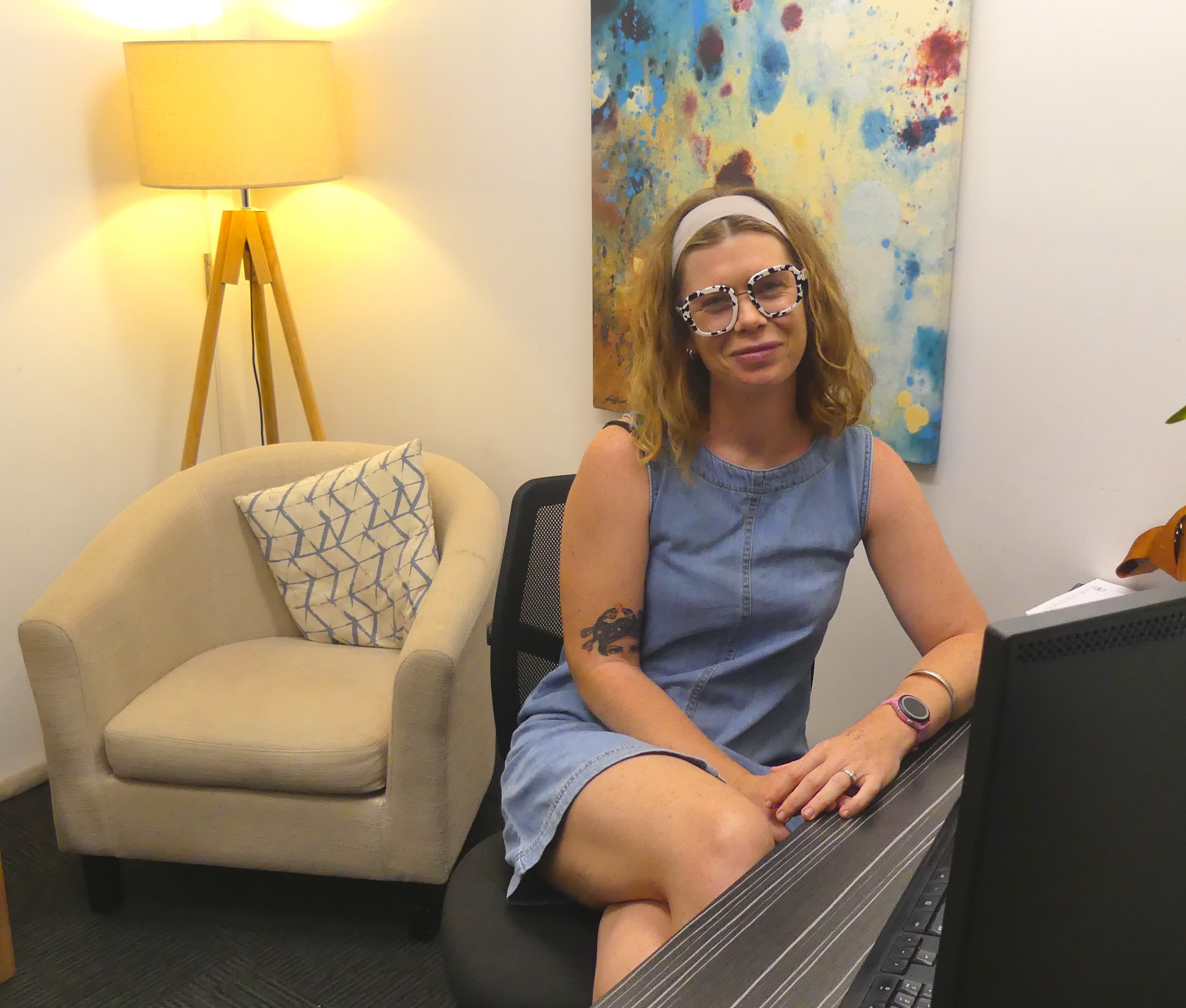
Peta Franklin-Corben has been named Woman of the Year by the Zonta Club of the Whitsundays, in recognition of her impactful work supporting women experiencing domestic and gender-based violence as Project Coordinator at Whitsunday Counselling and Support.
Peta has dedicated 15 years to helping women flee violence and rebuild their lives through accommodation support and therapeutic services.
“I never didn't want to be a social worker,” she remembered.
“It was always something that I was interested in doing. I was supported by some incredible teachers at Proserpine High School who encouraged me to try lots of different things.
“I went to an open day and, just by pure chance, spoke with a social work student. She was free and funky and cool and just seemed really interesting. So I went to her talk, and I adored it.
“I knew that I wanted to work with women and in gender-based violence because I experienced what it's like to grow up as a woman, but later, working overseas really cemented things for me, seeing how challenging it can be for women in lots of different spaces.”
After studying at James Cook University, Peta moved to England, where social work originated. There she worked in inner-city Manchester, with trafficking victims in women-only mental health inpatient units, engaging with the intersectionality of gender with other aspects like race and cultural background.
After 9 years, she moved home to the Whitsundays.
“Airlie Beach has this way of pulling people in,” she said.
“Lots of people move away, then come back and see the beauty of the place and the community.”
Peta credits the whole team at Whitsunday Counselling and Support for Zonta’s recognition, with a strong management team and dedicated case workers doing difficult but deeply important work. She also thanks the community for their continued support, without which the services couldn’t function the way they do.
“We are so fortunate here, with so many businesses and operations, big and small, seeking us out to offer their support.”
When asked what advice she would deliver to young women looking to make change, Peta referred to some advice she recently received herself from local 14-year-old pupil Sarah Hart, who spoke at the Zonta International Women’s Day Luncheon:
“She said: just apply, just do things. Just get in there. I just thought that's exactly right.
“If you are interested and you want to help, just reach out. People, particularly women, have imposter syndrome where they have a good idea, but think: Who am I to bring that?
“Just bring it! As women we’re great at sharing community and ideas and making space for people, so something that I've always lived by is to surround yourself with people that will say your name in a room full of opportunity. And I think that's the kind of network that this community has.”
You can support Peta’s work by donating via the QR code below, and follow the Whitsunday Counselling and Support Facebook page for upcoming community events.
1 – Peta’s vast impact helping women heal from gendered-violence has gained local recognition. Photo credit: Suzanna Mcloughlin
2 – Scan here to donate.

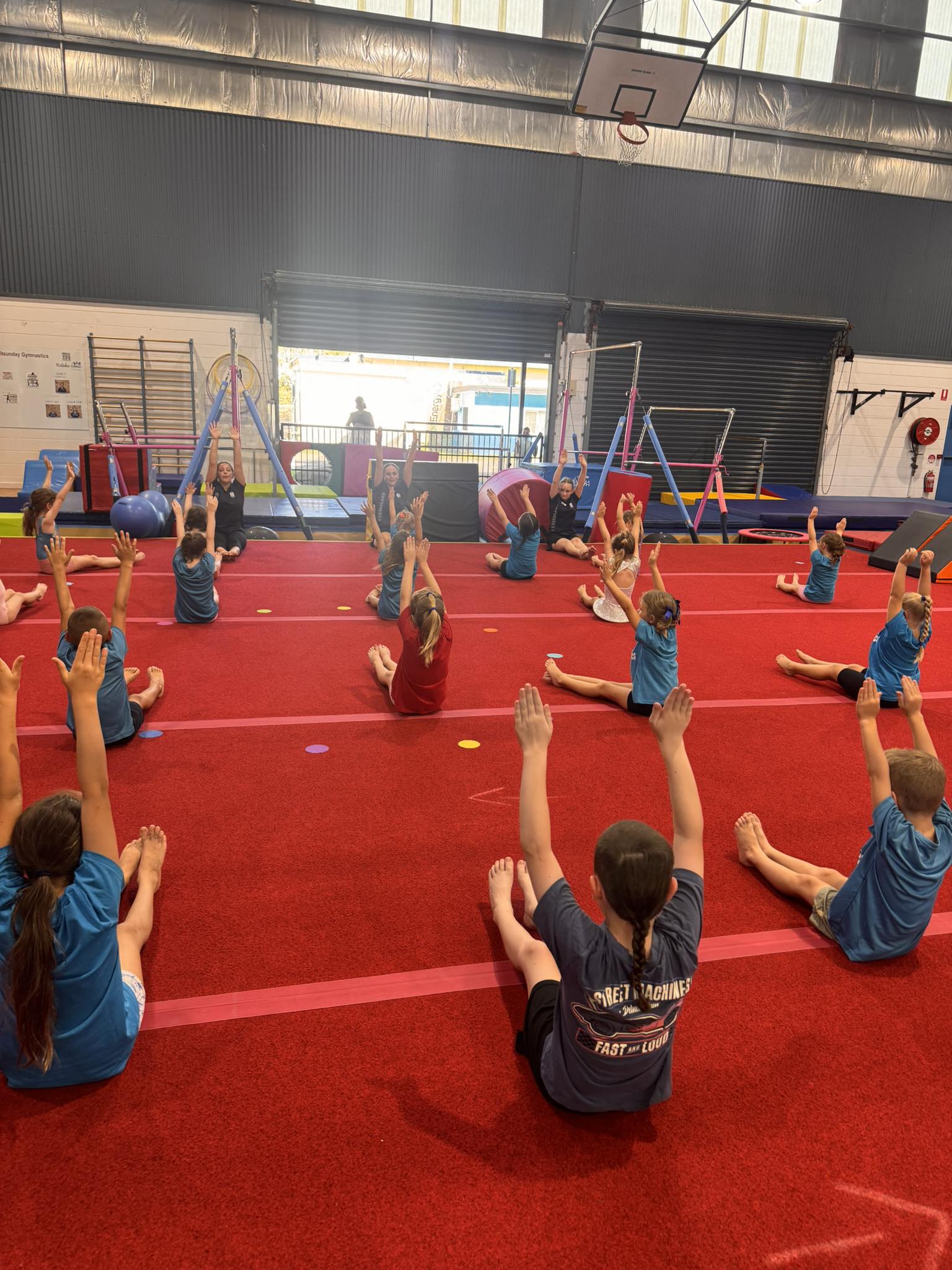
School holiday camps are now open for bookings at PCYC Whitsunday, offering a fun and active way for local children to spend their break. The camps provide a welcoming environment where kids aged 5 to 12 can stay active, learn new skills and make friends while enjoying a variety of popular sports and activities.
The program includes freestyle gymnastics, basketball, volleyball, badminton and a range of engaging gymnastics activities designed to keep children moving and having fun. With a mix of structured games and social play, the camps encourage teamwork, confidence and healthy activity during the school holidays.
Families can choose between convenient three-hour or six-hour camp sessions, making it easy to fit into holiday schedules. Children are also encouraged to bring a friend along, helping to create a friendly and supportive atmosphere for everyone involved.
Importantly, families do not need to be PCYC members to take part. The camps are open to all members of the community, making them a great opportunity for children to experience the programs and facilities available locally.
Bookings are now open and places are limited, so families are encouraged to secure their child’s spot early to avoid missing out on a fun and active holiday experience.
1 - Photo source: Facebook
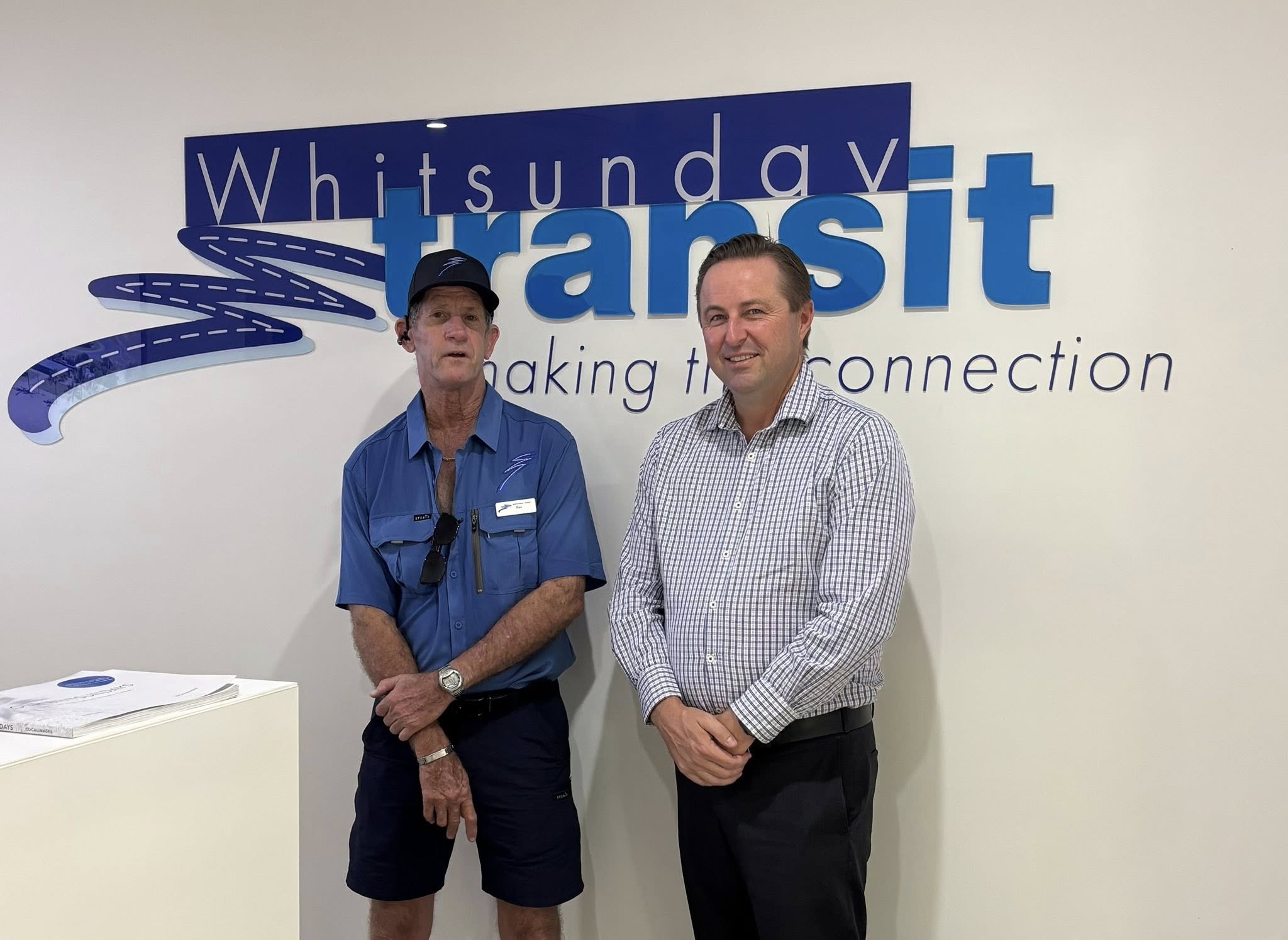
Voting is now open for the Queensland Bus Driver of the Year Awards, and the Whitsundays community has the chance to support one of its own. Local Whitsunday Transit driver David “Buzzy” Bussey has once again been nominated for the award, marking his third nomination and highlighting the positive impact he has on passengers every day.
Buzzy is well known among locals and visitors for the friendly welcome he offers to everyone who steps onto his bus. When asked what sets his approach apart, Buzzy keeps it simple. He believes in making people feel welcome. Whether transporting residents on their daily commute or greeting visitors arriving in the region, he aims to ensure every passenger feels comfortable and at home in the Whitsundays.
It is this attitude that many say reflects the spirit of the region itself. Friendly faces and genuine hospitality help create the reputation the Whitsundays is known for, and drivers like Buzzy play an important role in that experience.
Community members who would like to support Buzzy can cast their vote through the Translink website. Voting remains open until 11.59 pm (AEST) on Sunday, 22 March. Local supporters are encouraged to get behind him and help bring the award home to the Whitsundays.
1 – David “Buzzy” Bussey with Mayor Ry Collins. Photo sourced: Facebook

Term 1 has been a busy and productive start to the year for the community at St Catherine’s Catholic College, with students recently completing NAPLAN assessments while also participating in activities marking the season of Lent.
College Principal Katherine Nelson said the term had also included important work focused on strengthening the College’s mission and future priorities as part of the school’s renewal and improvement planning.
“As a Catholic school, our mission sits at the heart of everything we do,” Ms Nelson said.
“At St Catherine’s we are guided by the Gospel values of Community, Compassion, Excellence and Justice, because we are inspired by Jesus. These values shape our approach to learning and teaching and help create a welcoming environment where students and families of all faith backgrounds feel part of our community.”
Families have recently been invited to provide feedback through a parent survey exploring the College’s mission, purpose and priorities for the coming years. The consultation process forms part of ongoing work across Townsville Catholic Education to strengthen learning and teaching outcomes while maintaining the distinctive Catholic identity of its schools.
Assistant Principals Religious Education Julie Hornstra said Lent was also an important learning time for students across the College.
“During Lent, students reflect on prayer, service and helping others,” Ms Hornstra said.
“As part of this, students will learn about the work of Caritas Australia and participate in fundraising activities to support communities experiencing hardship around the world.”

On Sunday 22nd March the Epic Walk for Domestic Violence is set to take place. Commencing at 7:30am, everyone will meet at the Coral Sea Marina Gardens and walk 5km from the meeting point along the Cannonvale boardwalk and back. Participants are advised to bring a picnic blanket, family, friends and dog if they have one.
The event is hosted by Whitsundays Dancing CEO Clarice Davis with support from support from Whitsunday Legal Service Ambassador Katelyn Aslett.
“It’s been going on in Brisbane for four years and this is the second year that we’ve held it in the Whitsundays”, Katelyn said.
“It’s just a fantastic community day that brings all sorts of people from the community together to raise funds and awareness for domestic violence.”
The team hopes to raise significant funds to support victims of domestic violence.
“Between us, Brisbane, the Gold Coast and the Sunshine Coast we hope to raise over $300,000. We’re hoping locally we can raise at least $50,000.”
This is a fantastic event that supports a critical issue.
“None of us like to think it happens in our community, but it happens in every community. These kinds of events just let everyone know that, even if times are tough, you are not on your own. We generally have a few services on hand, so we can point people in the direction if are struggling or who may know someone that is struggling.”
The event will also feature a special appearance from the CEO of Women’s Legal Service Queensland – Nadia Bromley, who will be travelling up from Brisbane.
“She’s going to speak to the community. Because the raised so much in our community last year, the team is dedicated to supporting rural and local communities. It is a testament to everything our community has achieved.”
Host Clarice Davis shared a similar sentiment.
“It’s an easy walk. The power is in people and their presence. Showing up on the day is a big message. It’s a way of showing solidarity”, she said.
This is an incredibly important event that supports a vital cause.
For more information, check out the ‘Epic Walk for DV’ website.
What: The Epic Walk For DV
When: Sunday 22nd March 6:30am
Where: Coral Sea Marina Gardens
Captions
Hosts for the event, Katelyn Aslett and Clarice Davis. Photo credit: Sebastian Conidi

The Whitsunday Regional Council is preparing to introduce significant changes to how short-term accommodation (STA) is approved and managed across the region. The updates include both a planning scheme amendment and proposed changes to local laws aimed at improving compliance and protecting residential amenity.
A major amendment to the Whitsunday Planning Scheme 2017 relating to short-term accommodation is scheduled to commence on Monday, 30 March 2026.
Prepared under the Planning Act 2016, the amendment introduces stronger assessment benchmarks within the Low Density Residential Zone across the entire Whitsunday local government area.
Under the updated planning framework, short-term accommodation will generally not be supported in Low Density Residential zones.
Exceptions will apply to ten identified precincts that have a long-standing history of holiday home use.
The amendment provides clearer guidance for development assessments, helping both property owners and planners understand where holiday rentals are appropriate.
The planning scheme update follows a public consultation process conducted in 2025, where residents and stakeholders provided feedback on the future of short-term accommodation in the region.
Alongside the planning amendment, Council has launched consultation on changes to Subordinate Local Law No. 1 (Administration) 2014 that will affect how short-term accommodation is licensed, monitored, and managed.
Public consultation runs from 16 March to 19 April 2026 through Council’s online engagement portal and community feedback channels.
While the planning scheme determines where short-term accommodation is appropriate, the proposed local law changes focus on how these properties operate.
Key Proposed Changes
The amendments aim to improve accountability and compliance through several measures, including:
Residents are encouraged to review the proposed changes and provide feedback through an online survey or via hardcopy forms available at Council customer service centres and libraries.
Community members can also meet the project team at the Bowen Centrepoint Shopping Centre on Thursday 26th March, 12pm–4pm
Additional resources are available to help property owners understand the approval process, including a Short-term Accommodation Guide and an online self-assessment tool.
Together, the planning scheme amendment and proposed local law changes represent a coordinated effort by the Whitsunday Regional Council to balance the region’s strong tourism sector with the need to maintain the character and livability of residential neighbourhoods.
Learn more and have your say at Your Say Whitsunday - https://bit.ly/STALocalLaw
What? Community Consultation on STA Amendment Proposals
When? Thursday 26th March 12pm–4pm
Where? Bowen Centrepoint Shopping Centre
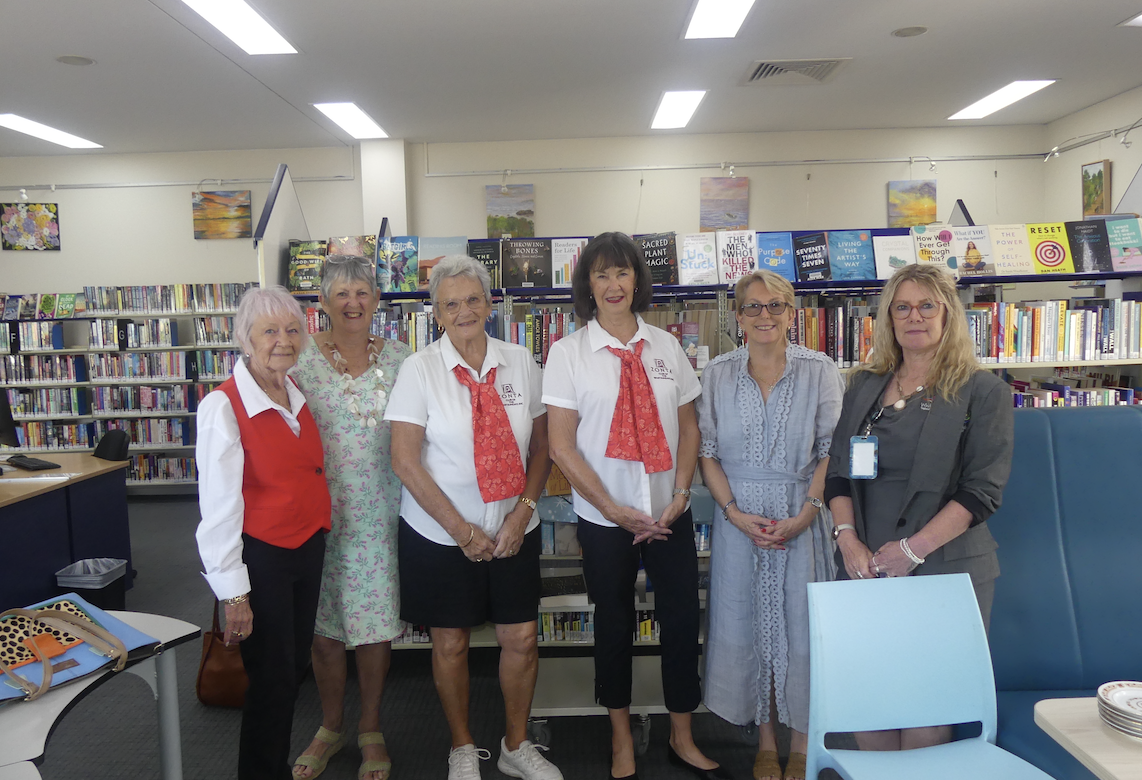
On Thursday 12th March, Zonta Club of Whitsundays had its annual book donation, which was marked by a morning tea at Cannonvale Library.
The Zonta team gathered to mark the occasion with Cr Jan Clifford coming to show her support.
The initiative was revamped in 2021 after the team noticed that the Zonta Section at the library hadn’t been updated for some time. Since then, Zonta have been donating new books and 2026 marks the fifth year of the collection in its new form. Since 2021, at least 30 books have been added each year.
The books are sourced by Secretary Janice Lake using a number of resources. Choices are made based on sources such as ABC Book Club, Booker Prize Long List and Women’s Authors Award with purchases made from the State Library bookshop and private bookshops.
The collection contains books from a range of topics including ‘self-help’, memoirs and general fiction with a focus on Australian and women authors, however it is not exclusive and encompasses a wide range of writers.
The club hopes that the Zonta Section will provide something for anyone looking for a good ‘read’.
Captions
Photo credit: Sebastian Conidi

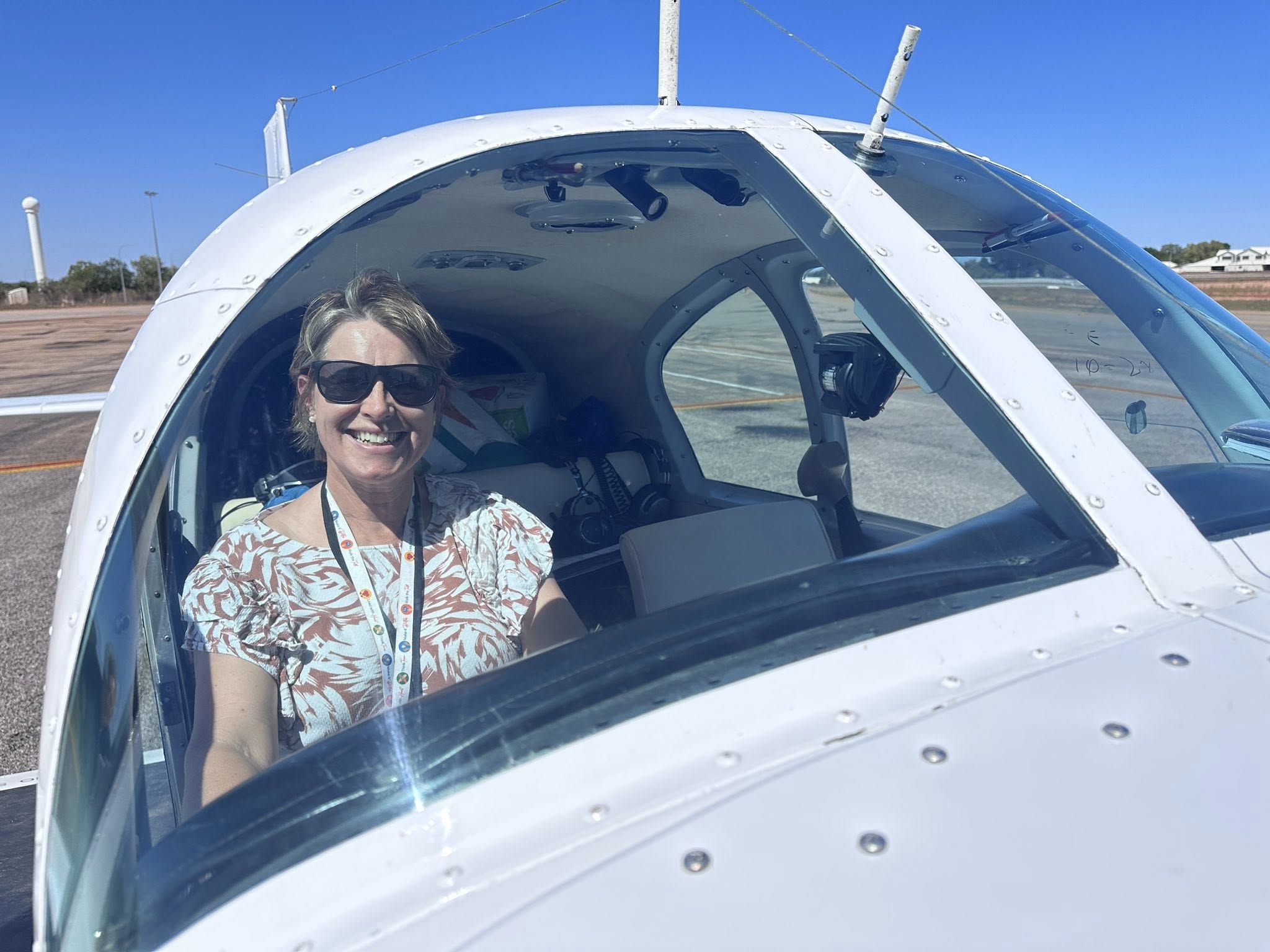
Airlie Beach is set to welcome an inspiring group of aviation professionals next May, as the Australian Women Pilots’ Association (AWPA) holds its 2026 National Conference and AGM from 6 to 10 May. This prestigious event, a highlight on the AWPA calendar, is more than a gathering of pilots—it is a celebration of skill, ambition, and community, bringing together women from all sectors of aviation, from student flyers to commercial, airline, and military professionals.
The Australian Women Pilots Association was founded in 1950 by pioneering Australian Aviator Nancy – Bird Walton. Since then, the aassociation has expanded and now includes members between the ages of 16 and 90, ranging from pre-solo students to commercial to airline and military pilots – with some members having 20,000 hours.
For the residents of the Whitsundays, the conference is a unique opportunity to shine a spotlight on the region. Hosted by a different state and regional town each year, the AWPA conference draws delegates from across Australia, creating a welcome boost for local businesses, accommodation providers, and tourism operators. With the theme Sun, Sea and Sky, Airlie Beach’s natural beauty offers a perfect backdrop for professional development and networking, showcasing the region as an attractive hub for events that combine learning with leisure.
The multi-day program promises a variety of engaging experiences, including an education day, the AIPA industry forum, and an air navigation trial. These hands-on opportunities provide delegates with practical skills while fostering connections with peers and industry leaders. According to AWPA Queensland Branch President Helen Trenerry, the event is about much more than flying: it’s about building relationships, sharing knowledge, and supporting women as they advance their careers.
The conference will culminate in the Qantas AWPA Runway Presentation Dinner at Shute Harbour, where over $110,000 in scholarships will be awarded, helping women pilots take the next step in their aviation journey. For the local community, this is a chance not only to witness the future of Australian aviation but also to be part of a gathering that champions inclusion, mentorship, and excellence.
Airlie Beach is ready to welcome women pilots from across the nation, putting the region at the center of a landmark event that combines professional growth with a celebration of our stunning coastal setting. More information and registrations are available at www.awpa.org.au/conference-agm.
Captions
Photo source: Facebook

A major tourism gateway in the Whitsundays has changed hands, with Epochal Hotels acquiring the Port of Airlie, Cruise Whitsundays Terminal and Marina for $20.75 million in a move that signals continued confidence in the region’s tourism future.
The Port of Airlie is widely recognised as one of the key entry points to the Whitsunday Islands and the Great Barrier Reef, providing vital marine transport links for visitors and locals. The precinct includes a 1,400 square metre terminal building, extensive pontoon infrastructure and a marina operating under a seabed lease. The terminal is leased to Cruise Whitsundays, part of Journey Beyond Group, until 2035 with a further 10-year option.
“Port of Airlie plays a critical role in the Whitsundays’ transport and tourism network. This acquisition secures long-term logistics and connectivity for the region while providing a platform to enhance infrastructure and passenger facilities over time,” Mr Piper said.
Over time, Epochal Hotels plans to introduce improvements to the terminal aimed at enhancing the visitor experience.
Whitsunday Regional Council Mayor Ry Collins said the investment was a positive sign for the region and its tourism industry.
“The Port of Airlie is a key gateway to the Whitsunday Islands and the Great Barrier Reef, and this investment reflects strong confidence in the region’s future,” Mayor Collins said.
Captions
Epochal Hotels CEO Glenn Piper said the Port of Airlie plays an essential role in the region’s tourism and transport network.
Photo supplied
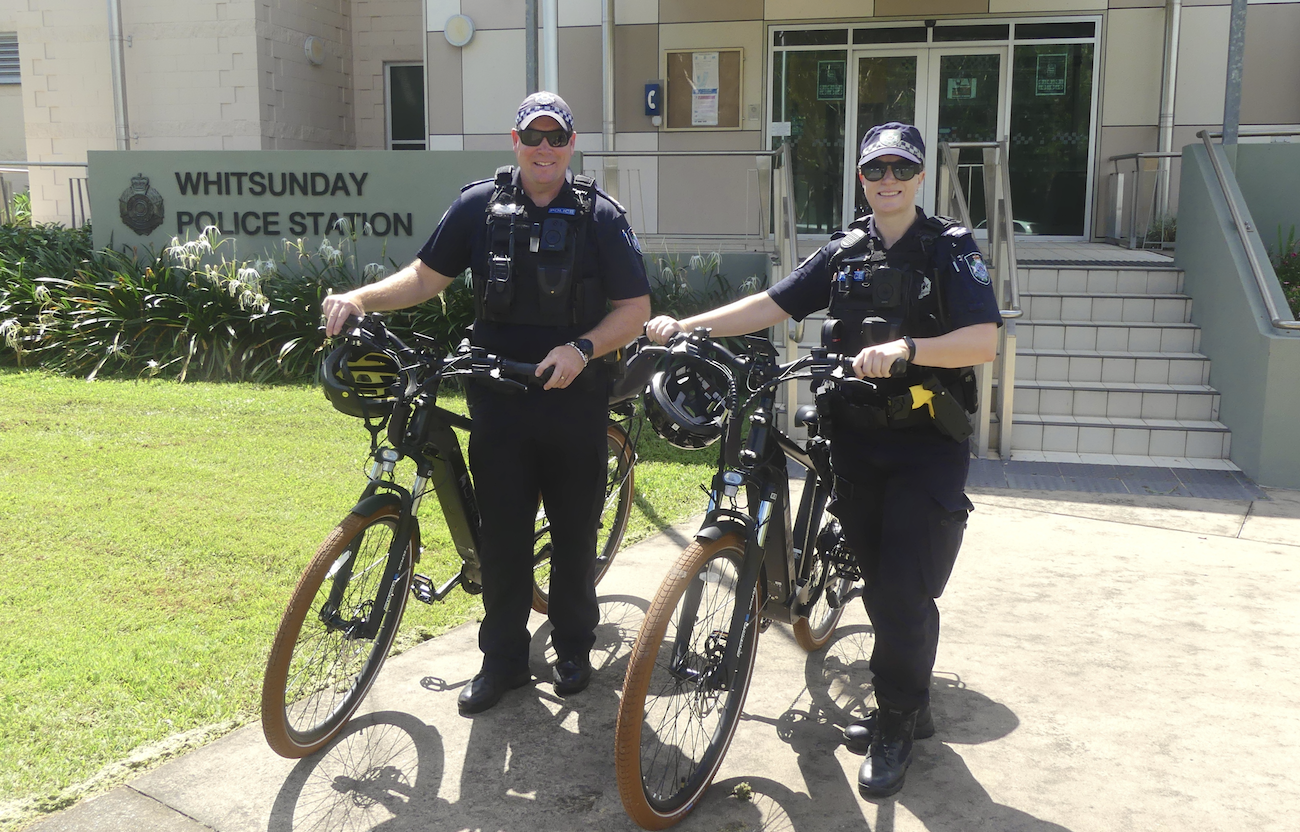
Police Officers are now patrolling Airlie Beach by bicycle, on sleek E-bikes that give them an all-access-pass to previously hard-to reach locations.
Morning strollers may see the patrols along the Bicentennial Boardwalk between Airlie Beach and Cannonvale, as will parents at school drop-off and revellers at events like the Airlie Beach Music Festival.
The Queensland Police cycling initiative was adopted in the Whitsundays to increase community patrol, whilst making it easier to police other e-bike and e-scooter users, and allowing fast response to areas with no vehicle access, like the boardwalk.
The e-bikes arrived in December and have been adopted readily by officers.
“The whole idea is for community safety, to ensure those areas that were untouched before are now getting policed.” said Senior Constable Jessica Leech
“There are 1000s of people using the boardwalk daily, so we want to ensure that they're getting looked after along the way.”
Senior Sergeant Anthony Moynihan also highlighted the need to confront E-scooter issues in Queensland.
“It's an opportunity for us to interact with people that are utilising e-scooters and e-bikes and just have conversations around safety and things like that with them.”
Following several e-scooter related injuries in Airlie Beach, the police are reinforcing the need for helmets, and safe-transit on the boardwalk especially. Residents are asked to keep respectful distance and pace around pedestrians to ensure no further mishaps.
The patrols will be conducted in partnership with the businesses along the waterfront, who rely on footfall from the boardwalk and want to ensure safe passage for their customers.
1- Senior Sergeant Anthony Moynihan and Senior Constable Rachel Leech ready to patrol.
%20Citizen.JPG)
On Friday 13 March, Proserpine Entertainment Centre hosted a citizenship ceremony, welcoming the newest citizens. The event was hosted by Mayor Ry Collins, with Uncle Leo Gabey presenting the welcome to country. Mayor Collins, Uncle Leo, Cr Jan Clifford and Cr Gary Simpson provided the certificates, along with a gift to show the regions warmest welcomes.
Mayor Ry Collins was happy to welcome his next-door neighbour of nine years - Bo Zhang - as an Australian citizen. The event was a fantastic morning as many individuals and families were presented with their certificates. It is wonderful to see so many people become more connected with our beautiful community.
%20Citizen.JPG)
%20Citizen.JPG)
%20citizen.JPG)
%20Citizen.JPG)
%20Citizen.JPG)
Following last weeks’ unexpected resignation from Deputy Mayor Michelle Wright, a new Deputy Mayor was elected on Wednesday at the Ordinary Council Meeting held in Bowen.
Mayor Collins thanked Cr Wright for her service.
“Councillor Wright will continue to serve the community as Division 4 Councillor, and I thank her for her contribution in the role of Deputy Mayor over the past two years,” Mayor Collins said.
Cr Michelle Wright said that “while there can be differing views around governance and organisational matters, I believe it is important to ensure clarity and stability moving forward.”
“I remain fully committed to serving the residents of Division 4 and the broader Whitsunday community as a Councillor. It continues to be a privilege to represent our community, and I will remain focused on delivering positive outcomes for our region.”
Councillor John Finlay was appointed as the new deputy mayor on Wednesday.
Cr Finlay brings significant experience to the role, including his background as a former CEO of both Bowen and Whitsunday Regional Councils.
“Thank you for your support in nominating and appointing me as deputy mayor. I am honoured and blessed to accept the position”, he said.
“Regardless of local demographics, the single most important for a community to have is – I believe – unity.”
Mayor Ry Collins has stated his support.
“I look forward to closely working with Cr Finlay as we continue to get on with the job for the Whitsundays”, said Mayor Collins.
“I also want to acknowledge and thank Cr Michelle Wright for her service as Deputy Mayor over the past two years.”
1 - Councillor John Finlay appointed as new deputy mayor. Photo credit: Facebook
Publishers Indemnity. Any individual or entity that places advertising, supplies copy material, or submits editorial content to Core Life Publishing agrees and undertakes to ensure that all such material:- Does not infringe upon any copyright, trademark, or other intellectual property rights;- Is free from any content that could be considered defamatory, libelous, or slanderous;- Does not infringe upon any rights related to privacy or breach of confidence;- Contains no obscene, indecent, or otherwise unlawful material;- Complies fully with the Trade Practices Act and all other applicable laws, regulations, or statutes.Furthermore, by submitting or placing such material, these individuals or entities agree to indemnify and hold harmless the publisher, Core Publishing and Events Pty Ltd, and/or its agents from and against any and all investigations, claims, demands, liabilities, damages, costs, or judgments arising out of or in connection with the material provided. All material is believed to be accurate at the time of printing and remains the copyright of Core Publishing and Events Pty Ltd.
© 2026 Mackay and Whitsunday Life Pty Ltd.
