Independently Owned, Locally Grown, Community Loved

It is often said that behind every successful man stands a good woman. From the early years of settlement, women were playing a major role in the development of the shire, not only in their traditional roles as wives and mothers but as active and essential members of the farming and business communities.
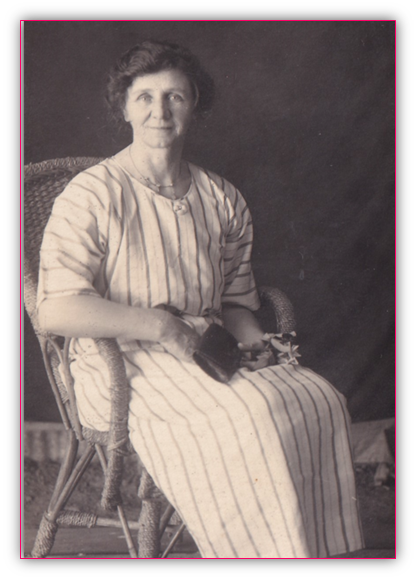
One such woman was Sarah Hannington Compton.
Born in Lambeth, Surrey, England on the 17th of October, 1870, she was the eldest of Sarah and John lllidge Gray's fifteen children. The family migrated to Australia on the ship “Macquarie” in 1889.
Sarah's sister, Miriam, had married and her husband was working on Havilah Station near Bowen. While visiting them, Sarah met her future husband, John Compton, who also worked there. John and Sarah married in Bowen in 1893. They had six children. Sadly, their first child died at nine years old.
In the first years of married life, they travelled around the Bowen district while John, a proficient carpenter, built homes and stockyards.
In 1895, they took up Block No. 3 on Glen Isla Estate, growing sugar cane in anticipation of Proserpine's Central Sugar Mill which opened in 1897. Until their home was built, they lived in a humpy with a grass roof. It was cool but there were plenty of snakes. Living conditions were poor, so a couple of years later, with their young family, they moved to another farm, Fern Hill, at Mt Julian.
John Compton was one of Proserpine's representatives on the Bowen-Proserpine Tramway Joint Board. He also agitated for Proserpine to become a shire separate from Bowen's Wangaratta Shire. In March of 1910, this dream was realised, and John was elected first Chairman of Proserpine's Shire Council. As Chairman’s wife, Sarah provided strong support to John throughout his time in office. In 1912, she was given the honour of opening the McGregor Bridge at Taylor's Crossing, Glen Isla.
After selling their Mt Julian farm in 1915, they built a home on Auburn, their town cane farm located where Edward Street is now situated. Sarah and family were then very involved in Presbyterian Church activities. Sarah was also an active member of Proserpine Hospital Ladies' Guild.
In 1920, the Comptons were once again on the move, selling their farm and buying another, Yelvertoft, at Mackay corner, Proserpine. Then followed a short residence in Warwick before they returned to Proserpine in 1922, living in a home on their land in the Herbert/Main Street area. In 1923, John once again caught the pioneering bug and cleared land for farming at Lethebrook where he built yet another home. Sarah continued to immerse herself in local activities.
When John Compton died in 1932, Sarah remained on the farm with the help of son, Alex. When he married and left in 1939, she hired a manager until 1949, when she sold the farm to the Pratt family, moving to a new home in Herbert Street. Sarah managed on rental income earned from five houses that had been built on Compton land by O H Gray and sons, circa 1938. She supervised these tenants. As was a common practice for widows in years gone by, she rented part of her home to young married couples; sometimes, taking in young men as boarders; usually bank workers.
Throughout this time, Sarah continued to attend the Presbyterian Church and crafted many items to sell at their functions. She was also active in CWA and Red Cross.
At 94, Sarah had a serious fall and was admitted to hospital. Unfortunately, she suffered memory loss, however she lived on to almost 103 years, becoming Proserpine's first centenarian.
Naming Sarah Compton Lane on former Compton land was fitting acknowledgment of Sarah’s contribution to her community.
Story and photo courtesy of Proserpine Historical Museum.
Publishers Indemnity. Any individual or entity that places advertising, supplies copy material, or submits editorial content to Core Life Publishing agrees and undertakes to ensure that all such material:- Does not infringe upon any copyright, trademark, or other intellectual property rights;- Is free from any content that could be considered defamatory, libelous, or slanderous;- Does not infringe upon any rights related to privacy or breach of confidence;- Contains no obscene, indecent, or otherwise unlawful material;- Complies fully with the Trade Practices Act and all other applicable laws, regulations, or statutes.Furthermore, by submitting or placing such material, these individuals or entities agree to indemnify and hold harmless the publisher, Core Publishing and Events Pty Ltd, and/or its agents from and against any and all investigations, claims, demands, liabilities, damages, costs, or judgments arising out of or in connection with the material provided. All material is believed to be accurate at the time of printing and remains the copyright of Core Publishing and Events Pty Ltd.
© 2026 Mackay and Whitsunday Life Pty Ltd.