Independently Owned, Locally Grown, Community Loved

By Sharon Ashman
School refusal is a complex behavioural presentation. It is often driven by anxiety, emotional distress or unmet needs within the child’s environment. Behaviourally, school refusal serves a function usually to reduce distress or regain a sense of safety.
Children who refuse school may experience overwhelming anxiety related to separation, academic pressure, peer relationships or sensory overload. Avoidance temporarily reduces anxiety, reinforcing the behaviour over time. Without intervention, this cycle can become entrenched.
Effective behavioural change focuses on gradual exposure, predictability and emotional support, rather than force or punishment. Collaborative planning between families, schools and mental health professionals is essential. Small, achievable steps such as partial attendance or supported transitions, help rebuild confidence and reduce avoidance.
Equally important is validating the child’s experience. Statements like “School feels really hard right now” reduce shame and increase engagement. In addition, check the situation for what is called secondary gain. What is the child doing when not at school? Such things as gaming, playing on phone, watching movies are secondary gain. Consider working with school to have schoolwork at home with the same hours and rules as if the child is attending school to reduce secondary gain.
Behavioural progress is strongest when emotional regulation strategies are taught alongside attendance plans. Breathing techniques, grounding strategies and clear routines help children tolerate discomfort rather than escape it.
School refusal is not a failure of parenting or discipline. It is a signal that a child needs support to feel safe, capable and understood within their learning environment.
For more information visit my website https://www.personaltransitions.com.au/ or give me a call 0418708214.” NDIS FRIENDLY
Contributed with thanks to Sharon Ashman of Personal Transitions.
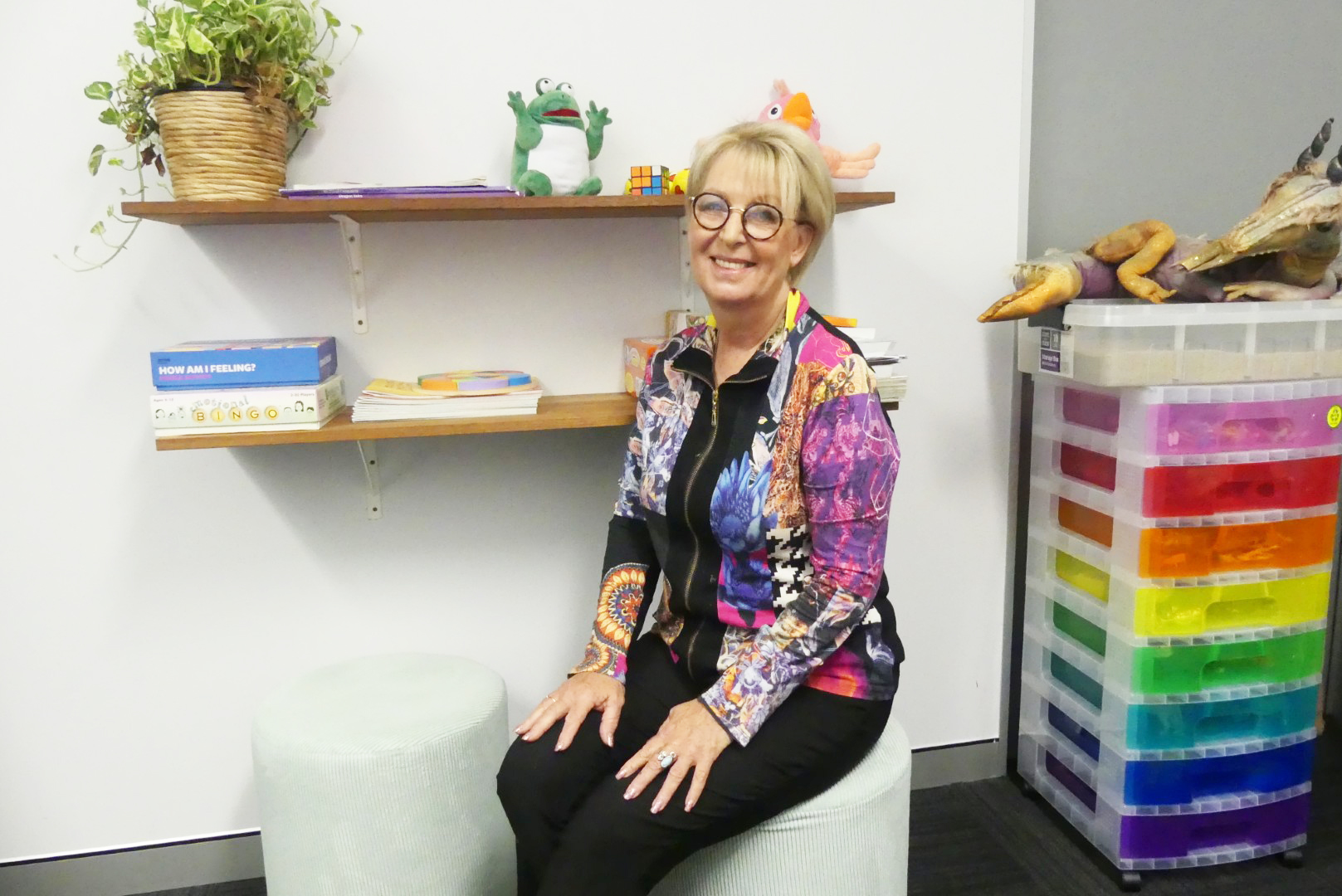
Sharon Ashman holds qualifications as a Post Graduate Psychiatrist, MPAS and CMHN. Photo supplied
Publishers Indemnity. Any individual or entity that places advertising, supplies copy material, or submits editorial content to Core Life Publishing agrees and undertakes to ensure that all such material:- Does not infringe upon any copyright, trademark, or other intellectual property rights;- Is free from any content that could be considered defamatory, libelous, or slanderous;- Does not infringe upon any rights related to privacy or breach of confidence;- Contains no obscene, indecent, or otherwise unlawful material;- Complies fully with the Trade Practices Act and all other applicable laws, regulations, or statutes.Furthermore, by submitting or placing such material, these individuals or entities agree to indemnify and hold harmless the publisher, Core Publishing and Events Pty Ltd, and/or its agents from and against any and all investigations, claims, demands, liabilities, damages, costs, or judgments arising out of or in connection with the material provided. All material is believed to be accurate at the time of printing and remains the copyright of Core Publishing and Events Pty Ltd.
© 2026 Mackay and Whitsunday Life Pty Ltd.

.jpg)