Independently Owned, Locally Grown, Community Loved

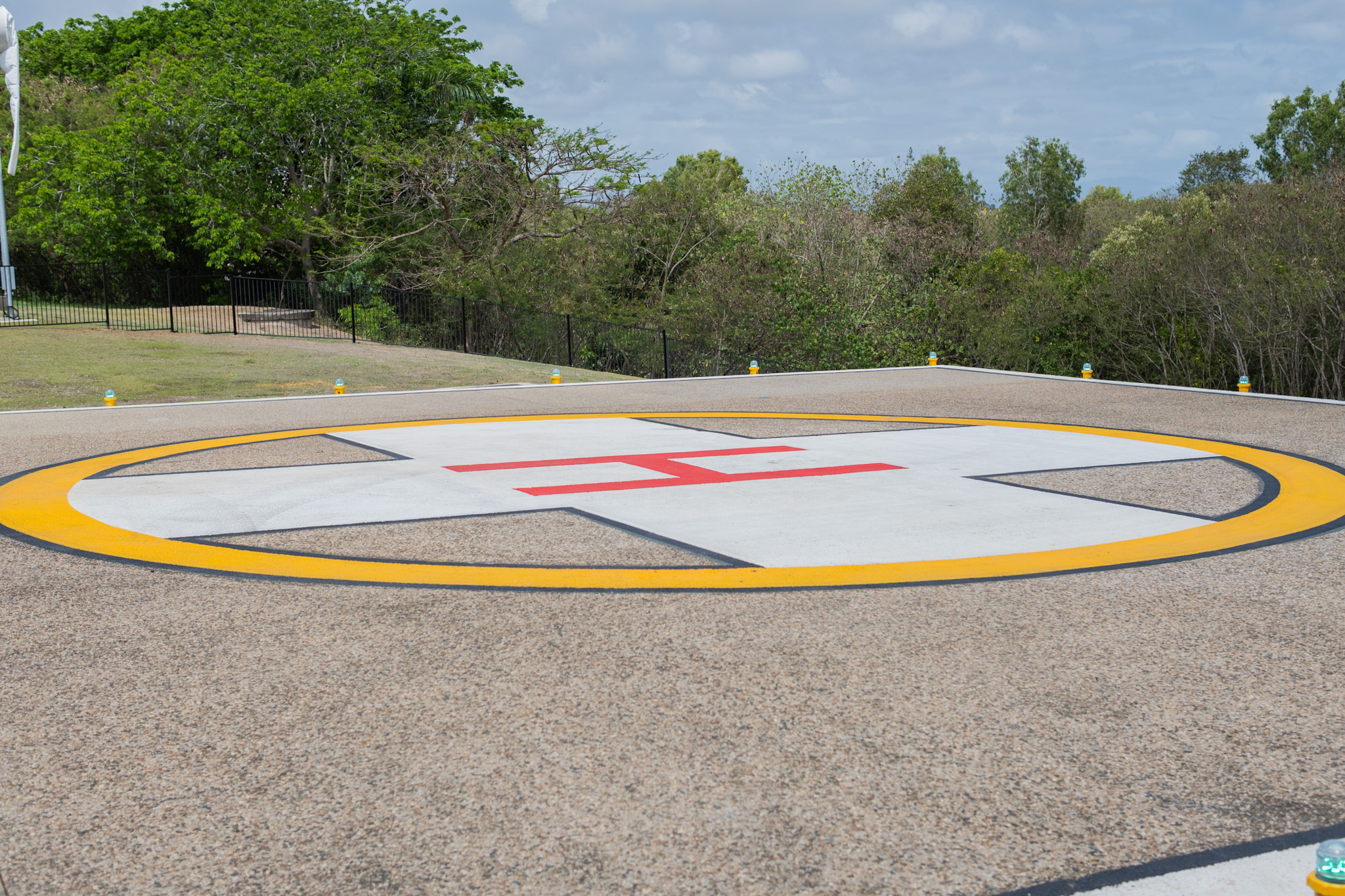
Mackay Base Hospital’s helipad has reopened after two and a half years, restoring direct aeromedical transfers and improving access to urgent care for critically ill patients. Photo credit: Hannah McNamara
As of Monday 19th October, Mackay Base Hospital’s helipad has officially begun operating after two and a half years, restoring direct helicopter transfers for critically ill patients. The reopening removes the need for additional ambulance transfers from Mackay Airport, helping patients reach urgent medical care sooner while freeing up ambulance crews to respond to emergencies across the region.
Mackay Base Hospital’s helipad officially reopened on Monday 19th October, restoring direct aeromedical retrieval services to the hospital after two and a half years.
The reopening means critically ill patients arriving by helicopter can once again be transported directly to the hospital, removing the need for an additional ambulance transfer from Mackay Airport.
The helipad has undergone upgrades to its systems, infrastructure and technology, with new safety features including automated boom gates, warning lights and locking doors activated as helicopters approach and depart.
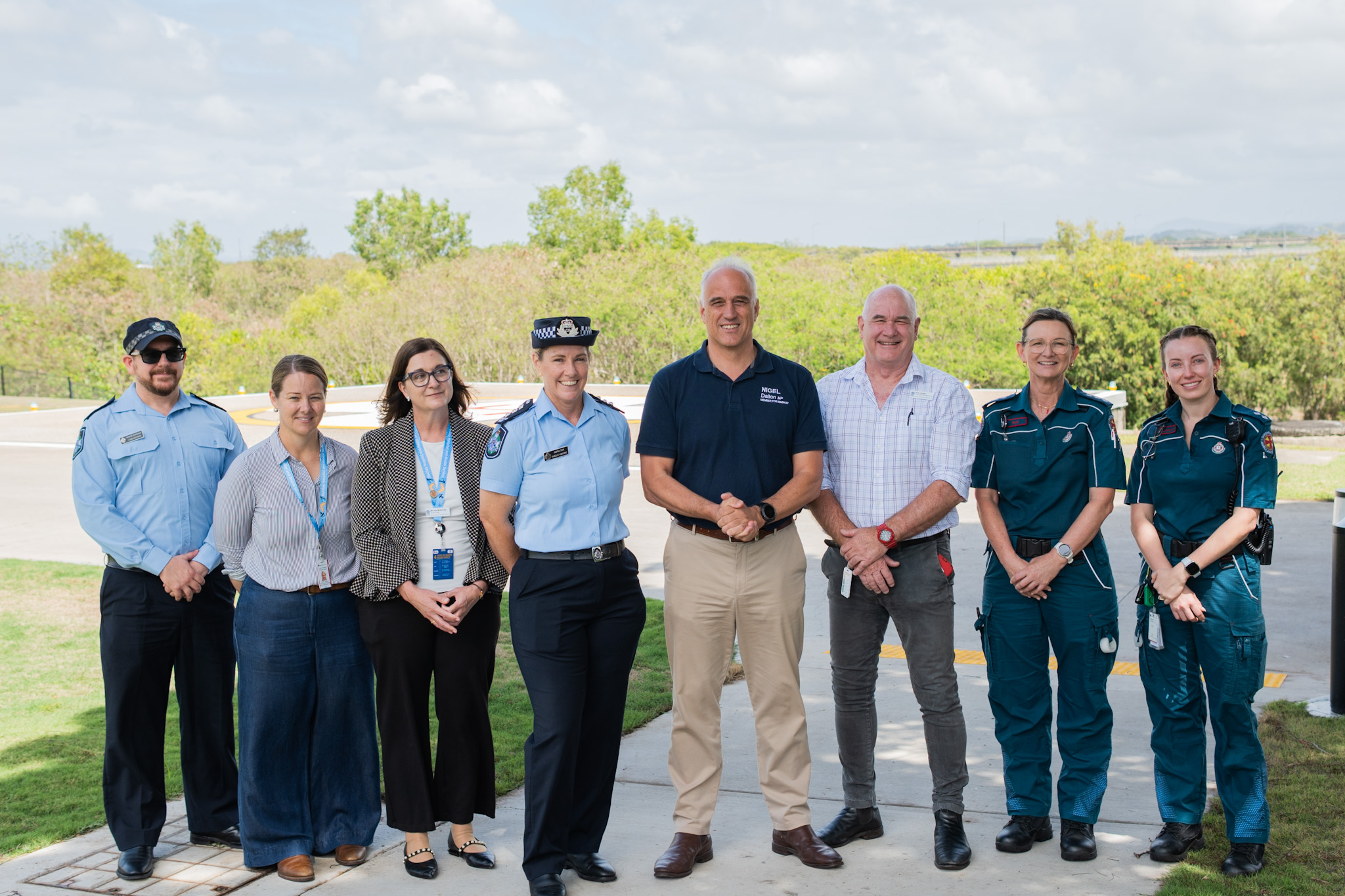
Member for Mackay Nigel Dalton welcomed the reopening, saying it would help patients access urgent medical care sooner.
“Today, we're really excited to announce the return of the helipad to the hospital here,” he said.
“It means that if there is a need to use a helicopter to transport somebody to the hospital, it doesn't have to land at the airport, and then a transfer for the ambulance to move the patient to the emergency ward.”
Mr Dalton acknowledged community concerns about the additional transfer time over the past two and a half years, saying people had worried about the potential consequences for patients requiring urgent care.
“Over 2.5 years, I think people have been really concerned that that extra amount of time and transfer time is going to cause a serious catastrophe, which could have been avoided,” he said.
He also congratulated the hospital board, contractors and staff involved in restoring the facility.
Mackay Hospital and Health Service Chief Executive Sean Birgan said approximately 1,400 patient transfers had taken place between Mackay Airport and the hospital during the helipad's two-and-a-half-year closure, averaging around 10 each week.
He said returning helicopter services to the hospital campus would help critically ill patients reach emergency departments, operating theatres and neonatal wards more efficiently. He also said the arrangement would also benefit ambulance services by reducing the need for crews to travel between the airport and hospital, particularly during busy traffic periods.
“The sooner we can get critically ill patients to definitive care in the emergency department, or the operating theatres, or our neonatal wards, that's what we are planning to do.”
“Anytime that they can avoid [traffic], that just puts an extra ambulance on the streets to respond to emergency care for the community,” he said.
Mr Birgan confirmed the helipad would recommence operations from midday on Monday, following clinical scenario testing to prepare hospital staff for incoming patient transfers.
The current ground-level helipad is expected to remain in place for at least a couple of years, with longer-term plans to incorporate a rooftop helipad into a proposed four-storey clinical building as part of Stage Two of the hospital redevelopment.
The Queensland Government's Stage One masterplan is set to deliver 128 additional beds, birthing services, an expanded emergency department, a new clinical services building with a rooftop helipad and a 1,000-space staff car park by 2030.
Publishers Indemnity. Any individual or entity that places advertising, supplies copy material, or submits editorial content to Core Life Publishing agrees and undertakes to ensure that all such material:- Does not infringe upon any copyright, trademark, or other intellectual property rights;- Is free from any content that could be considered defamatory, libelous, or slanderous;- Does not infringe upon any rights related to privacy or breach of confidence;- Contains no obscene, indecent, or otherwise unlawful material;- Complies fully with the Trade Practices Act and all other applicable laws, regulations, or statutes.Furthermore, by submitting or placing such material, these individuals or entities agree to indemnify and hold harmless the publisher, Core Publishing and Events Pty Ltd, and/or its agents from and against any and all investigations, claims, demands, liabilities, damages, costs, or judgments arising out of or in connection with the material provided. All material is believed to be accurate at the time of printing and remains the copyright of Core Publishing and Events Pty Ltd.
© 2026 Mackay and Whitsunday Life Pty Ltd.