Independently Owned, Locally Grown, Community Loved

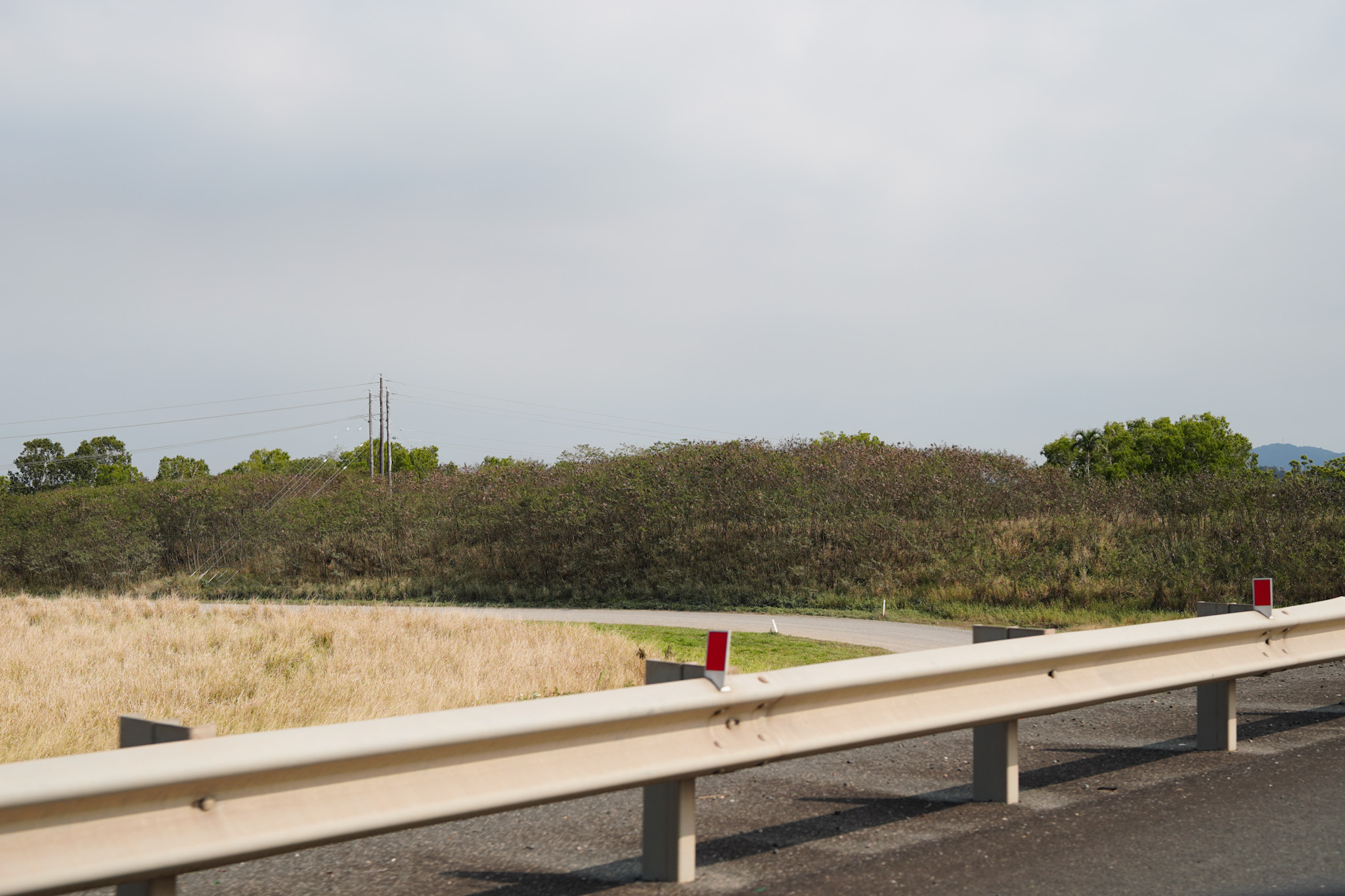
Leucaena is becoming increasingly visible across the Mackay Region, with extensive growth reported in rural areas, along waterways and around Hay Point, while concerns about its spread are also emerging further north into the Whitsundays. Photo credit: Hannah McNamara
By Hannah McNamara
A Mackay local is calling for greater recognition and coordinated management of leucaena, raising concerns about its increasing presence across roadsides, waterways and surrounding landscapes.
Helen Tame, who has lived in the region since she was 11, says she has spent at least three years raising concerns about the spread of the plant with government departments and authorities.
“I’ve spent the last, at least three years, trying to get somebody to recognise that Mackay has a problem.”
Ms Tame believes the issue extends beyond Mackay, with leucaena also present across the Whitsunday and Isaac regions and other parts of Queensland.
During a tour of several affected areas, she pointed to growth along roadsides, creek systems, railway corridors and near mangroves in the Mackay district, expressing concern about what continued spread could mean for the region’s landscapes.
“You don't notice it until someone points it out. How many people are not noticing what's happening right now?”
Her concerns have now reached Queensland Parliament, with Member for Mirani Glen Kelly sponsoring a Queensland Parliament petition calling for greater recognition and management of unmanaged and naturalised leucaena across the state.
“Leucaena has been spreading across Central Queensland for many years, and we are increasingly seeing unmanaged plants along roadsides, creek and river systems, reserves and into surrounding paddocks,” Mr Kelly said.
“Leucaena can be a valuable fodder crop when it is properly managed, but when it escapes cultivation and spreads unchecked, it becomes a much broader land management and biosecurity issue.”
The petition calls for unmanaged and naturalised leucaena to be recognised as a significant emerging environmental and biosecurity issue, alongside investment in surveillance, containment, control, research and community awareness programs and a state-wide assessment of its distribution, environmental impacts and future spread risk.
“As the local Member, my job is to make sure the concerns of our communities are heard and put in front of the people who can act on them.”
However, the question of how leucaena should be classified remains an important part of the discussion.
Mackay Regional Councillor Peter Sheedy, who is a co-chair of the council’s sustainability committee, said the matter was a work in progress.
“Leucaena is absolutely very invasive. It's not native, and it's something that with some dedication and effort and resource, can be managed,” said Cr Sheedy.
“But to manage a problem that is so widespread, is going to take considerable resources.”
Ms Tame, who is a passionate advocate for the removal of Leucaena, said the concern is ultimately about the landscape she has watched change over decades.
“We have such a pretty town. We cannot let it be overrun by this.”
“Something has just got to be done.”
The Queensland-wide petition attracted more than 400 signatures within its first week, now up to 750 as the discussion continues over whether unmanaged and naturalised leucaena should receive greater recognition as an environmental and biosecurity issue. The petition will close on 24th September 2026.
For more information, or to sign the petition, visit www.parliament.qld.gov.au/Work-of-the-Assembly/Petitions/current - named: 4670-26 Leucaena as a significant emerging environmental and biosecurity threat
Publishers Indemnity. Any individual or entity that places advertising, supplies copy material, or submits editorial content to Core Life Publishing agrees and undertakes to ensure that all such material:- Does not infringe upon any copyright, trademark, or other intellectual property rights;- Is free from any content that could be considered defamatory, libelous, or slanderous;- Does not infringe upon any rights related to privacy or breach of confidence;- Contains no obscene, indecent, or otherwise unlawful material;- Complies fully with the Trade Practices Act and all other applicable laws, regulations, or statutes.Furthermore, by submitting or placing such material, these individuals or entities agree to indemnify and hold harmless the publisher, Core Publishing and Events Pty Ltd, and/or its agents from and against any and all investigations, claims, demands, liabilities, damages, costs, or judgments arising out of or in connection with the material provided. All material is believed to be accurate at the time of printing and remains the copyright of Core Publishing and Events Pty Ltd.
© 2026 Mackay and Whitsunday Life Pty Ltd.